Moderna, Inc. and Merck have reported five-year follow-up results from the Phase 2b KEYNOTE-942 study evaluating intismeran autogene (mRNA-4157 or V940), an investigational individualized mRNA-based neoantigen therapy, in combination with pembrolizumab (KEYTRUDA) in patients with resected high-risk stage III or IV melanoma. The combination demonstrated a 49 percent reduction in the risk of recurrence or death compared to pembrolizumab alone, reaffirming the long-term therapeutic potential of personalized mRNA immunotherapy in early-stage solid tumors. The update, which follows earlier two- and three-year analyses, is seen as an important durability signal for the combination’s clinical benefit and may influence the design of future immunotherapy combinations across oncology indications.
Why five-year durability matters in validating individualized mRNA cancer vaccine strategies
The five-year recurrence-free survival update from KEYNOTE-942 builds on earlier efficacy signals and positions intismeran autogene as one of the most mature individualized neoantigen therapies in the clinical pipeline. While the initial two-year data from the same trial had already shown promise, the persistence of benefit over five years addresses a central question facing mRNA-based oncology therapeutics: can these personalized agents deliver durable immune control beyond the treatment period?
Industry observers point out that in resected stage III or IV melanoma, the risk of recurrence is highest within the first two to three years. Extending a benefit curve past the five-year mark places the investigational regimen into a durability category that few immunotherapies, including adjuvant checkpoint inhibitors, have historically achieved. The 49 percent relative reduction in recurrence or death, with a hazard ratio of 0.510 and a confidence interval spanning 0.294 to 0.887, offers more than statistical significance. It supports the biological rationale that priming the immune system with patient-specific neoantigens can produce long-term immunological memory capable of maintaining tumor surveillance well beyond the dosing period.
This durability is clinically significant because pembrolizumab alone has already been shown to extend recurrence-free survival in adjuvant melanoma. That a combination approach involving intismeran autogene can improve upon that baseline reflects not only additive efficacy but potential synergy. The personalized vaccine is designed to encode up to 34 tumor-specific neoantigens, derived from sequencing of each patient’s tumor DNA. Upon administration, the mRNA instructs the body to translate and present these neoantigens intracellularly, training the immune system to recognize and destroy micrometastatic cells that may have escaped resection. Pembrolizumab’s PD-1 pathway inhibition then acts to release immune suppression, amplifying this tailored response.
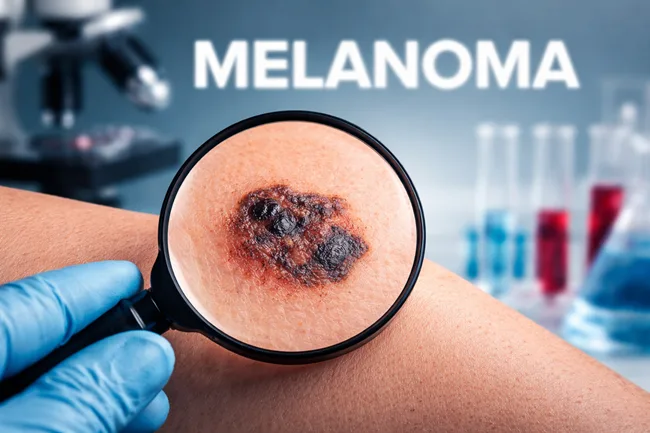
How the KEYNOTE-942 results reinforce the broader INTerpath platform across tumor types
Moderna and Merck are investing heavily in the INTerpath platform, a multicancer clinical development program built around intismeran autogene and its individualized neoantigen design strategy. The five-year data in melanoma will likely be viewed as a benchmark for expansion into other high-risk, post-surgical settings where minimal residual disease is a concern.
Eight randomized Phase 2 and 3 trials are currently underway across tumor types including non-small cell lung cancer, renal cell carcinoma, and bladder cancer. Two Phase 3 studies in non-small cell lung cancer are actively enrolling patients, including one focused on resected disease following neoadjuvant chemotherapy and immunotherapy. The Phase 3 trial in adjuvant melanoma, INTerpath-001, is fully enrolled and may become the pivotal dataset supporting future regulatory filings. Additional Phase 2 studies are targeting resected muscle-invasive and non-muscle-invasive bladder cancer, as well as first-line metastatic melanoma and metastatic squamous non-small cell lung cancer.
What sets the INTerpath approach apart is its algorithmic, patient-specific design combined with a rapid mRNA manufacturing platform. Each vaccine is customized based on the unique mutational signature of the individual tumor. The ability to reliably produce and deliver these customized biologics within a clinically relevant timeframe is crucial to the scalability and success of this model. If the melanoma durability signal translates to other tumor types, this platform could serve as a new immunotherapy backbone across early-stage solid tumors, particularly in settings where checkpoint monotherapy delivers incomplete control.
Why regulators will still need Phase 3 confirmation before pathway clarity emerges
Despite the positive update, the current evidence from KEYNOTE-942 is insufficient for regulatory approval. The study was a randomized but open-label Phase 2b trial with 157 patients, randomized 2:1 to receive pembrolizumab plus intismeran autogene or pembrolizumab alone. The trial’s design included stratification by stage and used recurrence-free survival as its primary endpoint. The robustness of the data is supported by consistency across earlier time points and a nominal p-value of 0.0075. However, the trial’s size and open-label nature limit generalizability, and the absence of a Phase 3 dataset with event-driven primary endpoints prevents accelerated filing.
Regulatory observers suggest that the fully enrolled INTerpath-001 trial will be decisive. This Phase 3 study is expected to provide definitive evidence of benefit in the same resected high-risk melanoma population and will also include more detailed safety and biomarker analyses. Notably, safety signals for the combination in KEYNOTE-942 remain consistent with prior pembrolizumab data, but long-term toxicity and immune-related adverse event profiles will be scrutinized closely in the larger cohort. Without clear safety and manufacturing reproducibility data, the pathway from durable efficacy signal to label expansion remains incomplete.
What remains structurally uncertain around scalability, comparability, and payer positioning
While Moderna and Merck have made substantial progress in demonstrating biological and clinical feasibility, several challenges persist that could limit the near-term commercial scalability of individualized neoantigen therapies. The first is manufacturing complexity. Each dose of intismeran autogene is customized based on patient-specific tumor sequencing, requiring a tightly integrated diagnostic-to-therapeutic pipeline. Even with digital sequencing, AI-guided antigen prediction, and Moderna’s proprietary mRNA production infrastructure, turnaround times and cost per patient remain concerns for health systems and payers.
Second, cross-trial comparability is limited. There are no direct head-to-head comparisons between intismeran autogene and shared neoantigen approaches, nor with other immuno-oncology strategies currently in development for adjuvant settings. While the magnitude of benefit in KEYNOTE-942 appears favorable relative to historical controls, regulators and payers are increasingly demanding comparative evidence, especially when therapies require individualized manufacturing.
Third, pricing and reimbursement pathways remain undefined. The Centers for Medicare and Medicaid Services and private payers have yet to establish precedents for individualized vaccines outside of niche rare disease or ultra-orphan markets. If approved, intismeran autogene would likely require bundled payment frameworks or value-based contracts linked to recurrence-free survival endpoints, which are operationally challenging to monitor and enforce.
Why this update positions Moderna to expand beyond infectious diseases
For Moderna, the five-year KEYNOTE-942 data mark a potential inflection point in its diversification strategy. Since the initial COVID-19 vaccine success, the company has worked to reposition itself as a broader mRNA platform innovator across oncology, rare diseases, and latent virus indications. The sustained benefit seen in this cancer vaccine study lends scientific credibility to that repositioning and could serve as a launchpad for investor confidence in the company’s oncology division.
The collaboration with Merck is central to this strategy. It not only allows Moderna to pair its mRNA platform with a proven immunotherapy in pembrolizumab but also provides access to global clinical trial infrastructure, regulatory expertise, and oncology commercial networks. For Merck, extending the lifecycle of pembrolizumab through novel combination strategies remains a core strategic goal. If the INTerpath platform succeeds, pembrolizumab could become part of a next-generation immuno-oncology regimen designed for early-stage intervention rather than salvage settings.
Both companies are positioning the platform not as a replacement for existing checkpoint therapies, but as an amplifier and extender. In this model, individualized mRNA therapy could become the immunological “primer,” with checkpoint inhibitors acting as the systemic activator, together producing a layered immune defense that outlasts either modality alone.
What the oncology field will be watching for in 2026
The release of late-stage data from INTerpath-001 will be the most immediate event to watch. If recurrence-free survival benefit holds in the Phase 3 dataset, it could trigger regulatory submissions in 2026 or 2027. Equally important will be real-world validation of manufacturing scalability and early regulatory engagements with the U.S. Food and Drug Administration, the European Medicines Agency, and reimbursement bodies in key markets.
Clinicians will also be closely tracking biomarker data from ongoing studies, particularly the role of tumor mutational burden, PD-L1 expression, and T-cell clonality in predicting response. These may form the basis for future patient selection strategies, further sharpening the precision element of individualized mRNA therapy.
Finally, the oncology community will be watching whether this combination strategy expands to less immunogenic tumors. If efficacy extends into non-small cell lung cancer, bladder cancer, or renal cell carcinoma, it could accelerate the mainstreaming of personalized vaccines as a therapeutic class rather than a scientific curiosity.