Merck and Moderna report 42% lower melanoma recurrence risk in Phase 3 mRNA trial
Merck and Moderna report 42% lower melanoma recurrence risk with intismeran plus Keytruda. Survival, safety and manufacturing remain key.


Merck and Moderna report 42% lower melanoma recurrence risk with intismeran plus Keytruda. Survival, safety and manufacturing remain key.

The FDA has accepted FYB206, a proposed biosimilar to Merck's Keytruda, for review, with a decision potentially due in the third quarter of 2027. Zydus and Formycon pursued a streamlined development programme without a comparative Phase 3 efficacy trial, but approval, patent clearance and commercial launch remain separate hurdles.

Merck & Co.’s Keytruda plus Padcev has won a positive European regulatory opinion for perioperative treatment of resectable muscle-invasive bladder cancer regardless of cisplatin eligibility, potentially expanding an already important oncology franchise into a broader earlier-stage population.

Cipla’s Invagen has licensed U.S. rights to Qilu’s investigational pembrolizumab biosimilar QL2107, setting up a future challenge to Merck’s blockbuster Keytruda franchise.
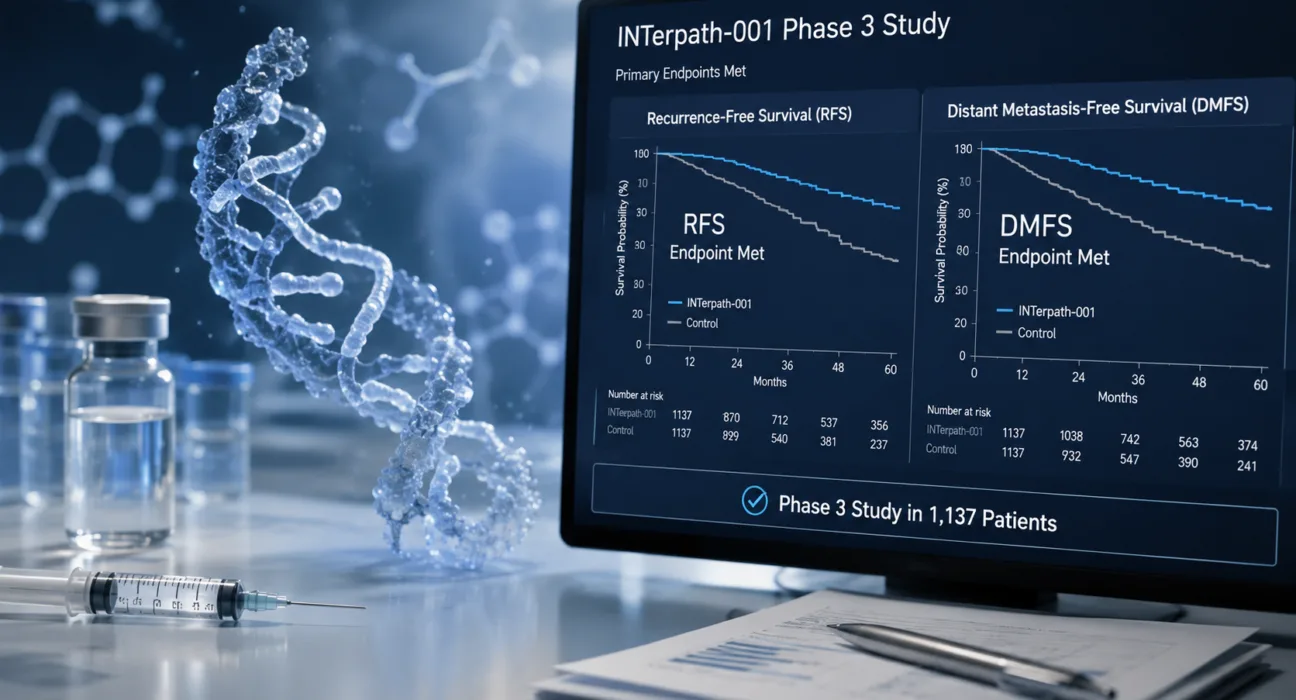
INTerpath-001 met recurrence-free and distant metastasis-free survival endpoints in 1,137 patients, giving individualized mRNA cancer therapy its first positive Phase 3 readout.

CHMP backs Trodelvy plus Keytruda for first-line PD-L1-positive metastatic TNBC, moving Gilead closer to an expanded EU label.

CEL-SCI launches a 212-patient Multikine Phase 3 study, but subgroup validation, funding and regulatory execution remain decisive.

FDA approval moves Keytruda and Padcev into perioperative MIBC regardless of cisplatin eligibility, intensifying the contest for standard care.

FDA expands Padcev plus Keytruda to adults with muscle-invasive bladder cancer regardless of cisplatin eligibility, reshaping perioperative care.
Read how Samsung Bioepis SB27’s positive Phase 1 and Phase 3 data could reshape the Keytruda biosimilar race and oncology access.