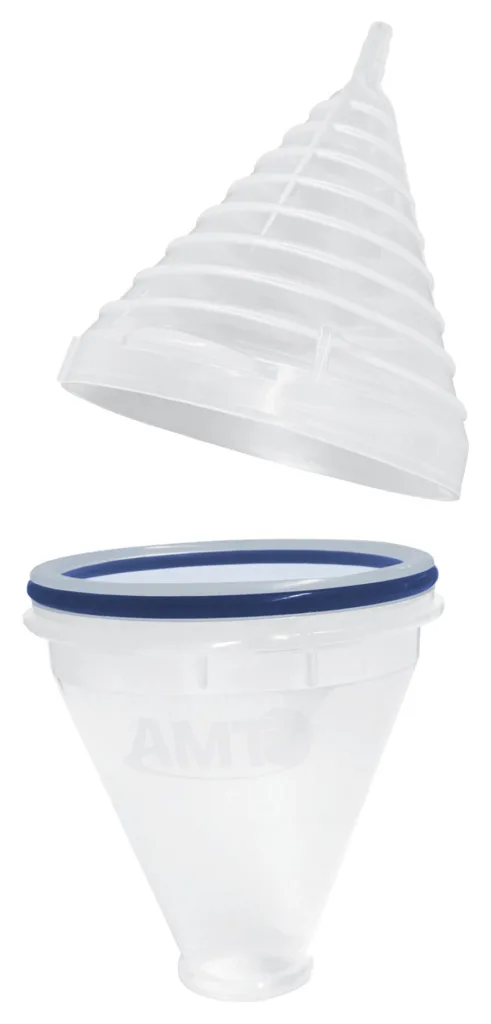
Applied Medical Technology, Inc. has received U.S. Food and Drug Administration 510(k) clearance for Explant Express, a suction-based breast implant retrieval device intended for use during explantation of ruptured silicone breast implants, positioning the product within routine plastic and reconstructive surgery workflows rather than specialty equipment pathways.
The clearance matters less for what Explant Express is than for what it implicitly acknowledges about current clinical practice. Ruptured silicone implant removal remains a technically variable, operator-dependent procedure that relies heavily on improvised techniques, manual handling, and operating room tolerance for contamination, time variability, and post-procedural uncertainty. Regulatory approval of a purpose-built retrieval device signals growing acceptance that explantation itself is a procedural category worth standardising rather than an ancillary surgical task.
Why FDA clearance highlights a procedural gap rather than a breakthrough device
From a regulatory perspective, Explant Express fits squarely within the incremental innovation lane. It leverages existing operating room suction infrastructure, avoids new energy sources or capital equipment, and does not alter surgical anatomy or implant design. This is precisely why 510(k) clearance was achievable without extensive clinical outcomes data.
Yet the clearance still exposes a long-standing gap in device support for explantation. While breast implant placement has benefited from decades of tooling, training pathways, and outcome benchmarks, implant removal, particularly in rupture cases, has largely remained dependent on surgeon technique rather than standardized devices.
Industry observers note that this imbalance has persisted because explantation was historically viewed as a corrective event rather than a core procedural category. As explant volumes rise due to aging implants, rupture awareness, and heightened scrutiny of implant-related complications, that framing is becoming harder to sustain.
What Explant Express reveals about evolving explantation volumes and complexity
The timing of the clearance is notable. Plastic and reconstructive surgeons are seeing a steady increase in explant procedures driven by implant longevity limits, patient-driven removals, and revision surgeries following rupture or capsular complications. Ruptured silicone implants, in particular, present a uniquely messy and time-intensive challenge due to gel migration, adherence to tissue planes, and the need for meticulous field control.
Clinicians tracking the field suggest that while rupture is not a new problem, tolerance for prolonged operative time, glove changes, and repeated irrigation has decreased as operating room efficiency pressures intensify. Devices that promise to contain silicone gel and reduce field contamination appeal less as productivity enhancers and more as risk management tools.
Explant Express directly targets this operational pain point by attempting to confine silicone gel during retrieval rather than relying on manual extraction and suction improvisation. The device’s separable chamber design also reflects growing interest in post-explant inspection, documentation, and material accountability, even if not formally mandated.
Incremental innovation, but aligned with real surgical workflow constraints
From an engineering standpoint, Explant Express does not introduce novel mechanics. Its value proposition lies in compatibility rather than disruption. By connecting to standard operating room suction and avoiding proprietary systems, the device lowers adoption friction, particularly in outpatient surgical centers where capital constraints are tighter.
Medical device analysts view this approach as pragmatic rather than conservative. Devices that require new consoles, training modules, or reimbursement negotiations face steep barriers in elective and semi-elective surgical categories. Explant Express instead competes on ease of integration, which may be its most commercially relevant attribute.
However, this same design philosophy limits differentiation. Without proprietary suction dynamics or measurable outcome advantages, adoption will hinge on surgeon preference, anecdotal efficiency gains, and peer diffusion rather than formal guideline inclusion.
How this compares with existing explantation techniques
Current explantation techniques for ruptured silicone implants range from manual scooping and suction-assisted removal to extended capsulotomy and en bloc approaches in select cases. None are standardized, and most depend on surgeon experience and tolerance for contamination risk.
What Explant Express offers is not a replacement for surgical judgment but an attempt to formalize one step of the process. Industry observers suggest that its closest comparator is not another device but the status quo of improvised suction and manual handling. This sets a low bar for improvement but also complicates objective assessment of benefit.
There is no clear clinical endpoint that Explant Express improves in a measurable way. Operating time reduction, glove changes, and field cleanliness are meaningful to surgeons but difficult to quantify consistently across cases. Without comparative data, claims of efficiency remain experiential rather than evidence-backed.
Regulatory clarity does not eliminate adoption uncertainty
The regulatory pathway for Explant Express is relatively straightforward, but regulatory clearance does not guarantee clinical uptake. Unlike implants themselves, explantation tools are rarely specified in procedural guidelines or reimbursement codes. Surgeons typically absorb device costs into procedural economics or pass them through facility supply budgets.
Reimbursement specialists note that unless payers begin scrutinizing explantation efficiency or complication rates more closely, there is little external pressure to adopt new retrieval tools. This places the burden of value demonstration squarely on manufacturers and early adopters.
Additionally, regulatory watchers point out that 510(k) clearance does not address long-term safety or outcomes beyond substantial equivalence. While this is appropriate for the device category, it limits how strongly the clearance can be used to drive behavior change among conservative surgical practices.
What this signals about the future of explant-focused device development
Explant Express may represent an early signal rather than a final solution. As explant volumes rise and surgical documentation expectations increase, demand for tools that support containment, traceability, and procedural consistency is likely to grow.
Medical device strategists believe that explantation could evolve into a more formally defined procedural segment, particularly if regulatory agencies or professional societies begin issuing guidance on rupture management, documentation, or material handling. In that scenario, early entrants like Explant Express could benefit from category establishment rather than device-specific differentiation.
However, that future remains uncertain. Without stronger clinical or regulatory drivers, explant-focused devices risk being viewed as optional conveniences rather than essential tools.
Manufacturing and scalability considerations remain secondary but relevant
Applied Medical Technology, Inc. manufactures Explant Express in the United States, which may appeal to facilities prioritizing domestic supply chains and consistent availability. From a scalability standpoint, the device’s simplicity favors volume manufacturing without complex quality constraints.
Yet manufacturing strength alone does not ensure market penetration. Distribution, surgeon education, and peer validation will likely determine whether Explant Express becomes a commonly stocked tool or remains a niche preference.
Clinicians tend to adopt new procedural tools when they are recommended by peers or embedded into training environments. Without residency or fellowship exposure, uptake may skew toward experienced surgeons seeking incremental workflow refinement rather than broad-based standardization.
Risks and unresolved questions that remain after clearance
Several uncertainties remain unresolved following clearance. There is no publicly available data on comparative operating time, complication rates, or post-explant outcomes associated with Explant Express. It is also unclear how the device performs across varying rupture patterns, implant sizes, and degrees of gel migration.
There is also the question of procedural creep. Devices designed to simplify one aspect of surgery can inadvertently encourage less disciplined technique elsewhere if users over-rely on containment rather than meticulous dissection.
Finally, reimbursement dynamics remain opaque. Without explicit coding or payer recognition, cost sensitivity may limit adoption in lower-margin settings despite perceived workflow benefits.
What clinicians, regulators, and industry watchers are likely to track next
Clinicians will watch peer feedback and real-world usability rather than formal trial data. Ease of handling, reliability under suction, and compatibility with existing workflows will matter more than marketing claims.
Regulatory observers will monitor whether explantation tools begin attracting greater scrutiny as explant volumes rise. Any shift toward formal guidance could accelerate demand for standardized devices.
Industry analysts will look for signs that explantation is emerging as a discrete device category rather than a procedural afterthought. If that shift occurs, Explant Express may be remembered less for its mechanics and more for its timing.

What Applied Medical Technology’s Explant Express FDA clearance reveals about breast implant explantation workflows added by Pallavi Madhiraju on
View all posts by Pallavi Madhiraju →