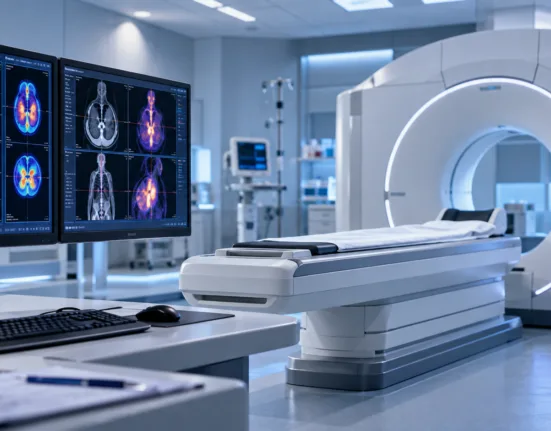
GE HealthCare Technologies Inc. has received U.S. Food and Drug Administration 510(k) clearance for three components of its next-generation SIGNA magnetic resonance imaging portfolio: the SIGNA Sprint with Freelium 1.5T MRI system, the SIGNA Bolt 3T MRI scanner, and the SIGNA One AI-powered workflow ecosystem. The clearances position the imaging-focused company to address rising MRI demand, workforce constraints, sustainability pressures, and access gaps across hospital, outpatient, and remote care settings.
Why this clearance matters beyond incremental MRI hardware refresh cycles
Industry observers tracking MRI innovation note that the announcement is not primarily about incremental image quality gains. Instead, it reflects a strategic attempt to reframe MRI value around operational autonomy, sustainability resilience, and workflow standardization rather than pure magnet performance. Over the past decade, MRI competition has largely converged on image fidelity, with diminishing clinical differentiation at the magnet level. The pressure point has shifted toward throughput, uptime, and staffing efficiency, particularly as imaging volumes rise faster than technologist capacity.
The combination of sealed magnet technology, AI-mediated workflows, and reduced infrastructure dependency suggests GE HealthCare is prioritizing system-level resilience rather than headline performance metrics. This matters in an environment where MRI utilization growth is increasingly constrained by operational bottlenecks rather than scanner availability alone.
What the helium-free 1.5T strategy signals about access, resilience, and site economics
The SIGNA Sprint with Freelium platform reflects a broader industry response to helium supply volatility, cost escalation, and operational fragility exposed during recent global disruptions. By reducing helium dependence to below one percent while preserving conventional power requirements and homogeneity specifications, the system is positioned as a risk-mitigation tool rather than a cost-cutting device.
Regulatory watchers note that helium independence has implications beyond sustainability narratives. Reduced reliance on cryogen refills and venting infrastructure lowers the probability of catastrophic downtime, particularly in regions with unstable power grids or limited service access. The extended ride-through capability and autonomous magnet recovery are especially relevant for rural hospitals, emerging markets, and outpatient centers where field engineer availability can be inconsistent.
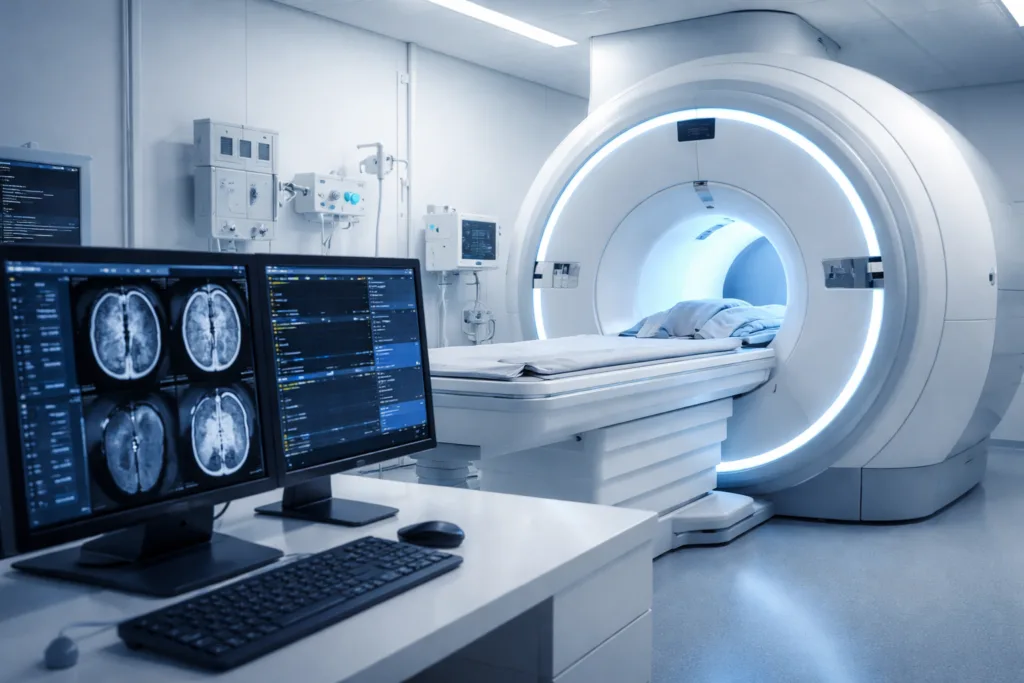
Clinicians tracking deployment patterns believe this could meaningfully alter MRI siting decisions. Facilities previously unable to justify conventional MRI installation due to infrastructure constraints may now reconsider, potentially expanding diagnostic access without requiring full-scale facility upgrades.
How operational autonomy changes the MRI service and staffing equation
A notable element of the SIGNA Sprint platform is its emphasis on operational autonomy rather than technologist augmentation alone. Automated magnet monitoring, self-protective ramp-down and recovery, and reduced service dependency suggest a design philosophy that anticipates staffing shortages as a structural, not cyclical, challenge.
Workforce burnout and variability in technologist experience have become persistent concerns across radiology departments. Systems that reduce the cognitive and procedural burden on staff may offer more value than marginal scan-time reductions. Industry observers suggest this framing aligns with a shift toward standardizing imaging outcomes across heterogeneous staffing environments, particularly in multi-site health systems.
What the SIGNA Bolt 3T platform reveals about the future of premium MRI positioning
At the high end of the portfolio, SIGNA Bolt reflects a recalibration of what defines premium MRI. Rather than emphasizing maximum gradient strength or niche research capabilities alone, the platform pairs research-grade performance with reduced power consumption and spatial efficiency.
The approximately thirty percent reduction in power consumption relative to prior-generation systems signals a response to hospital energy cost scrutiny and sustainability mandates. Reduced equipment room requirements further address space constraints in urban hospitals where expansion options are limited.
Clinicians involved in advanced neuro and oncology imaging note that premium systems increasingly need to justify their footprint through both clinical versatility and operational efficiency. The inclusion of redesigned coil architecture and patient-centric workflow options, such as feet-first scanning, suggests GE HealthCare is addressing rescan rates and patient tolerance as economic variables rather than comfort features.
Why SIGNA One reframes AI from image enhancement to workflow governance
The most structurally significant component of the clearance may be SIGNA One, which positions artificial intelligence as a workflow governance layer rather than a post-processing tool. By integrating patient positioning verification, contactless gating, in-room visualization, and exam orchestration, the platform seeks to reduce variability across the entire imaging pathway.
Regulatory observers note that workflow AI occupies a different risk and adoption profile than diagnostic AI. These systems do not claim diagnostic autonomy, but they materially influence scan consistency, exam duration, and staff training requirements. As such, they may face fewer regulatory barriers while delivering outsized operational returns.
Industry analysts believe this approach aligns with hospital procurement behavior, where workflow optimization tools often see faster adoption than diagnostic algorithms due to clearer return-on-investment narratives and lower medico-legal exposure.
What is genuinely new versus evolutionary in this portfolio update
While many individual components draw on previously introduced technologies such as deep learning reconstruction and AI-assisted positioning, the novelty lies in their consolidation into a unified operating environment. The integration of autonomy, sustainability, and AI under a single regulatory clearance framework suggests a platform mindset rather than a modular upgrade strategy.
This platform-level positioning contrasts with incremental feature releases that often struggle to achieve widespread adoption due to training complexity and fragmented value delivery. Industry observers suggest that standardization across entry-level and premium systems could accelerate enterprise-level deployments rather than isolated site upgrades.
Competitive context within the global MRI landscape
The MRI market remains highly consolidated, with competition focused on lifecycle cost, service models, and digital integration rather than pure image quality. Competitors are pursuing similar sustainability and workflow narratives, but execution depth varies.
GE HealthCare’s emphasis on sealed magnets and autonomous operations may offer differentiation in regions sensitive to infrastructure reliability and staffing variability. However, adoption will ultimately depend on demonstrated reductions in downtime, exam variability, and total cost of ownership rather than technical specifications alone.
Regulatory and commercialization considerations still in play
Although U.S. clearance establishes near-term commercialization momentum, global rollout will hinge on regional regulatory timelines and reimbursement environments. Anticipated CE marking later in the decade introduces execution risk related to regional compliance requirements and market readiness.
Reimbursement frameworks do not yet explicitly reward workflow efficiency or sustainability improvements, placing the burden on providers to internalize these benefits. Industry observers note that purchasing decisions may favor systems that demonstrably reduce staffing strain and operational disruptions, even in the absence of direct reimbursement incentives.
What clinicians, regulators, and hospital operators will watch next
Clinicians will be watching real-world consistency across technologist skill levels and patient populations. Regulators will monitor how AI-mediated workflows influence standard-of-care expectations without encroaching on diagnostic decision-making. Hospital operators will scrutinize uptime metrics, service call reduction, and total cost of ownership over multi-year deployments.
The success of this portfolio update will depend less on early adoption headlines and more on whether it can measurably stabilize MRI operations under real-world constraints.