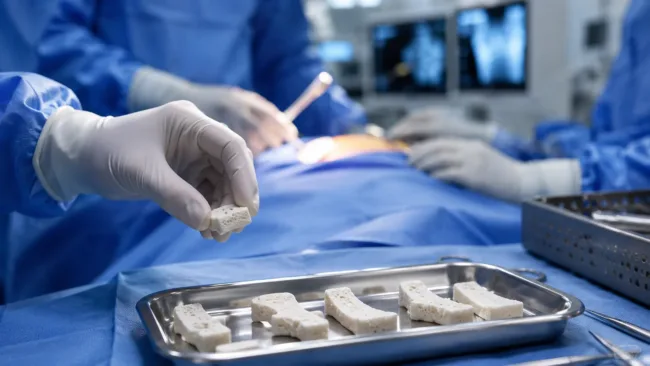
Theradaptive, Inc. has received U.S. Food and Drug Administration authorization to advance OsteoAdapt SP into the pivotal OASIS study for spinal fusion procedures. The investigational regenerative therapeutic will be evaluated as an alternative to autologous and allograft bone graft in single-level TLIF, ALIF, and LLIF procedures for symptomatic degenerative diseases of the lumbosacral spine, moving the U.S.-based biotechnology firm closer to a potential premarket approval pathway.
Why Theradaptive’s OsteoAdapt SP trial matters beyond another spine device milestone
The FDA authorization is important because it shifts OsteoAdapt SP from feasibility-stage promise into the kind of pivotal evidence generation that can decide whether a biologics-based spine product is clinically credible, commercially viable, and regulatively durable. For Theradaptive, the milestone is not simply about enrolling another study. It is about testing whether a targeted rhBMP-2 variant can solve a persistent orthobiologics problem: how to stimulate predictable bone formation without exposing surgeons, patients, and payers to the limitations that have shaped the category for decades.
Spinal fusion remains one of the most commercially attractive and clinically demanding areas of musculoskeletal medicine. Surgeons need reliable fusion, patients need pain and function improvement, and hospitals need products that can fit into procedural workflows without adding unacceptable safety, cost, or handling complexity. Autograft bone has long been treated as a biological benchmark because it contains osteogenic, osteoconductive, and osteoinductive properties. However, harvesting a patient’s own bone can add pain, morbidity, operating time, and variability. Allograft and synthetic substitutes can avoid donor-site complications, but they may not always deliver the same biological potency in higher-risk patients or complex fusion environments.
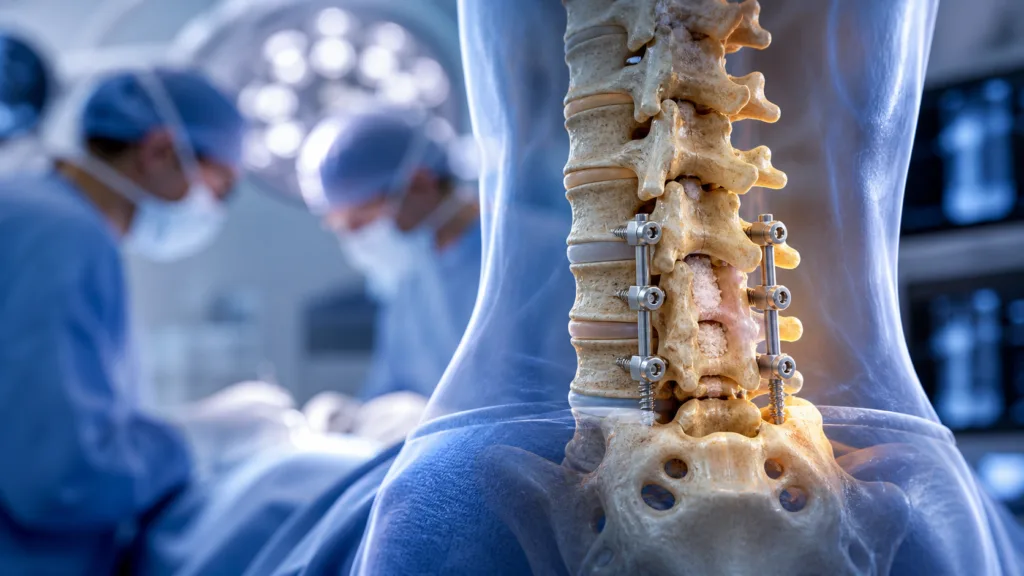
That is where OsteoAdapt SP’s positioning becomes interesting. Theradaptive is not trying to enter a vacant market. It is trying to enter a crowded but imperfect market where familiarity does not necessarily mean satisfaction. The unresolved question is whether pivotal data can show that targeted, sustained bone regeneration translates into outcomes that are not only statistically persuasive but also practically meaningful for spine surgeons who already have established graft preferences.
How the OASIS pivotal study could broaden the addressable spinal fusion opportunity
The OASIS study’s inclusion of TLIF, ALIF, and LLIF is strategically significant because those procedures represent different surgical approaches, anatomical access points, cage environments, and clinical workflows. A product that can generate useful data across all three could carry a broader commercial story than one tied narrowly to a single fusion technique. That breadth could also make OsteoAdapt SP more relevant to spine practices that use multiple approaches depending on pathology, anatomy, surgeon training, and patient risk profile.
This is not a small nuance. In spine biologics, the procedure label matters. A product’s commercial ceiling can be shaped as much by the exact cleared indication as by the underlying technology. If the pivotal study supports a broad indication across major lumbar interbody fusion approaches, Theradaptive could have a stronger case with hospital value analysis committees and specialist surgeons. It would also give the biotechnology firm a more flexible launch narrative if OsteoAdapt SP reaches U.S. commercialization.
The risk is that broader procedural ambition can also raise the evidentiary burden. TLIF, ALIF, and LLIF are not interchangeable from a surgical, biomechanical, or complication standpoint. Regulators and clinicians will likely scrutinize whether fusion outcomes are consistent across approaches, whether safety signals differ by access route, and whether the investigational product performs predictably across patient subgroups. A broad pivotal trial can create a stronger platform, but only if the dataset is robust enough to avoid looking diluted or heterogeneous.
Why the comparison with legacy recombinant bone graft products will be unavoidable
OsteoAdapt SP is powered by Theradaptive’s AMP2 platform and uses a proprietary rhBMP-2 variant engineered for targeted, sustained bone regeneration. That makes comparison with existing recombinant bone morphogenetic protein products unavoidable, even if the mechanism, formulation, delivery profile, and proposed risk-benefit balance differ. The commercial question is not whether surgeons understand BMP biology. They do. The question is whether a next-generation BMP-based product can convince them that the historical compromises of the category have been meaningfully improved.
Legacy recombinant protein products have shown that biologics can create substantial value in spine surgery, but the category has also been shaped by debates around dose, off-target bone formation, inflammation, ectopic effects, cost, and off-label use. That history cuts both ways for Theradaptive. On one hand, it validates the market’s willingness to pay for biologically active fusion technologies when they deliver compelling outcomes. On the other hand, it means any new entrant will face a cautious audience that already knows the difference between elegant biology and dependable surgical performance.
Theradaptive’s core claim, in industry terms, is that targeted persistence could improve the therapeutic window. If OsteoAdapt SP can localize activity more effectively and reduce unwanted biological spread, the product could offer a cleaner value proposition than older graft technologies. However, that proposition still has to be proven in the clinic. The pivotal trial will need to show not just fusion success, but also a safety profile that supports routine use in real-world spine practice.
What clinicians and regulators are likely to watch as the pivotal data mature
The central clinical question will be whether OsteoAdapt SP can demonstrate reliable fusion in single-level lumbar procedures while avoiding complications that would undermine confidence in a biologically active graft substitute. Fusion rate will likely be closely watched, but it will not be the only measure that matters. Pain reduction, functional improvement, reoperation rates, neurological safety, radiographic interpretation, and adverse event patterns could all influence how clinicians interpret the final dataset.
Regulators will also pay attention to trial execution. Spine studies can be vulnerable to variability in surgeon technique, imaging assessment, patient selection, follow-up adherence, and background procedural factors. For a product intended to support bone regeneration across several fusion approaches, disciplined site training and consistent data collection become more than operational details. They become part of the credibility of the evidence package.
The earlier treatment of roughly 100 participants gives Theradaptive a clinical foundation, but pivotal trials exist because early experience is not enough to establish broad approval-ready confidence. The company still has to show that the product’s performance holds up under larger, more rigorous, and more commercially relevant conditions. For industry observers, the most important signal may not be whether the study simply reaches its primary endpoint. It will be whether the totality of data supports a product that surgeons can adopt without needing excessive caveats.
Why commercialization may be harder than clinical validation alone suggests
Even if OsteoAdapt SP produces strong pivotal results, commercialization in spine biologics will not be automatic. Hospitals and ambulatory surgical centers are increasingly cost-sensitive, and biologics often face tougher scrutiny because their upfront cost can be high. Theradaptive would need to demonstrate that any premium is justified by clinical performance, procedural efficiency, reduced complication burden, lower revision risk, or better consistency in patients who are poor candidates for traditional grafting strategies.
Reimbursement and purchasing dynamics could become a major test. Spine surgeons may appreciate innovation, but hospital systems often demand evidence that translates into economic logic. If OsteoAdapt SP is priced as a premium biologic, Theradaptive will need health-economic arguments that go beyond fusion rates. The company may need to show where the product fits best, whether in standard single-level procedures, higher-risk degenerative cases, patients where autograft is less attractive, or settings where existing graft substitutes are viewed as insufficient.
Manufacturing will also matter. Protein therapeutics used in surgical settings require consistency, scalability, quality control, and supply reliability. A small biotechnology firm can win scientific credibility through trial execution, but commercial adoption requires dependable product availability, surgeon education, distributor strategy, post-market surveillance, and medical affairs depth. The gap between pivotal success and market penetration can be wide, especially in procedure-driven specialties where surgeon confidence builds gradually.
How OsteoAdapt SP could reshape the orthobiologics competitive landscape if it succeeds
The orthobiologics market has long been attractive because the clinical need is durable and the procedure base is large. Degenerative spinal disease is tied to aging demographics, chronic back pain prevalence, and the continued use of fusion for selected patients who fail conservative management. A next-generation graft substitute that can deliver strong fusion outcomes with a more controlled safety profile would have obvious strategic value for surgeons, hospitals, and potential commercial partners.
For Theradaptive, success in OASIS could create optionality beyond a single product launch. Positive pivotal data would strengthen the AMP2 platform story, supporting the idea that targeted protein therapeutics can be applied across orthopedic, dental, soft tissue, and potentially other regenerative settings. That platform angle matters because investors and strategic acquirers often look for repeatability, not just one asset. A credible spine dataset could therefore become a validation event for the broader delivery technology.
However, the opposite is also true. If the pivotal trial exposes safety concerns, inconsistent fusion performance, or limited differentiation versus established graft materials, the market may treat OsteoAdapt SP as an incremental product rather than a category reset. In a field already crowded with bone graft substitutes, incremental is a dangerous place to be. The winners are usually products that are clinically persuasive, economically defensible, and easy enough for surgeons to integrate without disrupting established workflows.
What happens next for Theradaptive as OsteoAdapt SP moves toward approval-stage evidence
Theradaptive’s next phase will be defined by execution rather than announcement momentum. Enrollment, site performance, imaging quality, endpoint discipline, adverse event monitoring, and communication with regulators will determine whether the OASIS trial can support a PMA submission. The company’s ability to manage a pivotal study across a complex spine surgery landscape may become just as important as the biology behind OsteoAdapt SP.
For clinicians, the trial could help clarify whether targeted rhBMP-2 delivery can offer a better balance between regenerative potency and surgical safety. For regulators, it will test whether the product’s design and clinical data justify use across multiple lumbar fusion approaches. For industry observers, it could signal whether the spine biologics market is ready for a serious challenger to long-established graft paradigms.
The milestone is therefore meaningful, but not conclusive. Theradaptive has moved OsteoAdapt SP into the evidence-generating phase that can create real commercial value. Now the harder test begins: proving that next-generation bone regeneration can perform consistently enough to change how spinal fusion is practiced.