FAR Biotech Inc., a computational drug discovery company integrating quantum mechanics with deep learning AI, has formally expanded its operations to Madison, Wisconsin. The announcement, made on January 21, 2026, confirms that the U.S.-based preclinical-stage firm has established a presence at Forward BIOLABS, a shared innovation space that supports early-stage life sciences companies. This geographic and strategic shift reflects the company’s ongoing collaborations with the McArdle Laboratory for Cancer Research at the University of Wisconsin–Madison and the Versiti Blood Research Institute in Milwaukee, and signals deeper integration with the state’s emerging biohealth ecosystem.
What FAR Biotech’s expansion reveals about the evolution of AI-first drug discovery platforms
The news marks more than a relocation—it underscores a philosophical and technological inflection point in the evolving field of AI-powered drug development. FAR Biotech’s core proposition hinges on a physics-based approach: the application of quantum mechanical principles to molecular modeling, augmented by machine learning, cheminformatics, and big data. This stands in contrast to most AI drug discovery platforms that lean heavily on empirical data, trained neural networks, and probabilistic modeling techniques.
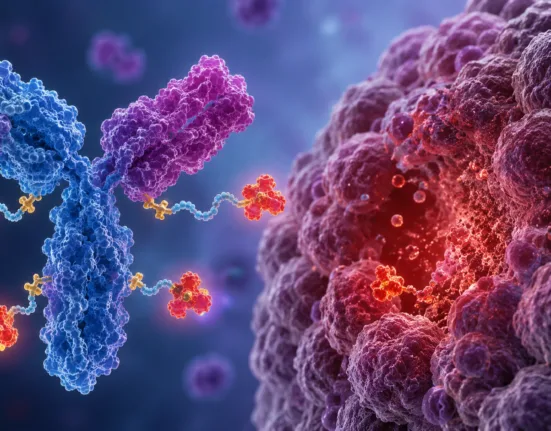
FAR Biotech’s QuantumAI platform is designed to simulate how drug-like molecules behave at the quantum level, thereby unlocking novel binding modes, structurally diverse scaffolds, and unconventional interaction profiles. According to the company, this methodology enables the identification of drug candidates that would be unlikely to emerge from standard structure-activity relationship (SAR) modeling or even generative AI chemistry pipelines.
While the company has yet to publicly disclose candidate-specific preclinical or IND-enabling data, it claims validation of its approach across oncology, neurodegeneration, and infectious diseases. Industry observers suggest that what differentiates FAR Biotech is not only its emphasis on first-principles physics, but also its claim of doing so with lower computational cost—a potential advantage as GPU scarcity, cloud compute pricing, and AI resource bottlenecks begin to affect industry scalability.
Quantum simulation in drug design has traditionally faced skepticism over practical applicability, but FAR Biotech’s progress suggests that hybrid models combining physics and data may now be ready for platform maturation. However, the broader scientific community will likely require peer-reviewed data, reproducibility, and head-to-head comparison with conventional computational chemistry methods before validating this as more than theoretical potential.
Why Wisconsin’s innovation infrastructure is drawing next-gen biotech bets
FAR Biotech’s decision to scale in Madison also reflects a shifting geography of biotech innovation. For years, the U.S. biotech ecosystem has been dominated by high-cost innovation hubs like Boston, San Diego, and the San Francisco Bay Area. But rising operating costs, talent competition, and infrastructure constraints in those regions have driven a new generation of AI and platform biotech startups to consider alternative hubs—especially those that offer access to translational science, academic partnership opportunities, and a lower-cost base for early-stage development.
Wisconsin has aggressively positioned itself as one of those next-generation biohealth clusters. The state was awarded a $49 million Phase 2 Implementation Grant by the U.S. Economic Development Administration’s Tech Hubs program in 2024, a move that formally elevated the region’s profile as a federally recognized center of innovation in precision medicine, diagnostics, and computational biology. Forward BIOLABS, where FAR Biotech has located its new operations, is part of a larger life sciences infrastructure play that includes startup accelerators, research institutes, and wet lab spaces co-located with university assets.
BioForward Wisconsin, a public-private initiative, has been instrumental in nurturing this ecosystem. CEO Lisa Johnson, who helped architect the state’s Tech Hubs grant, pointed to FAR Biotech’s arrival as validation of Wisconsin’s growing pull for scientifically advanced, AI-driven companies that require a mix of deep expertise and experimental agility.
While Wisconsin is still relatively new to the ranks of dominant biotech states, clinicians and translational investors note that its blend of talent, infrastructure, and university-driven discovery makes it an attractive testbed for preclinical validation, particularly for platforms that need wet-lab partnership, but are not yet ready for full clinical operations.
What remains unproven despite the QuantumAI technology pitch
Despite the buzz around the move, significant uncertainties remain regarding FAR Biotech’s clinical trajectory and commercial readiness. The company has not disclosed any active development candidates, timelines for Investigational New Drug (IND) submissions, or third-party validation of its modeling predictions. In a crowded AI-drug discovery space increasingly pressured to show translatability beyond preclinical modeling, these omissions may raise questions.
Quantum simulation itself, while scientifically robust, must still overcome real-world pharmacokinetic and pharmacodynamic hurdles. Experts in computational chemistry suggest that even the most precise quantum models must contend with biological complexity, including off-target effects, metabolic variability, and formulation constraints. For QuantumAI to succeed, its predictions must be not only novel but also druggable, safe, and clinically meaningful.
Additionally, without detailed insight into the platform’s performance metrics—such as hit rate versus traditional computational methods, predictiveness of binding affinity, or lead optimization turnaround time—FAR Biotech’s claim of superior efficiency remains qualitative. Regulatory watchers also note that platforms without clear mechanistic explainability or reproducibility often struggle to gain traction with regulators, particularly in indications with high safety thresholds like neurodegeneration or oncology.
Another challenge lies in downstream scalability. While computational modeling may allow FAR Biotech to accelerate early discovery, advancing to later-stage development requires capital-intensive investment in CMC (Chemistry, Manufacturing, and Controls), toxicology, and clinical operations. Unless the company forms partnerships with established pharmaceutical firms or brings in substantial Series B/C funding, it may face difficulty in translating early promise into pipeline execution.
What clinicians and regulators will be watching as collaborations emerge
The company’s reference to “ongoing collaborations” with the University of Wisconsin–Madison and the Versiti Blood Research Institute suggests that its scientific integration into the regional ecosystem is already underway. What remains to be seen is whether these collaborations yield co-authored publications, early-stage therapeutic assets, or joint validation programs that de-risk the platform for further development.
For clinicians in particular, the acid test of FAR Biotech’s approach will come in how its novel small molecules perform in cell-based assays, animal models, and ultimately in human systems. Targets in neurodegeneration, which often suffer from low tractability and high clinical failure rates, may especially benefit from new chemistry if off-target toxicity and blood-brain barrier challenges can be managed.
For regulators, transparency around data provenance, model explainability, and reproducibility will be critical. As agencies like the U.S. Food and Drug Administration begin to develop formal frameworks for the evaluation of AI-enabled therapeutics, platforms like FAR Biotech’s may set early precedents for what quantum-augmented discovery can (or cannot) reliably achieve.
Industry observers suggest that the company’s existing participation in the Johnson & Johnson Innovation JLABS network may also prove critical in this next phase. If FAR Biotech can leverage that ecosystem for mentorship, early-stage clinical input, or even BD partnerships, it may find a clearer path to de-risking its lead programs.
What this signals for the broader AI–physics convergence in drug R&D
At a macro level, FAR Biotech’s expansion and positioning reflect a growing appetite for first-principles innovation in an AI-saturated market. As many AI drug discovery companies compete on model complexity, dataset access, and generative capabilities, the return to quantum mechanics—ironically one of the oldest theoretical disciplines in physics—feels both contrarian and progressive.
If successful, the QuantumAI framework could become a cornerstone of a new subfield: physics-informed drug discovery that combines interpretability, chemical novelty, and computational parsimony. Whether that will attract scaled investment and clinical validation remains an open question—but the move to Madison suggests that FAR Biotech intends to pursue that answer through regional partnerships, scientific immersion, and methodical platform growth rather than headline-chasing acceleration.