SonoMotion Inc. has received U.S. Food and Drug Administration (FDA) 510(k) clearance for Break Wave, a non-invasive lithotripsy device designed to fragment kidney and ureteral stones using low-pressure focused ultrasound. The device enables real-time ultrasound-guided treatment in fully awake patients without anesthesia, representing a potential shift in procedural settings, patient management, and care access for nephrolithiasis. The announcement follows the prior FDA clearance of Stone Clear, SonoMotion’s companion device for post-fragmentation clearance, completing its anesthesia-free kidney stone treatment platform.
What this clearance reveals about the next stage of non-invasive kidney stone management
The clearance of Break Wave highlights growing regulatory confidence in replacing conventional energy-based lithotripsy approaches with image-guided, low-intensity alternatives. Traditional extracorporeal shock wave lithotripsy (ESWL), once dominant in non-invasive stone treatment, has long suffered from declining utilization due to inconsistent fragmentation efficiency, requirement for anesthesia or sedation, and limited effectiveness for lower pole or larger stones. Meanwhile, ureteroscopy has become the procedural workhorse—effective, but invasive, resource-intensive, and associated with stent discomfort and follow-up burdens.
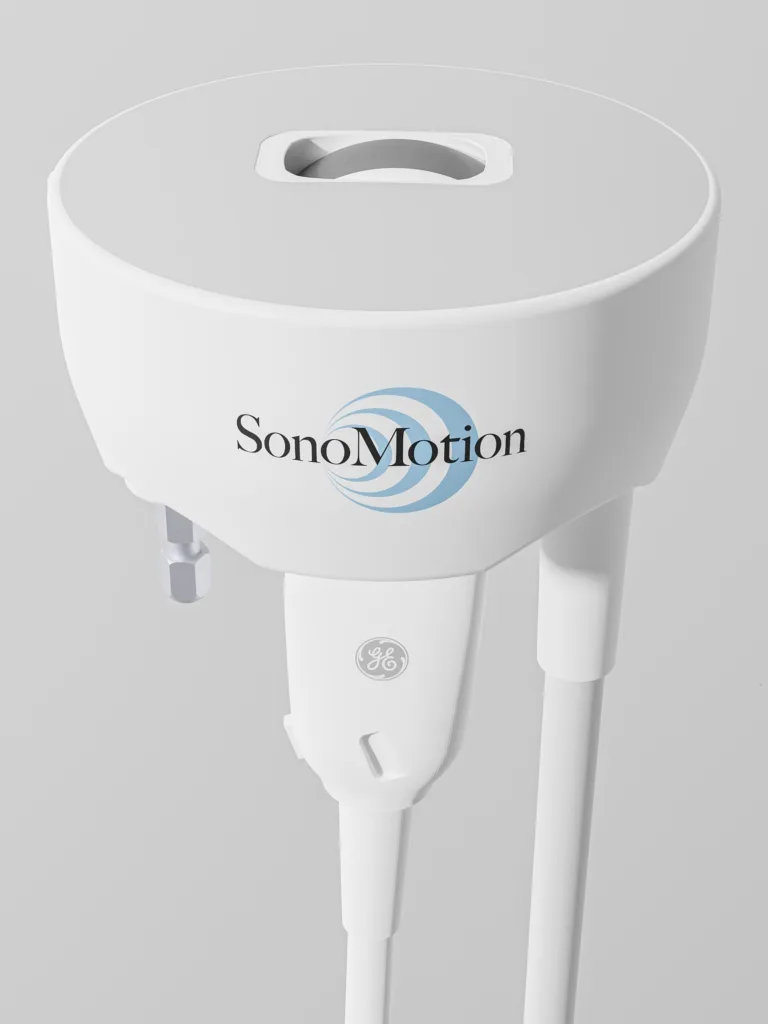
By contrast, Break Wave’s use of focused ultrasound to generate standing stress waves inside the stone under real-time imaging offers both mechanical precision and workflow flexibility. According to clinicians familiar with the platform, its ability to treat awake patients in outpatient or office-based settings could reshape the economics and accessibility of stone management—especially for asymptomatic stones or cases where anesthesia risks are elevated. The device’s ability to avoid stent placement further positions it for same-day use without downstream intervention.
While the concept of focused ultrasound fragmentation is not entirely new, Break Wave appears to represent the first FDA-cleared platform to enable fully anesthesia-free lithotripsy across both renal and ureteral targets in real-world outpatient contexts. This suggests a departure from theoretical promise to operational deployment.
Why FDA confidence in real-time image-guided fragmentation matters for future device classes
The 510(k) clearance signals regulatory endorsement of real-time, image-guided energy modulation as a credible approach to achieving stone fragmentation without compromising safety. This is particularly notable given historical concerns about tissue injury, incomplete fragmentation, or unintended migration during ultrasonic procedures. Industry observers suggest that real-time ultrasound guidance—combined with low-pressure wave delivery—played a key role in differentiating Break Wave from past devices with less granular control.
Moreover, the clearance appears to build on a broader pattern of FDA support for ultrasound-based interventions, including approvals in high-intensity focused ultrasound (HIFU) for prostate disease and uterine fibroids. While Break Wave operates at significantly lower energy thresholds, the overarching principle of non-invasive acoustic manipulation is gaining traction across therapeutic areas.
This context raises the possibility that FDA’s decision may accelerate clinical development and commercial momentum for other ultrasound-based renal and urological platforms, particularly those seeking to challenge ureteroscopic dominance with lower risk profiles and simplified logistics.
How Break Wave could change clinical triage and early-stage intervention strategies
One of the most significant changes enabled by Break Wave is the potential to intervene earlier and more selectively in the natural history of stone disease. Nephrolithiasis is often managed conservatively until a stone becomes symptomatic, obstructive, or recurrent. For patients with asymptomatic stones or those waiting for spontaneous passage, the promise of a no-anesthesia, in-clinic intervention could prompt clinicians to rethink thresholds for active management.
Clinicians tracking the field note that Break Wave’s positioning aligns well with broader urology trends toward minimizing operating room utilization, stent use, and post-procedural follow-ups. It may also expand eligibility among patient populations typically excluded from anesthesia-based procedures—including elderly individuals, those with comorbidities, or patients in rural or resource-limited settings where surgical facilities are scarce.
In this regard, Break Wave is less a direct replacement for ureteroscopy and more a pathway-enabling modality that could broaden the decision-making window before invasive intervention becomes necessary.
What risks and unanswered questions remain around fragmentation efficacy and patient selection
Despite the platform’s promise, several critical questions remain. Fragmentation efficacy across stone types, sizes, and locations has not been fully disclosed in comparative data. Traditional ESWL is known to be less effective against cystine and brushite stones or larger aggregates exceeding 2 cm. It remains unclear whether Break Wave delivers consistent results across similar clinical scenarios.
Further, while avoiding anesthesia is a patient-friendly advantage, tolerability of real-time fragmentation in awake individuals—particularly for ureteral stones—may vary depending on stone burden and patient pain thresholds. Industry analysts suggest that adoption may initially cluster around smaller, accessible stones or elective interventions for non-obstructive cases.
Reimbursement may also present challenges. While traditional lithotripsy procedures are well-categorized under current procedural terminology (CPT) codes, payers may hesitate to approve office-based interventions without longitudinal data on efficacy, recurrence, and need for subsequent interventions. Procedural bundling with Stone Clear for post-fragment clearance could further complicate billing pathways unless a unified treatment protocol is developed.
Manufacturing scalability and clinician training are also near-term risks, particularly as SonoMotion prepares for wider commercialization ahead of the American Urological Association (AUA) 2026 meeting.
How Break Wave fits into a broader platform vision—and why it matters for market differentiation
SonoMotion’s strategy appears to hinge not on standalone device deployment but on the creation of an integrated treatment pathway. The company’s two-device platform—fragmentation via Break Wave and clearance via Stone Clear—suggests an attempt to replicate the functional outcomes of ureteroscopy (stone removal and clearance) without procedural invasiveness.
The prior de novo clearance of Stone Clear in 2024 created the regulatory foundation for this modular platform, and Break Wave’s recent 510(k) clearance completes the pathway’s pre-commercial validation. Together, they offer a differentiated value proposition to urologists: intervention without OR time, sedation, or stent dependence. Analysts suggest this could give SonoMotion a first-mover advantage in defining a new procedural archetype—an “awake lithotripsy-plus-clearance” model.
By framing the platform as both disruptive and clinically complete, SonoMotion positions itself to compete not only against legacy technologies but also against future entrants in non-invasive nephrolithiasis care.
What this means for future ultrasound-based platforms and commercial competition in urology
The FDA clearance may reignite commercial and investor interest in ultrasound-guided interventions for urology—an area that has seen limited innovation beyond energy modulation and miniaturization of scopes. As reimbursement models shift toward bundled payments and ambulatory care, technologies that reduce procedural time, sedation risk, and stent burden will likely gain strategic importance.
SonoMotion’s venture-backed structure and multi-agency support—including noted involvement by NASA and the National Institutes of Health—suggest that future clinical trials, post-market surveillance, and real-world evidence generation will be critical to validating its long-term role in treatment guidelines.
Commercial incumbents such as Boston Scientific, Olympus, and Dornier may face pressure to respond—either by internal R&D into similar non-invasive platforms or by acquisition. Early-stage firms in adjacent spaces, particularly those exploring robotic or AI-guided navigation for lithotripsy, may also find the regulatory bar slightly lower post-Break Wave.
What remains to be seen is whether Break Wave can achieve consistent adoption in urology practices, become embedded in standard-of-care algorithms, and demonstrate cost-effectiveness at scale.