The U.S. Food and Drug Administration has granted 510(k) clearance to Singular Health Limited’s 3DICOM MD Cloud platform, expanding the Australian company’s regulated product portfolio in the United States. This marks the second FDA approval for the company’s medical imaging software line, following the clearance of its desktop-based 3DICOM MD Viewer in October 2022. The latest approval covers the cloud-based, browser-accessible version of the imaging platform, classified as a Class II Software as a Medical Device, allowing for commercial deployment in clinical settings across the country.
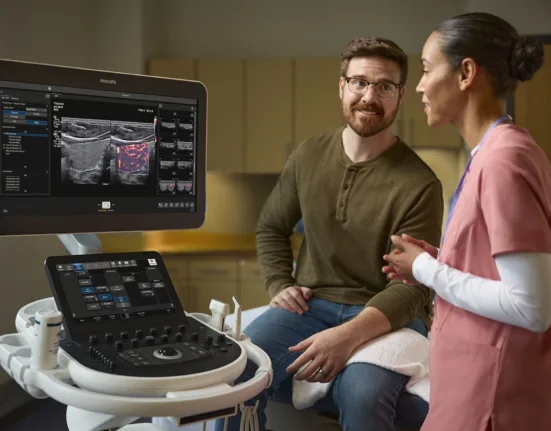
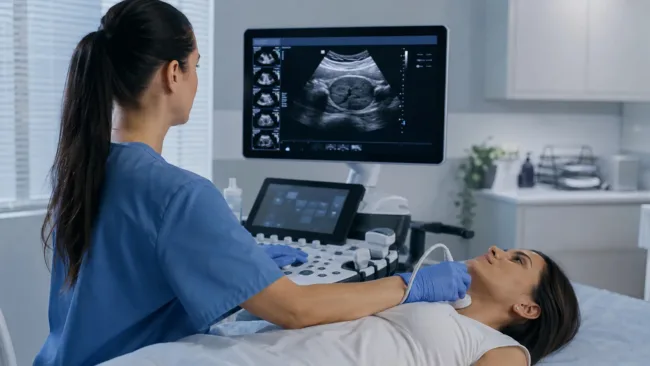
The decision to greenlight 3DICOM MD Cloud came after an accelerated 40-day review by the FDA, well ahead of the standard 90-day window, highlighting the strength of the submission and the robustness of the company’s validation and testing processes. Unlike the desktop version, the cloud platform now supports additional imaging modalities including X-ray and ultrasound alongside CT, MRI, and PET scans, significantly expanding the product’s clinical reach and strategic value proposition.
What this FDA clearance reveals about the regulatory path for cloud-native diagnostic software
The successful clearance of 3DICOM MD Cloud highlights a critical shift in regulatory confidence toward browser-based diagnostic tools. By leveraging the predicate foundation laid by its 2022 clearance, Singular Health Limited was able to streamline its 510(k) pathway and demonstrate the regulatory readiness of cloud-native platforms that maintain diagnostic-grade fidelity. The FDA’s swift turnaround on the submission indicates growing acceptance of SaMD tools that prioritize interoperability and workflow flexibility while adhering to device-class safety and effectiveness requirements.
This regulatory outcome not only accelerates the company’s U.S. go-to-market plans but also offers a replicable model for other imaging firms seeking to evolve from hardware-tethered software to scalable, browser-deployed applications. Industry observers note that this could influence how the FDA approaches similar transitions from desktop to cloud deployments, particularly for Class II medical software where prior clearances can support streamlined submissions.
Why web-based deployment with multimodal support changes the adoption calculus in U.S. imaging
One of the most consequential aspects of the 3DICOM MD Cloud clearance is the elimination of hardware and desktop installation requirements, a historical friction point in enterprise software adoption across health systems. By removing the need for local installations and enabling browser-native access to advanced 3D imaging capabilities, the platform significantly lowers the IT burden for providers. This simplification is especially compelling for outpatient clinics, imaging centers, and regional health networks where technical infrastructure varies widely.
More importantly, the addition of X-ray and ultrasound support positions 3DICOM MD Cloud to play a role in much earlier stages of patient diagnostics, where high-volume modalities dominate. X-rays remain the most commonly used imaging tool in U.S. healthcare, followed closely by ultrasound, particularly in primary care, obstetrics, and emergency medicine. These two modalities were previously unsupported in the desktop version, limiting use cases to more specialized imaging environments.
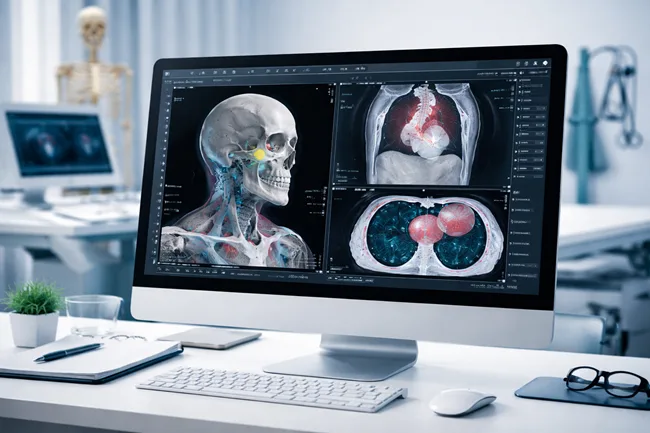
The new cloud-based solution now offers access across the full spectrum of major imaging modalities including PET, MRI, and CT, allowing clinicians across specialties to access and collaborate on diagnostic views without platform switching or localized installs. This multimodal capability supports use cases ranging from orthopedic planning and oncology case reviews to point-of-care triage, remote consultations, and cross-site surgical planning.
What the $16.5 billion duplicate imaging problem means for platform differentiation
Singular Health Limited’s stated commercial thesis hinges on solving a deeply entrenched inefficiency in U.S. healthcare: unnecessary duplicate imaging. According to peer-reviewed data cited by the company, repeat imaging occurs in approximately 7.7 percent of U.S. scans. When applied to national imaging volumes and weighted by modality-specific scan costs, this leads to an estimated US$16.5 billion in avoidable annual expenditure.
This is not a new problem, but it is one that existing PACS and EHR systems have failed to solve effectively due to interoperability silos and the inability to seamlessly share imaging across departments, providers, and care settings. 3DICOM MD Cloud is positioned to address this by offering browser-based access to imaging data, thus enabling clinicians to quickly visualize prior scans regardless of their origin. If implemented successfully, this capability could directly reduce duplicate scan ordering, improve care timelines, and support payer mandates for cost reduction in imaging-heavy specialties such as oncology, cardiology, and musculoskeletal care.
The commercial challenge will be proving this impact at scale. The platform will need to demonstrate measurable reductions in repeat imaging through pilot studies, value-based care integrations, or partner-driven analytics to differentiate itself from legacy systems.
What commercial execution challenges could stall platform uptake in U.S. provider markets
While the FDA clearance grants Singular Health Limited a significant regulatory and clinical foothold, the commercial success of 3DICOM MD Cloud in the United States will depend on execution in a competitive and fragmented market. Large incumbents such as Philips, GE HealthCare, Siemens Healthineers, and Agfa HealthCare already have deep relationships with major health systems, bundling their proprietary viewers within broader PACS or enterprise imaging solutions. These vendors benefit from embedded contracts, legacy integration, and vendor lock-in.
For Singular Health Limited to displace or supplement existing systems, it will likely need to target a mix of under-digitized mid-market providers, rapidly scaling outpatient diagnostic groups, and imaging-as-a-service platforms operating outside of traditional hospital procurement channels. Analysts believe the company may pursue reseller arrangements with health IT integrators, direct engagement with accountable care organizations, or strategic partnerships with cloud infrastructure providers to accelerate footprint expansion.
Scalability remains another unknown. Browser-based platforms must prove that they can deliver diagnostic-quality visualizations under real-world bandwidth constraints, across multiple modalities, and in high-concurrency environments. Regulatory clearance does not automatically imply readiness for enterprise-grade deployments across large IDNs or regional imaging networks. Questions also remain about HIPAA compliance, data storage practices, latency in real-time rendering, and integration with structured reporting workflows.
What clinicians and radiology leaders will watch in terms of usability and workflow fit
Despite strong product capabilities on paper, adoption among clinicians will hinge on the platform’s fit within daily diagnostic workflows. Radiologists and imaging technologists are often resistant to switching platforms unless the transition is seamless, data integrity is maintained, and productivity is unaffected. If 3DICOM MD Cloud can demonstrate interoperability with existing PACS archives, modality worklists, and structured reporting systems, it could find a receptive user base among early adopters.
Clinicians may also be drawn to the platform’s potential to support multidisciplinary care planning, tumor boards, or remote consultations by enabling real-time 3D imaging access from any device. These cross-functional scenarios are becoming increasingly important as health systems decentralize specialty care and push more diagnostics into outpatient and telehealth settings. However, workflow integration will remain a gating factor, and the company’s success will depend on its ability to build or co-develop connectors with dominant EHRs and RIS platforms.
What this means for software-as-a-medical-device developers navigating the U.S. market
From a regulatory and strategic perspective, Singular Health Limited’s clearance of a second SaMD under the 510(k) process underscores the growing viability of incremental innovation paths in the diagnostic software space. The ability to extend an existing FDA-cleared desktop application into a cloud-native version with expanded modality support illustrates how medtech firms can iterate within regulatory guardrails to stay competitive without undergoing de novo classification.
The company’s strategy also reflects a broader trend toward browser-native diagnostic tools that meet users where they are, without requiring complex IT coordination. This could embolden other SaMD developers to explore similar architectures that prioritize web-based access, real-time collaboration, and modular interoperability. Regulatory observers believe this might trigger increased FDA scrutiny of performance standards, connectivity safeguards, and cybersecurity posture for remote medical visualization tools.
Ultimately, the true impact of 3DICOM MD Cloud will be measured not just by its clinical versatility or regulatory positioning, but by whether it can reshape diagnostic imaging economics in the United States through lower duplication rates, higher data liquidity, and frictionless clinical collaboration.