Eli Lilly and Company and National Resilience, Inc. are committing $750 million to expand U.S. production of Lilly’s KwikPen injectable delivery device for medicines used in diabetes and obesity. The investment will enlarge Resilience’s manufacturing operations in the Cincinnati, Ohio region, create at least 400 skilled jobs and support the companies’ effort to bring additional device assembly and packaging capacity online from early 2027.
The agreement expands a manufacturing relationship established in 2023 and moves it into a more strategically important part of Lilly’s supply chain. Resilience said the partnership has already produced more than 150 million doses of Lilly medicines for U.S. patients in vial and pre-filled syringe formats. Adding KwikPen production broadens that work beyond medicine filling into the complex combination of injectable-device assembly, packaging, quality control and supply execution.
The investment is therefore more than a conventional outsourcing agreement. It reflects the increasing importance of delivery-device capacity as Lilly attempts to support demand across its diabetes and obesity portfolio. Manufacturing enough active pharmaceutical ingredient is only one part of the challenge. Each finished treatment must also move through filling, device assembly, testing, packaging, release and distribution before it can reach a pharmacy or patient.
The central test will be whether Resilience can qualify, launch and scale the additional operations without compromising quality or reliability. Site preparation is underway, but full operations are not expected to begin until early 2027, leaving the companies with a demanding programme of construction, equipment installation, technology transfer, process validation and regulatory readiness.
Why has KwikPen manufacturing become strategically important for Eli Lilly’s supply network?
Injectable medicine supply depends on a chain of interdependent processes, and weakness at any point can constrain the volume of finished products available to patients. Drug-substance manufacturing attracts much of the attention, but device availability, sterile filling, inspection, assembly and packaging can become equally significant bottlenecks.
KwikPen is a reusable platform name across Lilly’s injectable portfolio rather than a medicine itself. Manufacturing it requires the controlled integration of pharmaceutical and device operations, including accurate dose-delivery components, container closure systems, labelling and packaging. Production must also satisfy the quality requirements applying to the medicine and the associated delivery system.
That complexity helps explain why Lilly is deepening an existing relationship instead of relying entirely on a newly selected manufacturer. Resilience already produces Lilly medicines in vial and pre-filled syringe formats, giving the contract development and manufacturing organisation experience with the company’s processes, quality expectations and technical-transfer systems.
The companies have not disclosed how the $750 million will be divided between them or precisely how much additional KwikPen output the expansion will create. They have also not identified the individual medicines or dose configurations that will be manufactured at the Ohio operation. Those omissions limit any attempt to calculate the expansion’s direct effect on product availability.
Still, the choice of KwikPen production points to a broader manufacturing priority. As injectable portfolios expand across different doses, presentations and markets, companies need flexible capacity capable of handling more than one product configuration. A large device and packaging operation can provide that flexibility, provided changeovers, component sourcing and quality controls are managed efficiently.
What does the $750 million investment include and when could production begin?
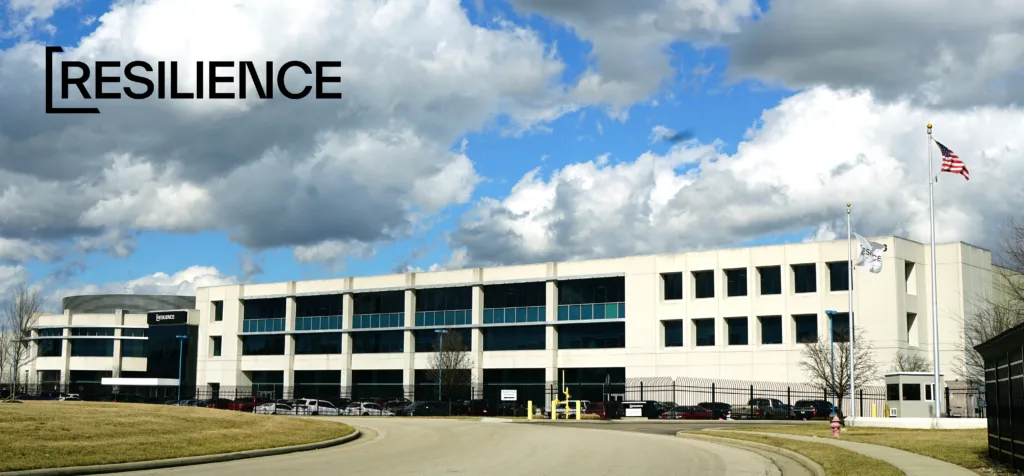
Resilience said site preparation for the campus expansion is already underway and that full operations are expected to commence in early 2027. The additional production will be located within the company’s Cincinnati-region manufacturing network, which includes two facilities covering nearly one million square feet.
Those operations currently employ approximately 1,000 people across manufacturing, quality, regulatory and related functions. The KwikPen expansion is expected to create at least 400 skilled jobs, taking the number of jobs created by Resilience in Ohio to more than 1,400.
The announced schedule suggests that the partners are pursuing an accelerated expansion rather than constructing an entirely new manufacturing campus from the ground up. Using an established site can reduce some infrastructure and staffing obstacles, but it does not remove the technical work required before commercial production can begin.
Manufacturing equipment must be installed and commissioned. Processes transferred from Lilly or other qualified operations must be demonstrated at the receiving site. Validation batches must establish that production can repeatedly meet defined specifications, while quality systems, data controls, environmental monitoring and employee training must be ready for routine operation.
The early 2027 target should therefore be understood as a planned operational milestone, not a guarantee that the facility will immediately operate at full commercial volume. Pharmaceutical manufacturing facilities generally ramp in stages as equipment, lines, processes and product configurations complete qualification.
The amount of finished medicine produced during the first months will depend on the pace of validation, regulatory requirements, component availability and Lilly’s production allocation decisions. Stable, high-volume output may take longer than the formal start of operations.
How does the expansion build on the manufacturing partnership formed in 2023?
The relationship has already moved beyond an initial or experimental stage. Resilience said the companies have manufactured more than 150 million doses for U.S. patients through their existing work in vial and pre-filled syringe formats.
That volume provides evidence that the partnership is supporting commercial production rather than serving only as a development or contingency arrangement. It also gives both companies an operational base from which to transfer additional products and delivery formats.
For Lilly, expanding with an established supplier may reduce some execution risks associated with onboarding an entirely new contract manufacturer. Resilience’s teams already have experience working within Lilly’s quality and production framework, although each additional device, process or presentation will still require its own technical work and approvals.
For Resilience, the agreement strengthens its position as a domestic manufacturing partner for complex injectable medicines. Large pharmaceutical companies increasingly expect contract manufacturers to provide integrated capabilities spanning sterile filling, device assembly, packaging, analytical testing and regulatory support. A supplier that can perform several of these activities within a coordinated network may be better placed to win long-term programmes.
The partnership also gives Resilience greater visibility into future production planning. Multi-year arrangements can justify investments in specialised equipment and workforce development that would be difficult to support through short-term manufacturing orders.
However, customer concentration remains an issue for any contract manufacturer undertaking a programme of this scale. Specialised lines and buildings can become closely tied to the volume needs of a particular client. Long-term value will depend on production utilisation, contractual protections and the ability to adapt assets if demand patterns change.
Why is Ohio becoming a larger part of the U.S. pharmaceutical manufacturing map?
Resilience’s two Cincinnati-region facilities combine existing infrastructure with access to a developing life-sciences workforce. The company has also relocated its global headquarters from California to Blue Ash, Ohio, signalling that the state is becoming more than a production outpost within its corporate network.
The expanded Lilly partnership involves Resilience’s operations in the West Chester area and is being supported by regional organisations including JobsOhio, REDI Cincinnati and Ohio Life Sciences. These organisations have focused on building training pipelines for manufacturing, engineering, quality and regulatory roles.
Workforce availability is a practical constraint on pharmaceutical expansion. Facilities cannot operate simply because buildings and equipment have been completed. They need engineers, technicians, microbiologists, validation specialists, quality professionals, regulatory personnel and trained production operators.
Creating 400 positions will test the region’s ability to supply experienced workers while training new entrants. Competition for pharmaceutical manufacturing talent has intensified as companies and contract manufacturers announce additional U.S. facilities.
A cluster effect could nevertheless make recruitment easier over time. Once several life-sciences employers establish operations within the same region, educational institutions and workforce programmes have a stronger incentive to develop specialised courses. Experienced employees may also become more willing to relocate when a region offers multiple potential employers rather than a single plant.
The Ohio expansion could consequently generate value beyond the immediate Lilly programme. A deeper technical labour pool may support Resilience’s ability to attract other customers and expand additional sterile manufacturing capabilities.
Can the expansion immediately increase supplies of diabetes and obesity medicines?
The investment should increase Lilly’s long-term manufacturing flexibility, but its near-term effect must be assessed carefully. The companies expect full operations to begin in early 2027, meaning the expanded facility will not immediately add finished KwikPen capacity.
Even after operations start, availability will depend on more than the Ohio site. Injectable medicine supply is influenced by drug-substance production, filling capacity, pens and other components, packaging materials, batch-release timelines and distribution planning.
A significant increase in one part of the chain may have only a limited effect if another part remains constrained. Lilly must coordinate the Resilience expansion with its broader internal and external manufacturing network to ensure that drug supply and device capacity rise together.
Demand itself could also continue to change before the new operations reach scale. Diabetes and obesity treatment markets are evolving rapidly as clinical indications broaden, payer policies change and additional therapies enter development or commercial use. Manufacturing plans built around current demand may need to accommodate a different product and dose mix by 2027.
The expansion’s most important contribution may therefore be resilience rather than an instant volume increase. Additional qualified domestic capacity can give Lilly more options when allocating production, responding to demand spikes or addressing disruption at another site.
This redundancy can be strategically valuable even when it does not translate into a simple one-for-one increase in market supply. Pharmaceutical networks designed around a small number of highly utilised facilities may be efficient during stable periods but more vulnerable when equipment problems, quality investigations or component shortages occur.
What manufacturing and regulatory work must be completed before the new lines can operate?
The investment announcement begins an execution phase rather than completing one. Construction and equipment spending must be followed by technology transfer, engineering runs, process qualification and regulatory readiness.
Combination products and injection devices require controls covering the medicine, container, closure and delivery mechanism. Manufacturers must demonstrate that assembled products consistently meet specifications and deliver the intended dose under approved conditions.
Component supply will be particularly important. Pens rely on multiple precision-manufactured parts, and delays involving any critical component can interrupt final assembly. Resilience and Lilly will need reliable supplier qualification, inventory controls and contingency planning alongside the physical production expansion.
Automated inspection and packaging systems will also have to be integrated with electronic records and quality-management processes. Data generated across production must remain complete, attributable and available for batch review and regulatory inspection.
Workforce training will be another major task. Hiring 400 people does not automatically create 400 fully qualified manufacturing employees. Personnel must be trained for their assigned operations, and competency must be documented before they can perform regulated work independently.
The operational target will become more credible as the companies complete equipment installation, qualification and initial production milestones. Until then, the planned capacity remains under development rather than commercially available.
What does the agreement mean for Resilience’s contract manufacturing strategy?
Resilience was created with the ambition of building a technology-focused biomanufacturing network capable of supporting complex medicines at commercial scale. The Lilly expansion gives the company a high-volume programme tied to one of the pharmaceutical industry’s most closely watched therapeutic markets.
Producing more than 150 million Lilly doses has already given Resilience a meaningful operating record with the pharmaceutical group. The addition of KwikPen manufacturing expands the relationship into a technically demanding area where pharmaceutical production and medical-device assembly converge.
That combination could strengthen Resilience’s pitch to other companies seeking U.S. capacity for injectable therapies, pre-filled syringes, cartridges or delivery devices. Customers typically evaluate not only installed equipment but also regulatory history, quality performance, technology-transfer experience and evidence that a site can sustain reliable output.
The partnership may also help Resilience improve utilisation across its Ohio network. Contract manufacturers carry substantial fixed costs, and profitability depends on keeping specialised assets productively occupied. Long-term programmes can provide a steadier base than fragmented development contracts.
Yet scale brings scrutiny. Quality lapses in sterile manufacturing can lead to rejected batches, supply disruption, regulatory action and damage to customer relationships. Resilience will need to demonstrate that rapid expansion does not outpace its quality systems, leadership capacity or ability to train employees.
The commercial value of the agreement will ultimately depend less on the headline investment than on the facility’s ability to start on schedule, qualify new processes and sustain dependable output.
Why is domestic manufacturing capacity becoming a board-level pharmaceutical priority?
The agreement arrives during a period of heightened attention to medicine supply security and U.S. pharmaceutical manufacturing. Drugmakers are reassessing networks that depend heavily on geographically concentrated suppliers, long international logistics routes or limited sources for critical components.
Domestic production does not eliminate supply-chain risk. U.S. facilities can still rely on imported raw materials, equipment and device components, while local plants remain exposed to quality events, weather disruption and labour shortages.
Nevertheless, domestic capacity can shorten some logistics routes and give companies greater direct oversight of important production programmes. It may also reduce exposure to changes in trade policy or international transportation.
For Lilly, the Resilience partnership complements a wider manufacturing strategy built around substantial investment in new and expanded facilities. The company’s challenge is not simply to announce enough capital spending. It must convert those projects into validated capacity that matches the commercial requirements of a rapidly growing portfolio.
Using both company-owned facilities and external partners can spread execution risk. Internal plants offer greater control, while qualified contract manufacturers can add capacity, specialised capabilities and flexibility. The trade-off is that external operations require rigorous governance and close coordination to maintain consistent standards.
The Ohio project illustrates that hybrid model. Lilly is not transferring responsibility for supply to Resilience and walking away. The two companies must operate as an integrated manufacturing partnership, with aligned technical, quality and planning systems.
What milestones will determine whether the investment delivers its promised supply benefits?
The first measurable milestone will be progress on the Cincinnati-region expansion, including facility preparation and equipment installation. Subsequent indicators will include hiring, employee qualification, completion of technology transfer and validation of the manufacturing processes.
Regulatory readiness will be equally important. The companies may need to make appropriate submissions or updates covering the additional manufacturing operation, depending on the products and jurisdictions involved. Commercial supply cannot be assumed merely because construction is complete.
The quality of the production ramp will matter more than speed alone. A controlled start that establishes repeatable processes may create greater long-term value than an aggressive launch followed by deviations, rejected batches or unplanned downtime.
Observers will also look for greater disclosure about the expansion’s capacity. The companies have not provided an annual unit target, named the medicines to be manufactured or explained how the investment is divided. Future information on validated lines and commercial output would make it easier to assess the project’s contribution to Lilly’s wider supply network.
The 400 planned jobs provide another visible measure of progress, although headcount alone will not establish operational success. The more important question is whether Resilience can build and retain a workforce capable of running a highly regulated device and sterile manufacturing operation consistently.
The $750 million commitment gives Lilly and Resilience the physical and financial foundation for a much larger manufacturing relationship. Whether it improves medicine availability will be decided during the less visible phase that follows: technical transfer, validation, quality oversight, component planning and disciplined commercial ramp-up. The first real verdict should emerge in 2027, when the Ohio operation is expected to begin converting investment into qualified KwikPen production.