Kardium Inc. has received a Health Canada Medical Device Licence for the Globe Pulsed Field System, opening another commercial market for the Canadian medical device developer’s integrated cardiac mapping and pulsed field ablation platform. The decision comes after the system received United States Food and Drug Administration premarket approval in 2025 and subsequently entered commercial use in the United States.
The regulatory milestone is significant because Kardium is moving beyond the question of whether Globe can reach the market and toward the harder question of whether its combination of high-density mapping, pulmonary vein isolation and customizable ablation can win sustained use inside electrophysiology laboratories. Health Canada authorization expands the company’s addressable commercial geography, but adoption will depend on physician experience, procedural workflow, hospital purchasing decisions, training and Kardium’s ability to scale support around a relatively sophisticated platform.
Kardium enters that phase with more clinical evidence than it had during Globe’s earlier development years. Results from the prospective, multicentre PULSAR pivotal study were published in the Journal of the American College of Cardiology in 2026, giving clinicians and hospital decision-makers access to a peer-reviewed dataset rather than relying solely on company presentations or conference disclosures.
What does Health Canada approval change for Kardium after its U.S. Globe commercial launch?
Health Canada granted a Medical Device Licence for the Globe Pulsed Field System, according to Kardium’s August 6 announcement. The company described the decision as its next major geographic expansion after launching the system commercially in the United States following Food and Drug Administration approval.
That sequence matters commercially. Regulatory approval in a second North American market gives Kardium an opportunity to build experience across additional electrophysiology centres while leveraging manufacturing, training and field-support infrastructure developed around the U.S. launch. It also gives the Vancouver-area company the chance to introduce technology developed in Canada into its domestic healthcare system.
The announcement, however, does not by itself establish how rapidly Globe will become available across Canadian hospitals. Kardium did not disclose a nationwide rollout timetable, first Canadian commercial procedure date, pricing structure or the number of centres expected to adopt the system initially. Those implementation details will become increasingly important now that the regulatory barrier has been crossed.
Health Canada’s active medical-device licensing framework is the gateway through which applicable Class II, III and IV devices can be offered for general marketing in Canada. A licence therefore creates commercial access, but it should not be confused with automatic procurement or widespread clinical adoption.
How does the Globe Pulsed Field System combine cardiac mapping and ablation in one catheter?
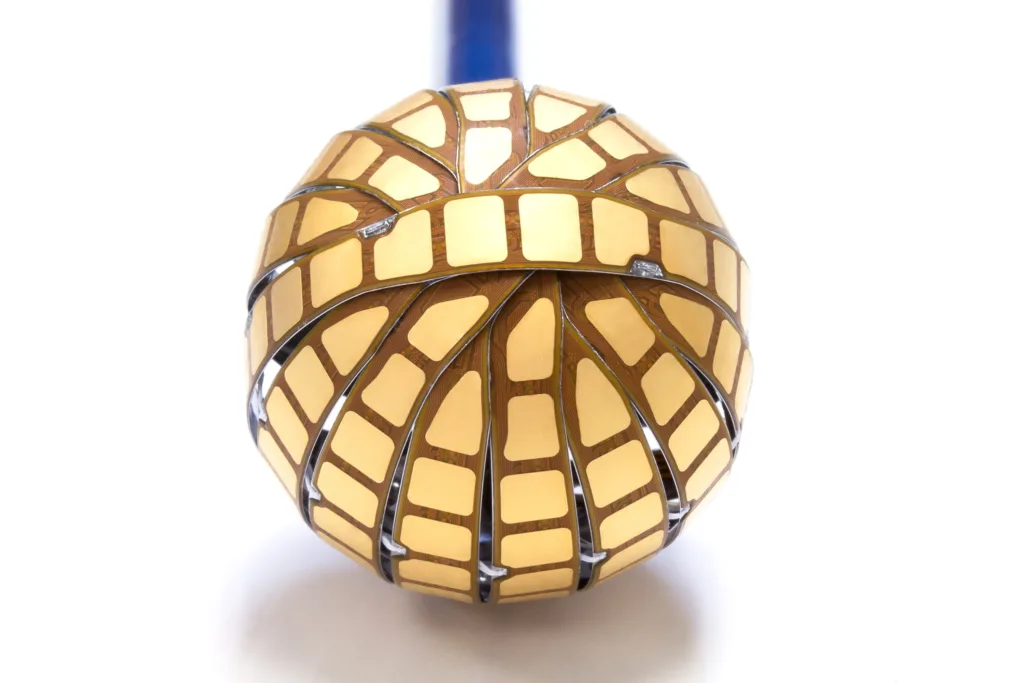
Kardium’s competitive proposition rests on integration. The Globe system uses a spherical array containing 122 electrodes and is designed to combine high-density cardiac mapping with pulsed field ablation through the same catheter. Kardium says the configuration can support single-shot pulmonary vein isolation while also allowing physicians to select electrodes for targeted lesion delivery.
Pulmonary vein isolation is a central component of catheter ablation for atrial fibrillation because electrical triggers associated with the pulmonary veins can contribute to abnormal rhythm initiation. Pulsed field ablation approaches the tissue differently from conventional thermal ablation techniques by using electrical fields to create lesions rather than relying primarily on heating or freezing.
The differentiation Kardium is pursuing is therefore not simply PFA itself. Pulsed field technology has moved rapidly into the electrophysiology market, and competing systems are already available. For example, Medtronic markets its PulseSelect Pulsed Field Ablation System in Canada under Health Canada licence number 110572.
Kardium instead has to demonstrate that combining detailed mapping, contact assessment and ablation capabilities in a single platform can meaningfully improve workflow or procedural control for electrophysiologists. The theoretical attraction is straightforward: reducing catheter exchanges and consolidating procedural functions could simplify some stages of an ablation procedure. Whether those advantages translate into meaningful differences in procedure time, resource utilization or physician preference across routine practice will require broader commercial experience.
What does the published PULSAR trial show about Globe effectiveness and safety?
The strongest clinical support behind the Globe system comes from PULSAR, a prospective, multicentre, single-arm investigational device study. The published paroxysmal atrial fibrillation cohort included 183 treated patients, comprising 19 roll-in patients and 164 pivotal patients. Participants had symptomatic paroxysmal atrial fibrillation and the trial evaluated procedural performance, safety and freedom from atrial arrhythmia and related treatment failures over 12 months.
Primary effectiveness at 12 months was 77.8%, with a reported 95% confidence interval of 70.6% to 83.9%. The investigators also reported that 94% of pulmonary veins, or 607 of 647 veins, were electrically isolated with the first pulsed field application. Mean mapping time was approximately nine minutes, while transpired ablation time was about 25.6 minutes.
The safety result requires particularly careful wording. The pivotal population had one primary safety event among 164 patients, corresponding to a 0.6% primary safety event rate. The event was a haemorrhagic stroke identified immediately after the procedure in a patient described in the publication as having severe hypertension and polycystic kidney disease. The investigators reported no device-related primary adverse events.
That distinction matters. Kardium’s statement that there were zero device-related primary safety events should not be interpreted as meaning there were no primary safety events of any kind. The peer-reviewed publication provides the fuller clinical context.
PULSAR nevertheless provides Kardium with a meaningful evidence base for commercialization because the results extend beyond acute technical success. Twelve-month rhythm outcomes and the published procedural data offer electrophysiologists a basis for evaluating Globe against their existing approaches.
Why is the reported 95% durable pulmonary vein isolation result encouraging but still limited?
One of the more distinctive PULSAR findings concerns durability. During repeat ablation procedures in 11 patients, investigators assessed 41 pulmonary veins and found that 39 remained durably isolated, representing 95.1%.
Durability is clinically relevant because an acutely isolated pulmonary vein can later reconnect, potentially contributing to recurrent atrial arrhythmia. Kardium’s catheter design is intended to improve electrode-to-tissue contact and create reliable circumferential lesion sets, making durable isolation an important technical objective.
The limitation is the size and nature of the subgroup. The 95% figure came from pulmonary veins evaluated during redo procedures in 11 patients. It was not derived from mandatory invasive remapping of every patient in the pivotal cohort. It should consequently be interpreted as supportive evidence of lesion durability rather than proof that 95% of all pulmonary veins treated in routine practice will remain permanently isolated.
The broader 12-month primary effectiveness rate of 77.8% provides a more comprehensive view of clinical performance in the pivotal population. Together, the measures suggest that Globe achieved both high acute isolation efficiency and encouraging one-year outcomes, while leaving room for continued assessment as use expands beyond controlled trial centres.
Can integrated mapping and ablation give Kardium an advantage in the crowded PFA market?
The commercial battle in pulsed field ablation is moving beyond the initial novelty of the energy modality. As more electrophysiology laboratories gain experience with PFA, device selection is likely to become increasingly influenced by workflow, mapping capability, catheter handling, installed equipment, service support and the economics of each procedure.
That is where Kardium’s architecture becomes strategically important. Globe is designed as more than a single-purpose ablation catheter. Its 122-electrode spherical array can collect high-density electrical information while the same catheter is used for ablation, giving physicians the ability to map and treat without relying on separate mapping and ablation catheters for those functions.
Integration can be attractive, but hospitals rarely change electrophysiology platforms solely because a new system has an elegant technical design. Physicians must become comfortable with catheter manipulation and mapping interpretation, clinical teams require training, and procurement committees must evaluate capital equipment, consumables and ongoing service requirements.
Competition also means Kardium cannot rely solely on being part of the PFA transition. Large cardiovascular device manufacturers already have extensive relationships with hospitals and electrophysiologists. Globe therefore needs to establish a sufficiently distinctive workflow or clinical proposition to justify adding or changing infrastructure.
Why Kardium’s US$250 million financing matters as regulatory access expands
Kardium appears better financed for commercialization than many privately held device developers reaching this stage. In July 2025, the company announced a US$250 million financing round, equivalent at the time to approximately C$340 million, specifically intended to support the Globe commercial launch and expansion of manufacturing capabilities. Investors included Janus Henderson Investors, Qatar Investment Authority, MMCAP, Piper Heartland Healthcare Capital, Eventide Asset Management and Eckuity Capital, alongside existing investors.
That financing is increasingly relevant now. Regulatory approvals create the opportunity to sell a device, but commercialization of electrophysiology technology requires more than inventory. Field clinical specialists, physician training, installation support, manufacturing quality systems, catheter supply and post-market evidence generation all consume capital before a new platform can establish meaningful scale.
Kardium began its U.S. commercial rollout in October 2025 with initial procedures at St. Bernards Medical Center in Arkansas and said it planned to expand availability through additional electrophysiology centres. The Canadian licence adds another deployment opportunity while that U.S. buildout remains relatively young.
The company is privately held, so there is no public share-price reaction to interpret. The more useful commercial indicators will be the pace of centre additions, procedure volumes, manufacturing expansion and whether physicians continue using Globe after their initial evaluations.
What will determine Globe Pulsed Field System adoption across Canadian electrophysiology centres?
Kardium’s home-market advantage may help generate interest among Canadian electrophysiologists, particularly because Canadian centres participated in the technology’s clinical development. Atul Verma of McGill University was one of the principal investigators associated with the PULSAR programme, giving the company established clinical relationships in Canada before commercial authorization.
Yet physician interest and regulatory approval are only the beginning of hospital adoption. Electrophysiology centres will need to determine how Globe fits into existing mapping and ablation workflows, what training is required, whether the system can deliver operational efficiencies consistently, and how its procedural costs compare with alternative approaches.
Real-world evidence will become increasingly important as well. PULSAR was a prospective multicentre trial, but it was single-arm rather than a randomized head-to-head study. Its 77.8% one-year primary effectiveness result therefore should not be used to claim superiority over other pulsed field ablation systems based on percentages from separate trials with different populations, monitoring protocols and endpoint definitions.
Commercial adoption will instead reveal whether the Globe system’s integrated design translates from clinical-study settings into a durable workflow advantage for hospitals treating larger and more varied patient populations.
Kardium’s Canadian approval shifts the Globe story from regulatory validation to execution
Health Canada’s decision removes another important market-access barrier for Kardium and gives Globe regulatory reach across both Canada and the United States. Combined with Food and Drug Administration approval, U.S. commercial procedures, substantial private financing and peer-reviewed PULSAR results, the company now possesses many of the elements required to move from development-stage medical technology toward broader commercialization.
The next evidence will increasingly come from execution rather than regulatory announcements. Kardium will need to show how rapidly Canadian hospitals begin using Globe, whether electrophysiologists find its mapping-and-ablation integration compelling after routine experience, how consistently clinical outcomes hold outside pivotal-trial centres, and whether manufacturing and field support can scale alongside additional installations.
For the Globe Pulsed Field System, the Canadian licence is therefore more than another approval stamp. It moves Kardium deeper into the competitive phase of the PFA market, where technical differentiation has to become repeatable clinical workflow and repeatable clinical workflow has to become sustainable adoption.