Eli Lilly and Company (NYSE: LLY) has received U.S. Food and Drug Administration approval for Onswik, or insulin efsitora alfa-gobe, as a once-weekly basal insulin used with diet and exercise to improve glycemic control in adults with type 2 diabetes. The September 24 approval gives Eli Lilly and Company an important new format in a diabetes portfolio already spanning insulins, incretin therapies and other metabolic medicines, while reducing basal insulin dosing from as many as 365 injections a year with once-daily therapy to about 52 weekly injections.
The approval is based on Eli Lilly and Company’s QWINT Phase 3 programme, which evaluated insulin efsitora alfa-gobe in more than 3,400 adults with type 2 diabetes across four registration studies. Across those trials, once-weekly efsitora met the primary objective of demonstrating non-inferior A1C reduction compared with established once-daily basal insulins including insulin glargine and insulin degludec.
That distinction is important. Onswik was not approved because the clinical programme established that it lowers A1C better than daily basal insulin across the population studied. The core efficacy proposition is that a much less frequent dosing schedule can provide glycemic control that is not clinically worse than established daily basal comparators within the prespecified margins of the trials.
The commercial question is therefore unusually straightforward but difficult to answer. If weekly basal insulin provides similar glycemic control while substantially reducing injection frequency, will patients, prescribers and payers value the convenience enough to change established insulin routines? Eli Lilly and Company will have to answer that question in a U.S. market where Novo Nordisk has already launched Awiqli, another once-weekly basal insulin for adults with type 2 diabetes.
What did the QWINT Phase 3 programme establish about Onswik’s once-weekly insulin profile?
The QWINT programme tested insulin efsitora alfa-gobe across different stages of type 2 diabetes insulin treatment, rather than relying on one narrowly defined population. This matters because initiating basal insulin for the first time presents different practical and clinical challenges from switching a patient already receiving basal insulin or treating someone who also requires mealtime insulin.
QWINT-1 enrolled 795 insulin-naive adults with type 2 diabetes and compared once-weekly efsitora with once-daily insulin glargine over 52 weeks. In the peer-reviewed study, mean glycated hemoglobin fell from 8.20% at baseline to 7.05% with efsitora and from 8.28% to 7.08% with insulin glargine. The estimated treatment difference met the prespecified criterion for non-inferiority, while superiority was not demonstrated.
That study also explored a potentially important operational advantage. Participants receiving efsitora initially moved through a limited set of fixed weekly doses, with adjustments generally occurring less frequently than with daily insulin glargine. The median number of dose adjustments reported in the study was two for efsitora and eight for insulin glargine, suggesting that weekly dosing could influence not only injection frequency but also aspects of titration burden.
QWINT-2 separately compared weekly efsitora with insulin degludec in insulin-naive adults with type 2 diabetes. Efsitora again met the non-inferiority objective for A1C reduction. Importantly, that study included people receiving and not receiving GLP-1 receptor agonists, reflecting the increasingly complex treatment landscape in which basal insulin now sits alongside widely used incretin medicines.
QWINT-3 studied adults who were already receiving basal insulin, while QWINT-4 evaluated people whose treatment included basal insulin and at least two daily injections of mealtime insulin. Eli Lilly and Company reported non-inferior A1C reductions against the relevant daily basal comparators in both trials, giving regulators evidence across a broader spectrum of insulin use rather than only first-time basal insulin initiation.
Why does reducing basal insulin from daily injections to weekly dosing matter clinically?
The obvious numerical difference is substantial. A patient using once-daily basal insulin may administer approximately 365 basal injections in a year. A weekly product reduces that schedule to roughly 52, removing more than 300 basal injections annually without eliminating the need for other diabetes medicines or mealtime insulin where those remain clinically required.
That reduction should not automatically be interpreted as better adherence, improved outcomes or easier diabetes management for every patient. Those outcomes depend on behaviour, education, dose selection, monitoring and the broader treatment regimen. Someone requiring multiple daily mealtime insulin doses, for example, will still face a considerable injection burden even if the basal component becomes weekly.
The potentially more consequential effect may emerge among adults with type 2 diabetes who need basal insulin but are reluctant to begin injectable treatment or struggle with daily administration. A weekly regimen changes the practical burden of basal therapy enough to create a different treatment proposition, particularly as clinicians increasingly have multiple injectable and oral options available before and alongside insulin.
The longer dosing interval also creates a different risk-management environment. Daily insulin can be adjusted relatively frequently, while a weekly product remains active across a much longer period. Correct dose selection, patient education and management of dosing errors therefore become especially important because an incorrect weekly dose cannot simply be treated as an isolated daily mistake.
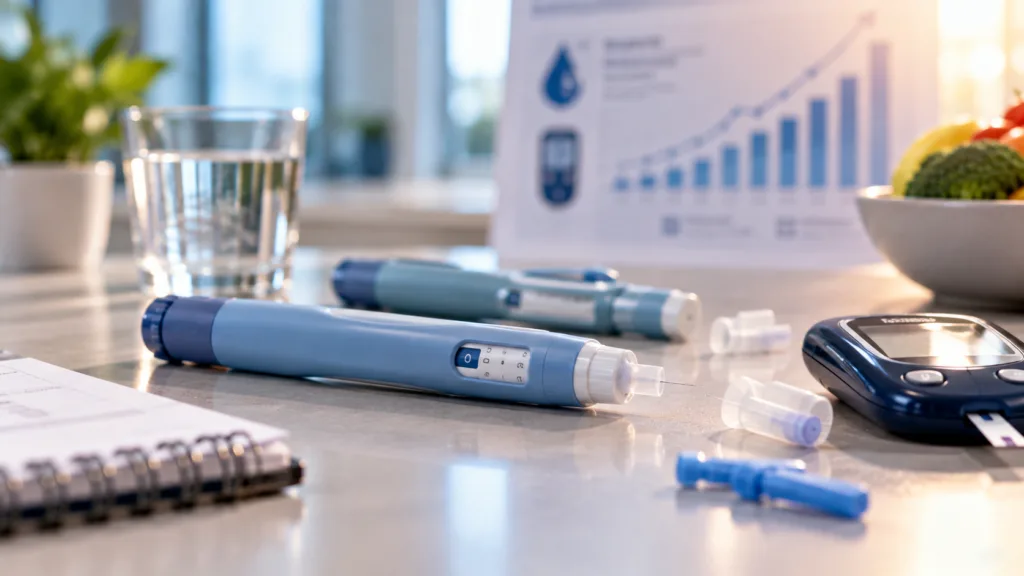
Eli Lilly and Company’s prescribing information reflects this concern. Onswik will be supplied in highly concentrated 500 units/mL and 1,000 units/mL KwikPen presentations, and the company specifically warns about selecting the correct dosage and avoiding accidental overdose. The 500 units/mL pen can deliver up to 400 units in one injection, while the 1,000 units/mL version can deliver up to 800 units.
What does Onswik’s safety profile mean for its U.S. label and patient population?
Hypoglycemia remains central to the benefit-risk assessment of any insulin therapy, regardless of dosing frequency. Eli Lilly and Company reported that the overall safety profile across the QWINT type 2 diabetes programme was similar to the daily basal insulins used as comparators, but individual trial results show why the safety discussion needs more precision than simply describing the drug as well tolerated.
In QWINT-1, the combined rate of clinically significant or severe hypoglycemia was lower with efsitora than with insulin glargine. QWINT-2 produced a different numerical pattern, with combined clinically significant or severe hypoglycemia occurring at 0.58 events per participant-year with efsitora compared with 0.45 with insulin degludec, although the confidence interval around the estimated rate ratio did not establish a statistically significant difference. No severe hypoglycemia was reported with efsitora in QWINT-2, compared with six episodes in the degludec group.
The FDA-approved Onswik indication is limited to adults with type 2 diabetes. Eli Lilly and Company states that Onswik should not be used in people with type 1 diabetes because of an increased risk of severe hypoglycemia. That restriction is particularly important because the concept of weekly insulin has also been investigated in type 1 diabetes, but the risk-benefit calculus is different when patients are completely dependent on insulin and require intensive basal-bolus management.
Other identified risks and common adverse effects associated with Onswik include hypoglycemia, allergic reactions, injection-site reactions, lipodystrophy, itching, rash, peripheral swelling and weight gain. As with other insulin products, hypokalemia can occur, and concomitant treatment with thiazolidinediones can increase the risk of heart failure in susceptible patients.
How does Onswik change the Eli Lilly versus Novo Nordisk diabetes competition?
Onswik enters the United States as the second FDA-approved once-weekly basal insulin for adults with type 2 diabetes. Novo Nordisk received U.S. approval for Awiqli, or insulin icodec-abae, in March 2026 and launched the product nationwide in August, making Awiqli available through more than 70,000 pharmacies according to the Danish drugmaker.
That means Eli Lilly and Company is not creating an entirely uncontested weekly insulin category. It is entering one that has only recently begun commercial development. Novo Nordisk’s first-mover advantage gives Awiqli an opportunity to establish formulary positions, prescriber familiarity and early real-world experience before Onswik becomes commercially available.
The comparison between the two products should nevertheless remain disciplined. Awiqli and Onswik were developed through separate clinical programmes with different trial populations, protocols and dosing strategies, so percentages reported across ONWARDS and QWINT studies should not be used to declare one insulin clinically superior to the other without an appropriate head-to-head trial.
Instead, commercial differentiation may depend on dosing systems, concentrations, titration experience, payer access, formulary placement, patient-support programmes and how comfortably clinicians integrate the products into existing diabetes workflows. These factors can become particularly influential in insulin because prescribing decisions are shaped not only by efficacy but by device familiarity, affordability, coverage and the consequences of medication or dosing errors.
Novo Nordisk’s Awiqli is already commercially available in the United States. Eli Lilly and Company has said Onswik will become available in the coming months, but it has not yet provided a precise U.S. launch date or the full access and pricing framework that will determine how quickly the approval translates into prescriptions.
Can once-weekly insulin expand when GLP-1 medicines are changing type 2 diabetes care?
Onswik arrives during an unusual period for the insulin market. Eli Lilly and Company and Novo Nordisk are simultaneously competing aggressively in GLP-1 and related incretin medicines, which have changed treatment patterns across diabetes and obesity and can delay or reduce the need for insulin in some patients with type 2 diabetes.
That does not eliminate the need for basal insulin. Many people eventually require insulin when glycemic control remains inadequate with other therapies, and insulin remains a fundamental component of diabetes treatment. Instead, the rise of incretin medicines makes the population reaching insulin more varied and raises expectations around convenience, weight effects, hypoglycemia and treatment burden.
QWINT-2 is particularly relevant because it evaluated efsitora in participants using and not using GLP-1 receptor agonists. This places the product within a modern treatment pathway rather than testing weekly insulin only as an alternative to older oral regimens.
For Eli Lilly and Company, the broader portfolio positioning is also significant. The company can now participate across oral medicines, incretin therapies, established insulin products and weekly basal insulin. Onswik therefore represents more than an isolated product launch, even if its financial contribution is unlikely to rival the scale of Eli Lilly and Company’s rapidly expanding incretin franchise in the near term.
Why will access, prescribing behaviour and real-world use matter more than another efficacy comparison?
Regulatory approval establishes that Onswik met the standards required for its approved indication. It does not establish that physicians will rapidly switch large numbers of patients from familiar daily basal insulins or that payers will provide access on terms comparable with existing alternatives.
That distinction may become the defining issue for the weekly insulin category. Switching a stable patient from a daily basal insulin involves more than changing injection frequency. Clinicians need confidence in conversion protocols, dose titration, patient understanding and management of missed or duplicated weekly doses, while healthcare systems and pharmacies must accommodate new high-concentration presentations.
Patient education may therefore become unusually important. Onswik is intended to be injected on the same day each week. The prescribing instructions also address missed doses and changing the weekly administration day, reflecting the fact that weekly dosing reduces frequency while creating a different set of medication-management considerations.
The ultimate commercial test will not be whether people generally prefer fewer injections when asked in isolation. It will be whether weekly insulin can maintain adequate glycemic control in routine practice while fitting safely into increasingly complex diabetes regimens and obtaining competitive reimbursement.
What does Eli Lilly’s stock reaction suggest about the importance of Onswik?
Eli Lilly and Company shares closed September 24 at $1,181.89, up 2.68% for the session in which the Onswik approval was announced. The stock traded between $1,153.05 and $1,197.75 during the day and remained within a 52-week range that extended from roughly $716 to $1,293.
The positive move coincided with the Onswik announcement, but it would be too strong to attribute the entire share-price change to one insulin approval. Eli Lilly and Company is now a very large pharmaceutical company whose valuation is heavily influenced by Mounjaro, Zepbound, its expanding incretin pipeline, oncology products, manufacturing investment and multiple late-stage programmes.
The company reported second-quarter 2026 revenue of $23 billion, up 48%, primarily because of Mounjaro and Zepbound volume, and subsequently increased its full-year revenue guidance to between $85 billion and $87 billion. Against that financial base, Onswik is better understood initially as an expansion of the diabetes franchise and a new competitive asset rather than a single product likely to redefine Eli Lilly and Company’s near-term earnings profile.
Its strategic importance could become clearer as the weekly insulin category develops. If Awiqli and Onswik demonstrate that patients and clinicians will meaningfully migrate from daily basal therapy toward weekly formulations, the two products could begin reshaping a mature insulin market that has historically competed around duration, device design, safety, access and price.
For now, Eli Lilly and Company has cleared the regulatory hurdle. The next measurable milestones are the U.S. commercial launch, formulary coverage, prescribing uptake and the accumulation of real-world experience with weekly dosing. Those data will show whether cutting more than 300 basal injections a year is primarily a convenience story or the beginning of a durable shift in how basal insulin is delivered.