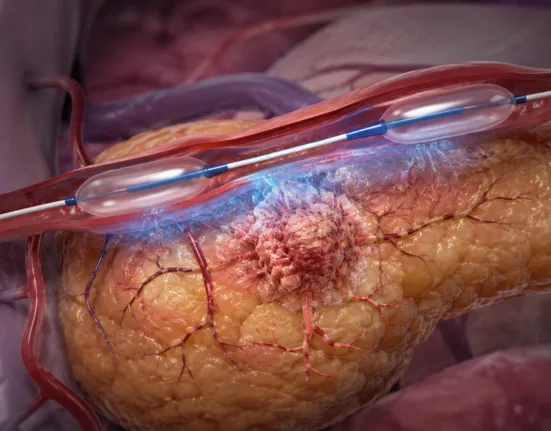
RenovoRx, Inc. (NASDAQ: RNXT) has received a US patent Notice of Allowance covering additional aspects of RenovoCath, its FDA-cleared dual-occlusion catheter used to isolate vascular segments and deliver therapeutic or diagnostic fluids locally. The patent application covers a configuration involving a primary catheter with multiple ports and expandable balloons used to create a controlled vascular treatment zone, together with a secondary catheter capable of entering a branching vessel for more selective delivery. Once issued, the patent will bring RenovoRx’s global portfolio around its TAMP drug-delivery platform and RenovoCath to 20 issued or allowed patents, alongside 13 pending applications.
The timing makes the IP development more commercially relevant than a stand-alone patent announcement. RenovoCath generated $909,000 of revenue in the second quarter of 2026, up about 61% sequentially and 115% from the comparable quarter of 2025. First-half revenue reached approximately $1.5 million, already above the roughly $1.1 million generated during the entire first full year of commercialization in 2025. RenovoRx finished the second quarter with 21 active commercial cancer-center customers and another 42 centers at different stages of evaluation or activation.
What does RenovoCath actually do?
FDA classifies RenovoCath as a temporary intravascular occlusion catheter. Its cleared indications include isolation of blood flow and delivery of fluids, including therapeutic or diagnostic agents, into selected locations in the peripheral vascular system, as well as temporary vessel occlusion for applications including chemotherapeutic infusion. FDA’s current clearance history includes K212324, decided in August 2021, building on earlier versions of the device.
The dual-balloon architecture is central to RenovoRx’s TAMP concept. By occluding a segment of an artery, clinicians can create a controlled region in which a drug is delivered under pressure across the arterial wall and into surrounding tissue rather than being immediately carried away through normal blood flow.
RenovoRx is particularly interested in solid tumors where systemic drug exposure creates toxicity but conventional vascular anatomy provides a route toward the tumor. The device itself is already FDA cleared, but specific investigational drug-device combinations require separate regulatory evidence.
Why is a patent meaningful for a device that already has FDA clearance?
Regulatory clearance gives a company permission to market a device for authorized uses. It does not prevent another manufacturer from developing a competing product capable of achieving a similar clinical objective through different technology.
Patent claims can protect specific catheter architecture, balloon configuration, delivery pathways and methods of using the system, potentially making it more difficult for competitors to reproduce the platform without licensing or engineering around those claims.
For a small medtech company trying to establish partnerships, patent breadth can therefore influence strategic value even before sales become large. RenovoRx explicitly says the expanding portfolio is intended to support commercialization, potential partnerships and licensing opportunities.
A Notice of Allowance is not equivalent to clinical validation, however. The US Patent and Trademark Office evaluates whether claimed inventions satisfy patentability requirements, not whether the device produces superior clinical outcomes.
What do RenovoCath’s early commercial numbers show?
The strongest signal is sequential expansion rather than absolute scale. Revenue of $909,000 in the second quarter remains small relative to established interventional-device franchises, but the quarter alone represented roughly 83% of RenovoRx’s total revenue for all of 2025.
The number of active cancer-center customers increased from 16 around the first-quarter earnings period to 21 by the end of June, while the total funnel including centers under evaluation reached 63. RenovoRx is targeting at least 36 active commercial cancer centers by the end of 2026.
This creates the beginning of a recurring-use model. A catheter business becomes more attractive when hospitals reorder disposable devices for repeated procedures rather than purchasing one capital system and generating little additional revenue.
The important metric over the next several quarters will therefore be utilization per active center as much as the raw customer count.
Why is TIGeR-PaC separate from the cleared device business?
RenovoRx is simultaneously testing an investigational treatment strategy in which intra-arterial gemcitabine is delivered through RenovoCath for locally advanced pancreatic cancer. That combination, often described as IAG, is being evaluated under an FDA investigational new drug pathway and has not been approved for commercial sale as a pancreatic cancer therapy.
The Phase 3 TIGeR-PaC trial completed enrollment in August 2026. RenovoRx reported that 78 of the 86 required death events had occurred at the time of its August 11 update, with formal study completion expected in the first half of 2027 and topline results during the second half.
This separation is important editorially. A physician can currently use RenovoCath within its FDA-cleared catheter indications, but the company cannot claim that its intra-arterial gemcitabine regimen is an approved treatment for pancreatic cancer.
If TIGeR-PaC succeeds, the clinical value of the delivery platform could rise substantially because the trial would connect the device’s mechanical capability with a randomized therapeutic outcome.
Why is pancreatic cancer a logical target for local drug delivery?
Pancreatic tumors are anatomically difficult and often surrounded by dense stromal tissue that can interfere with drug penetration. Systemic chemotherapy exposes the entire body to cytotoxic agents even though only a fraction of the administered dose may reach the local tumor environment.
RenovoRx’s TAMP hypothesis is that creating a temporary isolated arterial segment can drive chemotherapy across the vessel wall near the tumor and generate greater local exposure with less systemic distribution. That is a mechanistic rationale rather than an established Phase 3 benefit.
The pivotal trial therefore has to show whether changing where gemcitabine is delivered changes outcomes enough to matter, not simply whether catheter placement is technically feasible.
What is the more important RenovoRx story, the patent or the Phase 3 trial?
The patent strengthens the economic moat around a platform whose commercial traction is beginning to become measurable. The Phase 3 trial will determine whether that platform can support something more valuable than catheter sales alone.
RenovoRx is effectively developing two businesses around the same physical device. One is a commercial medical-device operation generating growing but still modest revenue from hospitals using RenovoCath as a stand-alone catheter. The other is a drug-device therapeutic strategy whose clinical value could change dramatically when TIGeR-PaC reports.
That makes the new patent strategically useful even though it does not alter FDA status. If the clinical programme eventually validates TAMP as a way of improving pancreatic cancer treatment, broader protection around how the catheter creates and controls a local delivery zone becomes considerably more valuable.
For now, the numbers show real adoption but early scale: $1.5 million of first-half sales, 21 active centers and a 63-center commercial funnel. The next patent can make those economics harder to copy. The 2027 Phase 3 data will decide whether there is something much larger worth protecting.