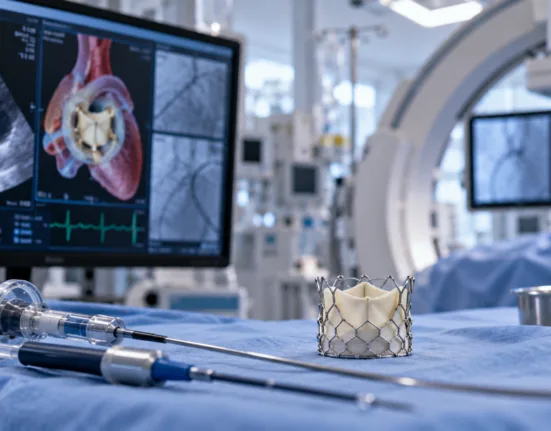
CraniUS Therapeutics has received United States Food and Drug Administration 510(k) clearance for the CraniUS Plate, a patient-specific cranial implant designed to fill defects in the skull, giving the Baltimore neurotechnology company its first product authorized for commercial marketing in the United States. FDA records show that the agency issued its substantial-equivalence determination on July 29, 2026 under submission K261058, classifying the device as a Class II preformed alterable cranioplasty plate.
The commercial clearance is straightforward: the CraniUS Plate is intended for reconstruction of bony voids or defects in the cranial skeleton. The strategic story surrounding the product is more unusual because CraniUS Therapeutics is positioning the plate, which it calls NeuroPASS 1 within its platform architecture, as the physical foundation for future implant technologies that could potentially provide long-term access to the brain, sensing capabilities or targeted delivery of therapeutics.
Those future functions are investigational and are not included in the FDA clearance. That regulatory distinction is essential because the company’s longer-term NeuroPASS concept carries substantially different clinical and technical risks from a structural cranial implant. The current product gives CraniUS a market entry point and manufacturing foundation, but it does not authorize brain drug delivery, diagnostic sensing or implanted access systems.
What exactly has the FDA cleared CraniUS Plate to do?
The cleared device is a patient-specific cranial implant intended to fill bony voids or defects in the skull. Such defects can result from trauma, tumor removal, decompressive craniectomy and other neurosurgical procedures in which part of the cranial bone is missing or cannot be replaced. Cranioplasty seeks to restore structural protection and cranial contour after the underlying clinical problem has been addressed.
FDA classified the CraniUS Plate under the regulatory category for preformed alterable cranioplasty plates. The agency found the device substantially equivalent to a legally marketed predicate, allowing commercial distribution through the 510(k) pathway rather than requiring a premarket approval application. Substantial equivalence is a specific regulatory determination and should not be interpreted as evidence that the device is superior to other cranial implants.
The device is customized to an individual patient’s anatomy. Patient-specific implants can potentially reduce the amount of intraoperative shaping required and provide a closer geometric match to the defect than generic plates that must be adapted during surgery. Actual surgical advantage depends on design quality, manufacturing accuracy, fixation technique and the clinical characteristics of the defect.
The commercial product is therefore considerably narrower than some of the company’s broader technology descriptions. CraniUS Plate is a structural implant for cranial reconstruction, not a cleared route for intracranial drug administration or neurological monitoring.
Why can patient-specific cranioplasty matter for neurosurgeons and craniofacial teams?
Large or irregular cranial defects can be technically demanding to reconstruct. Restoring the contour of the skull is important not only cosmetically but also for protection of intracranial structures and, in selected circumstances, recovery after decompressive surgery. Surgeons can use several materials and methods depending on the size, location and history of the defect.
A patient-specific implant can be designed using preoperative imaging so that the geometry closely corresponds to the missing portion of skull. This may reduce manual contouring in the operating room and improve predictability for complex defects. It can also allow features requested by the surgeon to be incorporated during manufacturing rather than improvised during implantation.
The device nevertheless has to perform within ordinary cranioplasty risks. Surgical infection, wound healing problems, implant exposure, fixation failure and the need for revision remain clinically relevant regardless of how precisely an implant is manufactured. Patient history, scalp condition, previous radiation, contamination and prior infections can significantly influence outcome.
Regulatory clearance therefore removes the marketing barrier but does not guarantee rapid clinical uptake. Neurosurgeons and hospitals will compare the CraniUS Plate with established patient-specific implants and other reconstructive options on turnaround time, cost, surgical handling, design flexibility and post-operative performance.
Why is CraniUS calling the cleared plate NeuroPASS 1?
CraniUS Therapeutics is developing a broader implant architecture called NeuroPASS, and the company has designated the cleared structural plate as NeuroPASS 1. The concept is that a patient-specific cranial implant could eventually become more than a passive piece of reconstruction material and instead provide a stable interface for additional neurological technologies.
Programs described by the company include durable access to the brain, sensing and diagnostic capabilities and a fully implantable platform intended to deliver therapies directly from within the cranial space. Those concepts address an important problem in neurological drug development: many systemic medicines have difficulty reaching adequate concentrations in the central nervous system because of the blood-brain barrier.
A device that created a reliable route for repeated targeted administration could therefore have potential applications in neurological disease, neuro-oncology or other conditions requiring localized therapy. Such a platform might also avoid some of the burden associated with repeated surgical procedures if access could be maintained safely over long periods.
None of that functionality is covered by the current FDA decision. Each additional drug-delivery, access or sensing component could require extensive biocompatibility, mechanical, infection-control, human-factors and clinical testing, along with its own regulatory strategy. Some configurations could potentially become combination products depending on their interaction with drugs or biologics.
Does 510(k) clearance reduce the regulatory risk for the broader NeuroPASS platform?
It reduces risk only in a limited sense. CraniUS Therapeutics now has a cleared structural implant and a manufacturing process capable of producing patient-specific devices that meet FDA requirements for this particular indication. That can provide a useful regulatory and engineering foundation for future development.
However, clearance of a structural plate does not establish the safety of leaving a chronic access route to the intracranial space, operating an implantable pump or sensor, or repeatedly exposing brain tissue to delivered therapeutics. Those functions change the risk profile considerably and could require different testing, clinical evidence and regulatory classifications.
Infection risk illustrates the difference. A conventional cranial plate is implanted and the surgical site is closed, whereas a system intended to provide repeated access or ongoing fluid delivery may introduce additional pathways through which infection or mechanical failure could occur. Long-term implants may also have to address device degradation, catheter performance, reservoir stability and the consequences of component failure.
The NeuroPASS program therefore remains a development-stage platform despite the commercial milestone for the CraniUS Plate. Investors, collaborators and clinicians should separate what FDA has actually cleared from what CraniUS Therapeutics hopes to develop in subsequent generations.
Could a cleared cranial plate help CraniUS build commercial relationships before its more complex technology is ready?
That may be one of the strategically important aspects of the clearance. A company developing a highly ambitious implant platform faces a long path if its first interaction with neurosurgeons begins only when the most complex system reaches clinical testing. A commercially available reconstruction device can introduce the company’s manufacturing and design capabilities to surgical teams earlier.
Hospitals purchasing patient-specific implants will gain experience with order turnaround, imaging requirements, design approval and operating-room handling. CraniUS Therapeutics, meanwhile, can learn from real-world use and establish relationships with neurosurgery programs that could eventually become important clinical-development sites for future NeuroPASS configurations.
The approach could also create an initial revenue stream, although the company has not disclosed enough commercial detail to estimate the scale of the opportunity. Patient-specific cranioplasty is an established but competitive segment, and hospitals already have access to multiple implant materials and vendors.
Commercial differentiation may therefore depend on service quality and surgeon customization rather than simply the fact that the product is patient-specific. Manufacturing lead time can be particularly important because some cranial reconstructions need to be scheduled around complex patient recovery pathways.
Why the CraniUS Plate is commercially meaningful even without the futuristic brain-access features
The most interesting narrative around CraniUS Therapeutics involves the possibility of integrating access, diagnostics and drug delivery into the skull. Yet the first business challenge is much more conventional: sell a safe, reliable and economically competitive cranioplasty implant.
That step matters because medtech companies often struggle when they attempt to commercialize highly complex technology before establishing manufacturing, quality systems and relationships with clinical customers. The CraniUS Plate gives the company a product that operates within an established surgical category and can generate practical experience with patient-specific production.
Real-world performance will determine whether that foothold becomes meaningful. Hospitals will want reliable supply, predictable fit, manageable pricing and responsive technical support, while surgeons will focus on ease of implantation and post-operative outcomes. Complications could undermine adoption quickly because cranial implant failures can require major revision procedures.
If the first-generation product establishes a credible commercial base, CraniUS Therapeutics may have a stronger platform from which to develop later NeuroPASS technologies. If it struggles to gain routine use in an established cranioplasty market, the more ambitious technology roadmap becomes harder to execute.
The FDA clearance therefore creates a genuine commercial milestone without validating the company’s entire neurological platform. CraniUS Therapeutics can now sell a patient-specific cranial plate in the United States. Turning that plate into a future gateway for brain access, sensing or localized drug delivery will require a separate series of technical, clinical and regulatory successes.