Vantis Vascular, a privately held medical device company based in San Jose, California, announced on October 13, 2026, that it has received United States Food and Drug Administration 510(k) clearance for a 6 French (6F) version of its CrossFAST Integrated Microcatheter Advanced Delivery System. The new configuration features a larger internal lumen and shorter distal tip, allowing it to accommodate a broader range of devices used in complex percutaneous coronary intervention (PCI), including intravascular ultrasound and intravascular lithotripsy technologies.
The FDA granted clearance on September 18, 2026, under submission K262817, confirming substantial equivalence under the agency’s Class II percutaneous catheter classification. Vantis plans to make the 6F version commercially available in November alongside its existing 5.5F model, which has been marketed in the United States since January 2025. The expansion provides two device configurations for physicians treating challenging coronary anatomy rather than introducing an entirely new catheter platform.
The development addresses a practical limitation encountered during complex PCI, particularly when calcified or tortuous arteries make it difficult to advance balloons, stents and imaging catheters to the treatment site. CrossFAST uses an integrated microcatheter and delivery catheter arrangement designed to improve navigation through difficult vessel segments. The larger 6F lumen broadens the range of compatible interventional tools, potentially allowing the platform to participate in more stages of complex procedures.
The regulatory milestone comes after a March 2026 peer-reviewed case series describing successful CrossFAST-assisted stent delivery in four difficult coronary interventions. Those findings provide preliminary clinical support for the underlying technology, but they involved the earlier device configuration and cannot establish the performance of the newly cleared 6F model. Vantis has not disclosed a randomized comparative study, a new 6F clinical outcome dataset or quantitative evidence that the expanded system reduces procedure duration or patient complications.
Why does the larger 6F CrossFAST lumen matter for complex coronary procedures?
Complex PCI frequently requires multiple devices to cross and treat the same diseased artery. Interventional cardiologists may use intravascular ultrasound to assess plaque characteristics, balloons to prepare the lesion, intravascular lithotripsy to modify calcium and drug-eluting stents to maintain vessel patency. Each device must navigate the coronary anatomy, which can become challenging when arteries are severely narrowed, calcified or sharply curved.
The existing 5.5F CrossFAST system was designed to support device delivery in difficult anatomy, but its internal dimensions limited compatibility with some larger interventional technologies. The newly cleared 6F configuration has a wider lumen intended to accommodate a broader selection of tools, including intravascular ultrasound and intravascular lithotripsy catheters. Vantis has also shortened the distal tip, although the announcement does not provide measurements establishing the extent of that design change.
The distinction between the two configurations is important because a larger internal passage can increase device compatibility without necessarily making every procedural situation easier. Catheter selection must still account for the guide catheter, the dimensions of devices being advanced, vessel anatomy and the manufacturer’s instructions for use. The 6F model expands the available options but does not replace the need for case-specific equipment planning.
Jasvindar Singh, an interventional cardiologist at Washington University and Barnes-Jewish Hospital in St. Louis, highlighted the potential value of accommodating intravascular ultrasound during complex procedures. His assessment reflects the growing importance of imaging-guided coronary intervention, although it is a clinical perspective rather than the result of a comparative CrossFAST trial.
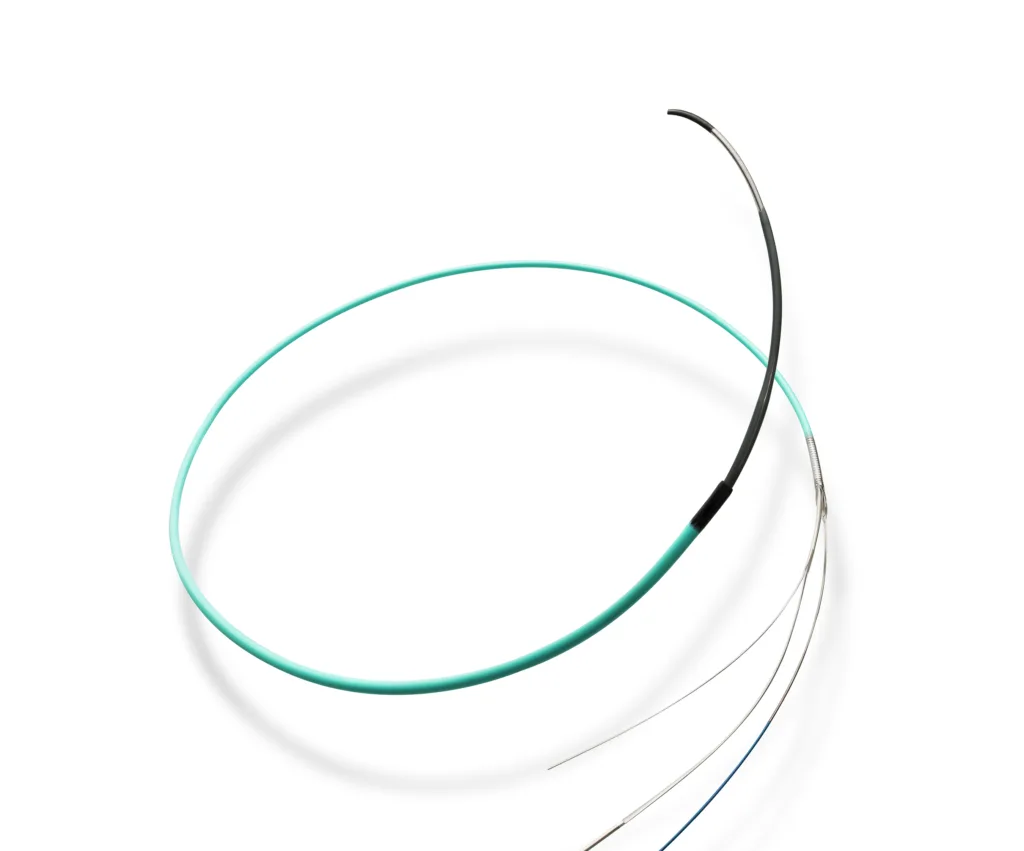
How does CrossFAST’s DuoPRO technology differ from conventional guide extension catheters?
CrossFAST uses Vantis Vascular’s proprietary DuoPRO interlocking technology, combining an inner monorail microcatheter with an outer delivery catheter. The two components connect to create a low-profile leading section, allowing the system to advance together over a guidewire. After the delivery catheter reaches the desired position, the inner microcatheter can be removed to provide a passage for other interventional devices.
Conventional guide extension catheters are used to provide additional support when equipment cannot easily reach a target coronary lesion. Many employ a relatively abrupt transition at the distal end of the extension catheter, creating a potential point of resistance when negotiating calcified or tortuous anatomy. CrossFAST’s integrated inner microcatheter is designed to provide a more gradual transition during advancement.
The design could be particularly useful when an interventional device repeatedly fails to advance despite adequate guidewire positioning. Instead of relying exclusively on additional guide support or more complex tracking techniques, the operator may use the integrated catheter arrangement to help reach the target vessel segment. Once positioned, the outer catheter can assist with delivery of the required treatment device.
However, the system’s design does not eliminate procedural risks associated with deep coronary intubation. Advancing support catheters into diseased vessels can create concerns involving dissection, vessel injury, obstruction of blood flow and equipment interaction. Successful use therefore depends on appropriate patient selection, device handling and operator experience.
The newer 6F model retains the integrated operating concept while addressing compatibility limitations associated with the smaller version. Its commercial differentiation will depend on whether physicians find that combination of deliverability and device compatibility useful across a sufficiently broad range of complex interventions.
What does FDA clearance K262817 establish about the new CrossFAST model?
The FDA’s public 510(k) database confirms that Vantis submitted the CrossFAST modification on August 7, 2026, and received a substantial equivalence determination on September 18. The submission, K262817, was reviewed as a Special 510(k), a pathway used for qualifying modifications to a manufacturer’s own existing device. The system is classified as a Class II percutaneous catheter under regulation 21 CFR 870.1250.
The clearance covers use of the system in conjunction with guide catheters to access selected regions of the coronary and peripheral vasculature and facilitate placement of interventional devices. This is broader than coronary use alone, although the October announcement emphasizes complex PCI as the principal commercial application. The precise equipment combinations and procedural conditions remain subject to the device’s cleared labeling.
A Special 510(k) clearance is different from a new medical device approved through the FDA’s premarket approval pathway. The agency determines whether the modified device meets the applicable substantial equivalence requirements, rather than establishing clinical superiority over competing catheter systems. The clearance permits marketing under the relevant regulatory controls but does not independently demonstrate improved procedural success or fewer adverse events.
This distinction also matters because CrossFAST was already commercially available before the latest decision. Vantis previously obtained regulatory clearance for the platform in 2024, followed by its United States commercial introduction in January 2025. The new decision is therefore an incremental product expansion, with a defined November 2026 market-entry plan.
What does the published four-patient CrossFAST study reveal about real-world performance?
A study published in the Journal of the Society for Cardiovascular Angiography & Interventions in March 2026 provides early clinical experience with the original CrossFAST configuration. The investigators reviewed four complex coronary interventions in which conventional approaches had failed to deliver the intended stents. The cases involved difficult anatomy in the right coronary artery, left circumflex artery, left anterior descending artery and a diagonal branch.
CrossFAST successfully crossed the target lesions and enabled stent delivery in all four procedures, according to the investigators. No complications were reported in the described cases, and the authors considered the technology a potentially useful alternative when established delivery techniques encounter difficulties. These observations support the practical feasibility of the system in selected complex interventions.
One case involved a tortuous right coronary artery with calcified disease that prevented delivery of a drug-eluting stent despite lesion preparation. The 5.5F CrossFAST system was advanced into the distal vessel, allowing the operator to remove its inner component and deliver the stent through the outer catheter. The procedure was completed with satisfactory angiographic results and no reported immediate complications.
The study also identified important limitations of the original device. Investigators reported that the 5.5F configuration could not accommodate certain larger stents or contemporary intravascular lithotripsy catheters, specifically identifying development of a 6F version as a way to address those restrictions. The newly cleared model therefore responds to a limitation documented in clinical use, rather than relying solely on a theoretical design improvement.
However, four successful cases cannot establish a reliable procedural success rate or characterize uncommon complications. The retrospective report did not include randomized comparison with conventional guide extension catheters, and the investigators acknowledged the need for additional clinical evidence. Its findings are relevant background for the platform but should not be presented as direct validation of the 6F modification.
Why are IVUS and intravascular lithotripsy becoming important in complex PCI?
Intravascular ultrasound allows physicians to examine coronary arteries from inside the vessel using a miniature ultrasound transducer mounted on a catheter. The images help characterize plaque, estimate vessel dimensions and assess whether a stent has been appropriately expanded after implantation. This information can influence device selection and procedural decisions, particularly when angiography alone provides an incomplete picture of coronary anatomy.
The clinical evidence supporting intravascular imaging is substantial, although results vary by study design and patient population. In the randomized RENOVATE-COMPLEX-PCI trial, published in 2023, the cumulative incidence of target-vessel failure was 7.7% with intravascular imaging guidance versus 12.3% with angiography guidance at a median follow-up of 2.1 years. The trial included 1,639 randomized patients and found a statistically significant reduction in the composite outcome with imaging guidance.
However, a separate randomized study published in 2026, IVUS-CHIP, produced a different result. Among approximately 2,020 randomized patients undergoing complex high-risk PCI, routine IVUS guidance did not significantly reduce target-vessel failure compared with angiography-guided intervention. At a median follow-up of 19 months, the event rates were 13.9% and 11.1%, respectively, with a statistically nonsignificant difference.
These results illustrate why the clinical value of intravascular imaging should be considered in the context of patient selection, procedural strategy and the available evidence. Importantly, neither trial evaluated the new CrossFAST catheter, so their outcomes cannot be used to claim that its larger lumen independently improves cardiovascular results.
Intravascular lithotripsy addresses a different procedural challenge by delivering acoustic pressure waves through a balloon catheter to modify calcified plaque. The technique can help prepare heavily calcified lesions before stent implantation, potentially improving the ability to achieve adequate stent expansion. However, its devices must still reach the treatment site, and difficult coronary anatomy can complicate their delivery.
The larger 6F CrossFAST may be useful in procedures involving both imaging and calcium modification because it is designed to accommodate a wider range of compatible equipment. That is a practical device-delivery proposition rather than evidence that CrossFAST itself modifies plaque or improves stent expansion. Its contribution must be distinguished from the clinical effect of the imaging or treatment technologies delivered through it.
What limitations and safety considerations remain for the 6F CrossFAST catheter?
The larger lumen addresses an important equipment compatibility issue, but procedural success involves more than internal catheter dimensions. Operators must consider the external catheter profile, guide catheter support, vessel diameter, arterial curvature and the risk of deep intubation. The manufacturer has not disclosed a complete comparative performance dataset quantifying differences in pushability, trackability or resistance between the 5.5F and 6F configurations.
The earlier clinical report also identified a limitation involving side-branch guidewires, which may need to be removed when advancing the system in certain circumstances. This can matter when a procedure involves significant disease near an arterial bifurcation or requires maintaining access to multiple branches. The October announcement does not establish that the new configuration eliminates that particular procedural constraint.
Other considerations include the potential for vessel injury, catheter-related obstruction, equipment entrapment and procedural delays if the system cannot be advanced or withdrawn as intended. These risks are not unique to CrossFAST and can be relevant to catheter-based coronary intervention generally. Appropriate training and adherence to device instructions remain important, particularly in heavily calcified or tortuous arteries.
Another unresolved issue concerns the evidence supporting the new 6F configuration specifically. Vantis has confirmed its FDA clearance and described its engineering changes, but has not disclosed a prospective clinical study evaluating procedural outcomes with the new model. The company’s claims about versatility and deliverability therefore remain distinct from demonstrated comparative patient benefits.
Post-launch experience may provide useful information about which anatomical situations benefit most from the wider lumen. It could also establish how often physicians use the system with intravascular ultrasound, lithotripsy devices or larger stents. Such evidence would make the commercial and clinical implications of the modification easier to assess.
How could the 6F expansion influence Vantis Vascular’s competitive position?
The guide extension and complex PCI device market includes established products from larger cardiovascular technology manufacturers, including Boston Scientific’s Guidezilla and Teleflex’s GuideLiner family. These technologies are familiar to many interventional cardiologists and have accumulated clinical experience across different procedural settings. Vantis is competing against established catheter systems rather than introducing a product into an entirely new market.
CrossFAST’s principal point of differentiation is its integrated microcatheter-led delivery mechanism. Vantis is seeking to address circumstances where conventional guide extension systems may encounter resistance during advancement through challenging coronary anatomy. The addition of a larger internal lumen gives the company an opportunity to make that approach relevant to a wider range of devices used in contemporary complex PCI.
The commercial opportunity nevertheless depends on hospital purchasing decisions, physician adoption, pricing and distribution capabilities. Healthcare institutions may consider a new catheter when it can address difficult procedural situations, but broader adoption requires confidence in product reliability and a compelling reason to change established practices. The available evidence does not yet establish that CrossFAST provides a measurable economic advantage.
Vantis has not disclosed pricing for the 6F model, expected sales volumes, distribution commitments or the number of hospitals currently using the 5.5F system. It has also not announced a revenue forecast attributable to the November launch. Consequently, the financial contribution of the product expansion cannot be reliably estimated.
The company is privately held, so the regulatory development also does not create a directly attributable public-market share-price catalyst. The more meaningful measures of progress will be commercial availability, adoption by interventional cardiology centers and subsequent clinical evidence demonstrating whether the expanded system improves procedural performance.
What will determine whether the November CrossFAST launch delivers meaningful clinical value?
The immediate milestone is commercial availability of the 6F CrossFAST system in November 2026. Vantis will be able to offer physicians two configurations intended for different procedural requirements, potentially reducing the number of situations in which its existing platform is unsuitable because of device compatibility. The announcement does not identify a specific launch day or quantify the initial distribution scale.
Clinical adoption will depend partly on how effectively the larger model accommodates intravascular ultrasound, lithotripsy and other compatible tools without sacrificing the deliverability that motivated the original system’s design. Operators will need to assess its performance in calcified, tortuous and difficult-to-access coronary segments. Product-specific training and the manufacturer’s compatibility instructions will be important components of that evaluation.
More extensive clinical reporting would also help determine whether the design offers consistent advantages over established approaches. Useful outcomes could include successful device delivery after conventional attempts fail, procedural complications, equipment exchanges, fluoroscopy exposure and overall procedure duration. Comparative evidence would be particularly valuable because successful use in isolated difficult cases cannot establish that one catheter system is generally preferable.
The FDA’s September clearance confirms that the 6F CrossFAST modification met the applicable substantial equivalence requirements, while the earlier four-patient clinical series provides preliminary support for the underlying integrated delivery concept. Together, these developments establish a credible foundation for commercialization but leave important questions about performance and clinical benefit unanswered.
For Vantis Vascular, the November launch will test whether expanding device compatibility can turn CrossFAST from a specialized solution for difficult stent delivery into a more versatile platform for complex coronary procedures. Demonstrating reliable performance with imaging and calcium-modification technologies could strengthen its position in interventional cardiology. The decisive measure will be whether that expanded functionality produces consistent procedural value beyond what existing guide extension systems already provide.