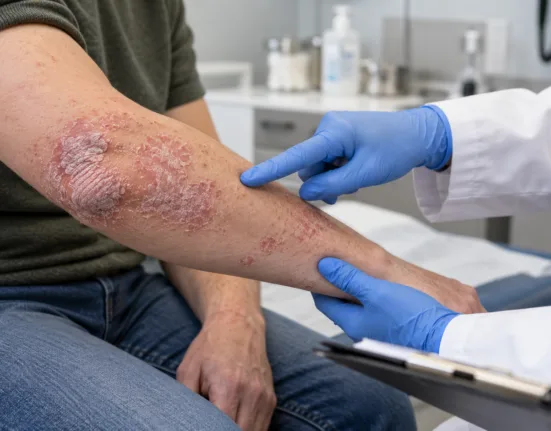
Oruka Therapeutics has reported positive Phase 2b clinical trial results for ORKA-001, an investigational long-acting biologic for moderate-to-severe plaque psoriasis, achieving complete skin clearance in 61% of patients receiving the highest dose after 16 weeks. The EVERLAST-B study met its primary endpoint, with 86% of high-dose patients also achieving at least 90% improvement in psoriasis severity. The findings provide further evidence supporting ORKA-001’s potential as a long-acting treatment for chronic inflammatory skin disease, with the company preparing to initiate Phase 3 trials during the first half of 2027.
The results closely align with findings from the earlier EVERLAST-A study, strengthening confidence in the treatment’s reproducibility across separate patient populations. Oruka Therapeutics is developing ORKA-001 with the longer-term goal of maintaining skin clearance through once- or twice-yearly dosing, although the durability of this proposed maintenance schedule remains under clinical investigation.
How did ORKA-001 perform in the Phase 2b EVERLAST-B psoriasis clinical trial?
The randomized, double-blind, placebo-controlled EVERLAST-B study enrolled 187 patients with moderate-to-severe plaque psoriasis across 36 clinical sites in the United States, Canada and Europe. Participants were assigned equally across four treatment groups to evaluate the efficacy, safety and pharmacokinetics of different ORKA-001 dosing regimens.
Patients received either 37.5 mg at Week 0, 300 mg at Weeks 0 and 4, 600 mg at Weeks 0 and 4, or placebo. The study’s primary endpoint was the proportion of participants achieving a Psoriasis Area and Severity Index score of PASI 100 at Week 16, representing complete clearance of measurable psoriasis signs.
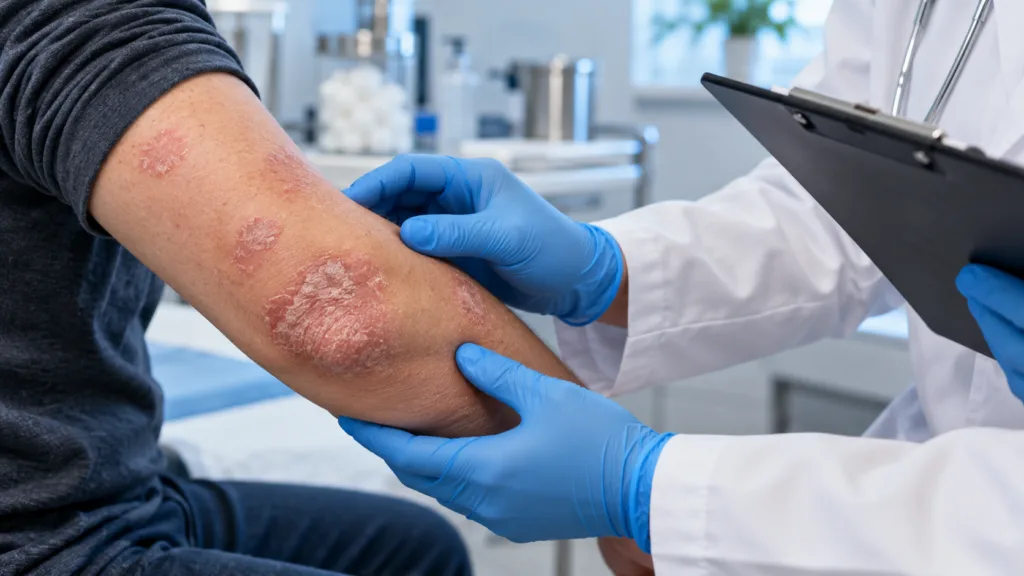
Among the 46 patients receiving the 600 mg regimen, 61% achieved PASI 100 compared with none of the 47 placebo recipients. The difference was highly statistically significant, with a p-value below 0.0001, indicating a substantial treatment effect on the trial’s primary efficacy measure.
The lower-dose groups also demonstrated meaningful activity. Complete skin clearance was achieved by 43% of patients receiving 37.5 mg and 44% receiving 300 mg, suggesting that ORKA-001 produces clinical responses across several exposure levels while the highest tested regimen delivered the strongest clearance outcome.
The 600 mg group also achieved an 86% PASI 90 response rate, meaning that nearly nine in ten patients experienced at least a 90% reduction in psoriasis severity. Investigator’s Global Assessment scores of clear or almost clear skin were similarly achieved by 86% of high-dose participants.
By comparison, PASI 90 rates reached 70% in the lowest-dose group and 85% in the intermediate-dose group. Investigator’s Global Assessment response rates were 74% and 85%, respectively, while no placebo recipients achieved either of these secondary outcomes.
These results demonstrate strong short-term activity across multiple established psoriasis measures. However, the 61% complete-clearance finding reflects the outcomes of 46 high-dose participants, making larger studies necessary to determine how reliably the effect can be reproduced across diverse patient populations.
Why could ORKA-001’s long-acting IL-23 mechanism change plaque psoriasis treatment?
ORKA-001 is a monoclonal antibody designed to selectively inhibit the p19 subunit of interleukin-23, an inflammatory signaling protein that contributes to the immune processes underlying plaque psoriasis. Interleukin-23 plays an important role in maintaining inflammatory pathways involving T helper 17 cells and related cytokines. These pathways contribute to excessive skin-cell production, inflammation and the formation of thickened, scaly plaques characteristic of psoriasis.
Several approved biologic medicines already target interleukin-23 and have established this pathway as an important therapeutic approach. Oruka Therapeutics is attempting to differentiate ORKA-001 through an extended antibody half-life intended to maintain therapeutic activity for longer periods between injections.
The company’s ultimate goal is to provide sustained disease control with administration as infrequently as once or twice annually. This approach could potentially reduce treatment burden for patients who currently require repeated injections throughout the year.
Plaque psoriasis is a chronic, immune-mediated disorder that frequently requires long-term management. Although effective treatments are available, maintaining consistent disease control can involve practical challenges associated with medication schedules, healthcare appointments and treatment adherence.
A biologic capable of delivering high rates of skin clearance with less frequent dosing could therefore offer an important convenience advantage. However, the current Week 16 findings primarily establish short-term efficacy following the initial dosing regimen rather than demonstrating that annual treatment can sustain remission.
The proposed maintenance schedule must be evaluated through longer follow-up, including assessments of relapse rates, durability of complete skin clearance, immunogenicity and safety over repeated treatment cycles.
How do the EVERLAST-B results compare with Oruka’s earlier EVERLAST-A findings?
The positive EVERLAST-B results provide important confirmation of the treatment activity previously observed in EVERLAST-A, another clinical study evaluating ORKA-001 in moderate-to-severe plaque psoriasis. Oruka Therapeutics previously reported that complete skin clearance in EVERLAST-A reached 71.4% by Week 28, while 87.3% of patients achieved PASI 90. Importantly, these responses deepened after the initial treatment period despite no additional dosing after Week 4.
That observation provided preliminary evidence that ORKA-001’s therapeutic effects might continue developing over time, an important consideration for a treatment designed around extended dosing intervals. The latest EVERLAST-B findings strengthen the consistency of the clinical program because fewer than 30% of its research sites had participated in EVERLAST-A. Demonstrating similar responses across largely different clinical centers reduces concerns that the earlier findings were unique to one study environment. However, the studies cannot establish that ORKA-001 is more effective than currently approved interleukin-23 inhibitors. Differences in trial populations, baseline disease severity, statistical methods and assessment timing make direct comparisons between separate studies unreliable.
Joel Gelfand, professor of dermatology and epidemiology at the University of Pennsylvania and lead investigator for EVERLAST-B, indicated that the findings suggested a potentially competitive treatment profile combining high skin-clearance rates with the prospect of infrequent dosing. His interpretation reflects the promising efficacy and proposed treatment convenience, but the potential advantages over approved biologics remain unconfirmed without appropriately designed comparative evidence.
What did the Phase 2b trial reveal about ORKA-001 safety and tolerability?
Oruka Therapeutics reported that ORKA-001 was generally well tolerated through Week 16, with a safety profile consistent with previous experience involving interleukin-23 p19 inhibitors. Treatment-emergent adverse events occurred in 39% of patients receiving the 600 mg regimen compared with 43% receiving placebo. Across all three ORKA-001 dose groups, 49% of treated participants experienced at least one treatment-emergent adverse event.
The most frequently reported adverse events among ORKA-001 recipients were upper respiratory tract infections and headaches, affecting 14% and 6% of treated patients, respectively. No serious or severe treatment-emergent adverse events occurred in the high-dose group, and no injection-site reactions were reported among participants receiving ORKA-001. Investigators also observed no clear dose-dependent increase in adverse events across the treatment groups.
However, three serious treatment-emergent adverse events occurred among patients receiving the lower and intermediate doses. These were not considered treatment-related by investigators, and their occurrence reinforces the importance of evaluating the complete safety dataset rather than focusing exclusively on the highest-dose group.
Two participants receiving ORKA-001 discontinued treatment because of adverse events. Although the overall tolerability findings are encouraging, the limited sample size and 16-week assessment period cannot reliably characterize uncommon complications or long-term risks associated with prolonged immune modulation. Larger Phase 3 studies and longer observation periods will therefore be necessary to evaluate infection risk, repeated exposure, antibody formation and other clinically relevant safety outcomes.
Can ORKA-001 maintain complete skin clearance with once- or twice-yearly dosing?
The durability of ORKA-001’s treatment effect will be a central focus as EVERLAST-B continues beyond its initial 16-week assessment. At Week 28, patients receiving ORKA-001 who have achieved PASI 100 will be randomized again to either an annual 600 mg maintenance regimen or placebo. The first annual maintenance dose is scheduled for Week 52, allowing investigators to study whether complete clearance can be maintained over an extended period.
Participants who have not achieved PASI 100 by Week 28 will receive ORKA-001 at 300 mg every six months, supporting evaluation of a more frequent maintenance approach. The trial will continue through Week 100, providing additional information about durability, maintenance dosing and longer-term safety. These assessments are important because plaque psoriasis frequently relapses when effective treatment is withdrawn or its biological activity diminishes.
Oruka Therapeutics expects to report 52-week findings from EVERLAST-A in December 2026, followed by 52-week EVERLAST-B results during the second half of 2027. These upcoming readouts should provide more direct evidence concerning whether the treatment’s initial high response rates translate into sustained control without frequent administration.
What comes next for ORKA-001 as Oruka Therapeutics prepares Phase 3 development?
Following the positive EVERLAST-B results, Oruka Therapeutics intends to engage with regulatory authorities regarding the design of its Phase 3 program in moderate-to-severe plaque psoriasis. The company plans to initiate pivotal studies during the first half of 2027 using the 600 mg regimen, subject to regulatory discussions. The decision reflects the higher complete-clearance rate observed at this dose and the consistency of findings across the clinical program.
Chief medical officer Joana Goncalves indicated that the results strengthened confidence in ORKA-001’s potential to combine substantial skin clearance with convenient long-term dosing. However, regulatory authorities will need to evaluate whether the proposed trial designs can adequately establish efficacy, safety and the durability of treatment response.
Oruka is also developing ORKA-002, another investigational interleukin-23-targeting biologic, with Week 16 Phase 2 ORCA-SURGE results expected during the first quarter of 2027. These findings may contribute to the company’s broader dermatology strategy but will require independent interpretation. For patients living with moderate-to-severe psoriasis, ORKA-001’s positive Phase 2b results provide encouraging evidence of a potential future treatment offering substantial skin clearance with fewer injections.
The most important unanswered question is whether those improvements can be maintained safely over prolonged periods. The forthcoming 52-week analyses and planned Phase 3 trials will determine whether the investigational therapy can translate promising short-term outcomes into reliable long-term disease control.