Oruka Therapeutics has reported that skin-clearance responses with ORKA-001 continued to improve through Week 28 in the Phase 2a EVERLAST-A study even though patients received no additional treatment after Week 4. Complete skin clearance, measured by PASI 100, increased from 63.5% at Week 16 to 71.4% at Week 28, while 87.3% of treated patients achieved PASI 90. The durability finding strengthens Oruka Therapeutics’ effort to develop an IL-23p19 biologic that could eventually be administered only once or twice per year in moderate-to-severe plaque psoriasis.
The results remain early and come from only 63 initially treated patients, making larger dose-ranging and Phase 3 studies necessary before the treatment’s comparative efficacy or long-term dosing interval can be established. Still, responses deepening approximately six months after the second induction dose provide an important pharmacodynamic signal ahead of the fully enrolled Phase 2b EVERLAST-B readout expected later in 2026 and a planned Phase 3 program in the first half of 2027.
PASI 100 rises above 70% six months after patients received their second ORKA-001 dose
EVERLAST-A enrolled 84 adults with moderate-to-severe plaque psoriasis across 26 sites in the United States and Canada. Patients were randomized three-to-one to receive 600 milligrams of ORKA-001 at Weeks 0 and 4 or matching placebo, while patients initially assigned to placebo crossed over to active treatment at Weeks 16 and 20. The study continues through Week 52 to evaluate durability, maintenance dosing and longer-term safety.
At Week 16, 40 of 63 patients initially treated with ORKA-001 achieved PASI 100, representing complete clearance of psoriasis lesions. That rate increased to 45 of 63 patients, or 71.4%, by Week 28 despite the absence of additional dosing after Week 4. PASI 90, representing at least a 90% improvement in Psoriasis Area and Severity Index, increased to 87.3%, while Investigator Global Assessment scores of clear or almost clear were maintained in 84.1% of patients.
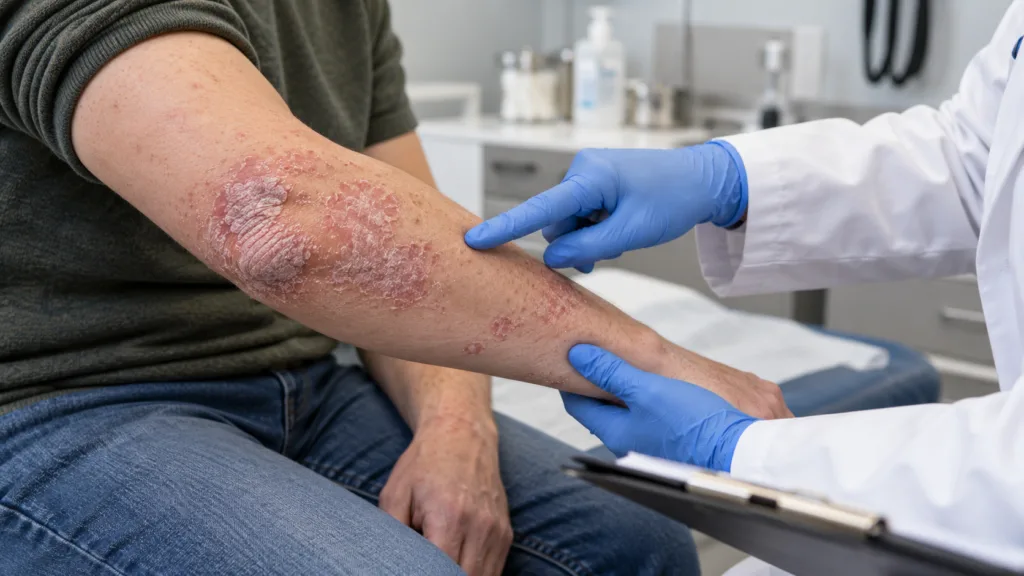
The continued improvement is notable because the primary cohort had gone approximately 24 weeks without another dose by the Week 28 assessment. Rather than showing evidence of waning effect as the interval from treatment increased, the proportion of patients reaching complete clearance continued to rise.
The crossover group provided an additional internal check on the pattern. Among patients initially receiving placebo who began ORKA-001 at Week 16, 40% achieved PASI 100 by Week 28, 12 weeks after treatment began. At the equivalent 12-week time point, 42.9% of patients in the original active-treatment group had achieved PASI 100, suggesting a broadly similar early response trajectory between the two cohorts.
These results strengthen the durability argument but should not yet be interpreted as evidence that ORKA-001 is superior to marketed psoriasis biologics. EVERLAST-A is relatively small, and comparisons across separate clinical trials can be misleading because patient characteristics, prior therapy, endpoint handling and study design differ.
Extended half-life could allow ORKA-001 to compete on dosing frequency as well as skin clearance
ORKA-001 is a half-life-extended monoclonal antibody targeting interleukin-23 p19, a validated inflammatory pathway already addressed by several approved psoriasis treatments. Oruka Therapeutics is therefore not attempting to establish an entirely new psoriasis mechanism; its differentiation strategy centers largely on achieving deep clearance with substantially less frequent maintenance treatment.
Current IL-23 inhibitors already provide relatively convenient dosing. The United States prescribing information for Skyrizi calls for injections at Weeks 0 and 4 followed by treatment every 12 weeks, while Tremfya is administered at Weeks 0 and 4 and every eight weeks thereafter for plaque psoriasis.
Oruka Therapeutics is aiming substantially beyond those intervals. Earlier pharmacokinetic and pharmacodynamic work showed ORKA-001 concentrations remaining above the company’s estimated effective trough level for a full year after a single 600-milligram dose, supporting development toward once- or twice-yearly maintenance dosing.
The Week 28 data add clinical evidence to that pharmacokinetic thesis. If high levels of complete skin clearance remain durable into Week 52 without frequent redosing, ORKA-001 could potentially reduce the treatment burden associated with long-term biologic therapy.
That possibility will require confirmation in larger studies. Psoriasis is a chronic condition in which patients may remain on biologics for years, meaning physicians need confidence not only in initial clearance but also in predictable maintenance of response between injections. A long interval could become less attractive if some patients experience breakthrough disease well before their next planned dose.
The December Week 52 analysis should therefore be particularly informative. It is expected to show whether the high response rates observed at Week 28 persist as the interval from induction dosing becomes considerably longer.
Safety remains consistent with the IL-23 class as longer follow-up continues
ORKA-001 continued to show a generally favorable safety and tolerability profile through Week 28. Between Weeks 16 and 28, upper respiratory tract infection was the only treatment-emergent adverse event reported in at least 5% of treated patients, occurring in seven of 83 patients who had received ORKA-001 across the initial and crossover cohorts.
Two serious adverse events were reported: one tibial fracture and one prostate adenocarcinoma in a patient who already had elevated prostate-specific antigen levels at baseline. Investigators did not consider either serious event related to ORKA-001. No injection-site reactions were reported, and anti-drug antibodies had not shown an observed effect on safety, efficacy or pharmacokinetics.
The dataset remains too small to fully characterize uncommon adverse events, and longer exposure will be needed if Oruka Therapeutics ultimately intends patients to receive the biologic over many years. The existing results nevertheless support advancement into larger trials without an obvious safety signal that would undermine the long-interval dosing strategy.
EVERLAST-B should provide the next important test. The Phase 2b study has enrolled 187 patients and is evaluating dose-ranging strategies intended to support Phase 3 selection. Week 16 results are expected during the fourth quarter of 2026, with Oruka Therapeutics planning to begin a Phase 3 program during the first half of 2027 if the broader evidence remains supportive.
Oruka enters upcoming psoriasis catalysts with a large cash position but a sharply higher valuation
Oruka Therapeutics has substantial financial resources for a clinical-stage biotechnology company. It reported approximately $1.1 billion in cash, cash equivalents and marketable securities at the end of the second quarter and expects those resources to fund operations through a potential Biologics License Application for ORKA-001.
That balance sheet reduces near-term financing risk as the company approaches expensive Phase 3 development. It also gives Oruka Therapeutics flexibility to advance additional dermatology programs, including ORKA-002 in psoriasis and hidradenitis suppurativa and its earlier-stage ORKA-004 program targeting TL1A.
Investor expectations, however, have risen dramatically alongside the clinical progress. Oruka Therapeutics’ market capitalization was approximately $5.7 billion during September 23 trading, up more than fivefold over the previous year. Shares were down sharply in afternoon trading despite the positive Week 28 update, falling to roughly $85.50 at around 1 p.m. Eastern compared with the prior close of $94.55.
The decline does not necessarily indicate that investors viewed the clinical results as weak. Market commentary noted that the positive durability outcome had been widely anticipated after the strong Week 16 data, while the stock had already appreciated dramatically ahead of the update.
Analyst sentiment remains favorable but should be considered in the context of that elevated valuation. S&P Global Market Intelligence data compiled by StockAnalysis showed 13 analysts with a Strong Buy consensus and an average price target of $155 as of September 23. Such targets represent analyst expectations rather than reliable forecasts, particularly for a company whose lead program has not yet entered Phase 3.
The next several months should provide considerably more evidence. EVERLAST-B Week 16 results are expected during the fourth quarter, followed by full Week 52 EVERLAST-A data in December. Together, those readouts should clarify whether ORKA-001 can consistently combine deep clearance with unusually durable activity before Oruka Therapeutics commits to pivotal development.
The Week 28 results strengthen the case that ORKA-001’s extended half-life may translate into more than a pharmacokinetic advantage. More than seven in 10 initially treated patients achieved complete skin clearance months after their last dose, while responses continued to deepen rather than fade. The larger question is whether that profile remains durable through one year and reproducible across the much larger populations required for Phase 3.