Pasithea Therapeutics has received U.S. Food and Drug Administration clearance to advance its experimental oral medicine PAS-004 into a randomized Phase 2 clinical trial for neurofibromatosis type 1-associated cutaneous neurofibromas, a genetic condition that causes benign tumors to develop on or beneath the skin. The investigational once-daily MEK inhibitor is being developed as a potential systemic treatment for patients with extensive skin tumor involvement, addressing an area where current management relies largely on surgical and other procedural interventions. The regulatory milestone allows Pasithea to expand clinical development into a second neurofibromatosis-related indication, although PAS-004 has not yet demonstrated effectiveness in a controlled trial involving cutaneous neurofibromas.
The planned study will operate under an active Investigational New Drug application overseen by the FDA’s Division of Dermatology and Dentistry. Pasithea supported its submission with nonclinical safety information and clinical findings from ongoing investigations involving plexiform neurofibromas and advanced cancers. The company believes the medicine’s prolonged half-life and pharmacokinetic characteristics could support chronic treatment, but larger studies are needed to establish whether these properties translate into meaningful and sustainable tumor reduction.
Why FDA clearance for PAS-004 represents an important development in treating NF1-associated cutaneous neurofibromas
The FDA’s clearance allows Pasithea Therapeutics to proceed with a randomized, placebo-controlled Phase 2 study evaluating PAS-004 in patients with neurofibromatosis type 1-associated cutaneous neurofibromas. This marks an expansion of the company’s clinical program beyond its existing investigations involving plexiform neurofibromas and advanced solid tumors.
The regulatory decision confirms that the company may conduct the proposed study under its active Investigational New Drug application. However, IND clearance does not establish clinical efficacy, indicate regulatory endorsement of the treatment’s anticipated benefits or constitute authorization to market PAS-004.
Pasithea has not disclosed the planned Phase 2 enrollment size, treatment dose, primary endpoint or first-patient enrollment date in its November 3 announcement. Those details will be important for evaluating how investigators intend to measure changes in tumor burden, treatment tolerability and patient-reported outcomes.
The study will provide an opportunity to investigate whether oral treatment can influence cutaneous neurofibromas across multiple affected skin areas. A placebo-controlled design should also help distinguish treatment-associated changes from natural variations in tumor appearance or measurement.
Chief medical officer Kartik Krishnan indicated that the clearance represents an important development for patients experiencing the visible and physical consequences of cutaneous neurofibromas. Management believes a long-acting oral therapy could offer a new approach for patients whose disease burden is difficult to manage through repeated procedures.
How neurofibromatosis type 1 causes cutaneous neurofibromas and affects patients’ daily lives
Neurofibromatosis type 1 is an inherited genetic disorder associated with changes in the NF1 gene, which provides instructions for producing neurofibromin. This protein helps regulate cellular signaling pathways involved in growth and proliferation.
When neurofibromin function is impaired, abnormal activation of the RAS/MAPK signaling pathway can contribute to the development of tumors arising from nerve-associated tissues. Cutaneous neurofibromas are among the most recognizable manifestations of the disorder.
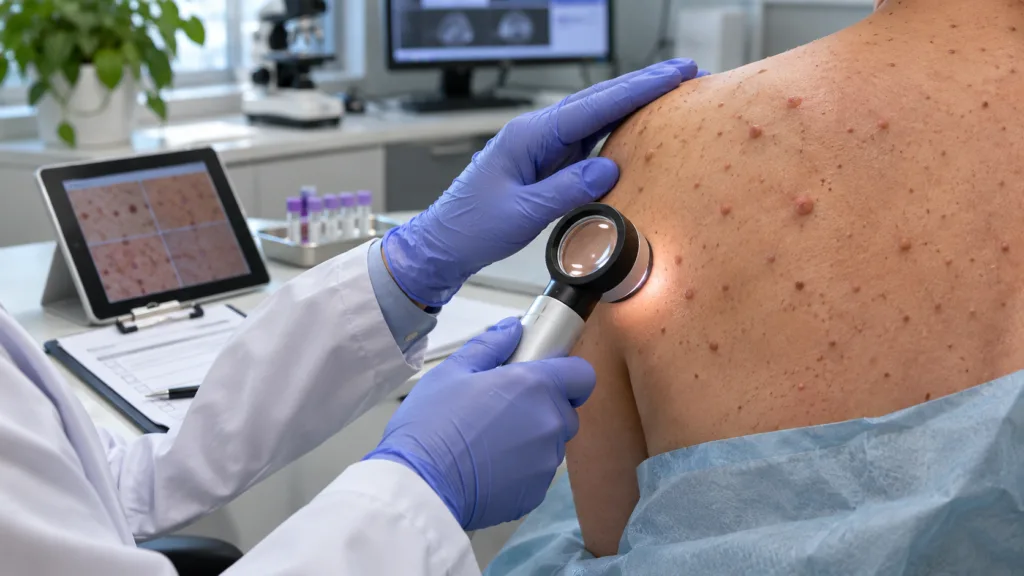
These benign tumors develop within or immediately beneath the skin and can appear throughout the body. They frequently begin emerging during adolescence and may increase in both number and size as patients grow older.
More than 95% of people with neurofibromatosis type 1 develop cutaneous neurofibromas, according to information highlighted by Pasithea. The number of lesions can vary considerably, ranging from a few isolated growths to thousands distributed across multiple body regions.
Although cutaneous neurofibromas are benign and are not generally considered precursors to malignant tumors, they can create substantial physical and psychological burdens. Lesions may cause discomfort, irritation, disfigurement and difficulties with clothing or routine activities.
Facial involvement and extensive tumor burden can have particularly significant consequences for body image and quality of life. Patients may experience social stigma and emotional distress, making treatment goals broader than reducing the size of individual lesions.
Pasithea estimates that more than 80,000 people in the United States have moderate-to-severe cutaneous neurofibroma involvement associated with NF1. This company estimate illustrates the potential scale of the unmet need but does not establish how many patients would qualify for future PAS-004 treatment.
How does PAS-004 target the MEK signaling pathway involved in neurofibromatosis tumor growth?
PAS-004 is an investigational macrocyclic inhibitor of MEK1 and MEK2, enzymes involved in the mitogen-activated protein kinase signaling pathway. This pathway helps control processes including cell proliferation, differentiation and survival.
In patients with neurofibromatosis type 1, loss of normal neurofibromin activity can cause excessive signaling through the RAS/MAPK pathway. Abnormal pathway activation contributes to the growth of neurofibromas and other manifestations associated with the condition.
MEK inhibitors are designed to interrupt signaling downstream of RAS and RAF, potentially reducing the activity of cellular processes that support abnormal tumor growth. This mechanism has already been explored in several cancers and NF1-associated tumor conditions.
Pasithea describes PAS-004 as a next-generation oral macrocyclic MEK inhibitor designed for prolonged treatment. The company believes its extended half-life and relatively flat pharmacokinetic profile may provide sustained pathway inhibition with once-daily administration.
A flatter drug exposure profile could theoretically reduce pronounced fluctuations in circulating drug concentrations. However, whether these characteristics improve tolerability or clinical effectiveness compared with other MEK inhibitors has not been established.
Long-term treatment considerations are particularly important for cutaneous neurofibromas because patients may live with extensive lesions for decades. An effective systemic treatment would need to balance tumor reduction against adverse effects associated with chronic pathway inhibition.
The Phase 2 study will therefore be important for assessing not only potential changes in skin tumors but also whether PAS-004 can be administered safely over a clinically meaningful treatment period.
What existing PAS-004 clinical studies reveal about its development in neurofibromatosis and cancer
Pasithea Therapeutics is already evaluating PAS-004 in a Phase 1/1b study involving adults with neurofibromatosis type 1-associated plexiform neurofibromas. These tumors differ from cutaneous neurofibromas because they can involve larger nerve networks and deeper tissues, sometimes producing extensive functional impairment.
The ongoing study is assessing safety, tolerability, pharmacokinetics and preliminary treatment activity in patients with symptomatic, inoperable or recurrent plexiform neurofibromas. Its findings contributed to the evidence supporting the new cutaneous neurofibroma IND application.
PAS-004 is also being investigated in a separate Phase 1 study involving adults with advanced solid tumors associated with alterations in the RAS/MAPK pathway. This program is intended to evaluate drug exposure, safety and potential antitumor activity across selected molecular backgrounds.
The company stated that its regulatory submission incorporated early treatment-response signals from these existing programs. However, the November 3 announcement did not provide numerical response rates, tumor-volume reductions or statistical analyses supporting those observations.
Consequently, the existing evidence should be interpreted as preliminary support for continued investigation rather than proof that PAS-004 can shrink cutaneous neurofibromas. Results from plexiform tumors or advanced cancers cannot automatically be generalized to skin-associated lesions.
Pasithea is scheduled to present initial clinical findings from its NF1 program at the European Neurofibromatosis Conference in Vienna, Austria, during November 12–14. The presentations are expected to provide additional information about early clinical activity and treatment characteristics.
These findings could help clarify the rationale for the next development stage, although the randomized cutaneous neurofibroma study will still be necessary to establish effectiveness in its intended patient population.
Why an oral systemic treatment could address limitations of existing cutaneous neurofibroma management
Treatment of cutaneous neurofibromas currently relies primarily on procedures such as surgical excision, laser therapy and electrodesiccation. These approaches may remove selected lesions or improve their appearance but can become difficult to apply comprehensively when patients have extensive tumor involvement.
Patients with numerous lesions may require repeated interventions over time, and removing individual neurofibromas does not necessarily prevent additional lesions from appearing. Procedural approaches may also be associated with discomfort, scarring and recovery requirements.
An effective oral medicine could potentially offer broader treatment coverage by acting on cellular pathways involved in tumor growth throughout the body. Such an approach may be particularly relevant for patients with large numbers of lesions distributed across several anatomical regions.
However, the therapeutic implications remain hypothetical until clinical studies demonstrate that PAS-004 produces meaningful changes in cutaneous tumor burden. The treatment would also need to show that its potential benefits justify systemic exposure in patients whose tumors are benign.
MEK inhibitors can be associated with adverse effects affecting the skin, gastrointestinal system, eyes and cardiovascular function, depending on the medicine and treatment regimen. These established class considerations reinforce the importance of determining PAS-004’s individual safety profile during prolonged administration.
While certain MEK inhibitors have received regulatory approval for specific NF1-associated plexiform neurofibromas, those approvals should not be confused with authorization to treat cutaneous neurofibromas. Pasithea’s new program specifically addresses this distinct manifestation of NF1.
What comes next for Pasithea Therapeutics as PAS-004 advances toward Phase 2 testing?
With its Investigational New Drug application now cleared, Pasithea Therapeutics can proceed with operational preparations for the randomized Phase 2 study in cutaneous neurofibromas. The company will need to establish trial-site readiness, treatment protocols, eligibility criteria and standardized methods for evaluating clinical outcomes.
Additional information about the study’s planned enrollment, treatment duration and primary efficacy endpoint will help clarify the strength of the forthcoming evidence. Patient-reported measures could also become important because the burden of cutaneous neurofibromas extends beyond lesion size.
Pasithea intends to pursue regulatory development for cutaneous neurofibromas as a second indication for PAS-004. Nevertheless, its future approval prospects will depend on results from adequately controlled studies, longer-term safety observations and continued FDA discussions.
The forthcoming European Neurofibromatosis Conference presentations represent another near-term opportunity to examine the company’s existing clinical evidence. Further findings may help inform dose selection and development priorities, but they will not replace the need for direct evidence in cutaneous neurofibromas.
For patients living with extensive NF1-associated skin tumors, the FDA clearance represents meaningful progress toward evaluating a possible oral treatment option. However, the medicine remains investigational, and no clinical benefit has yet been established for this new indication.
The central question is whether sustained MEK inhibition with PAS-004 can safely reduce tumor burden and improve daily functioning in patients with cutaneous neurofibromas. The planned Phase 2 trial will be an important step toward answering that question.