Aptar Pharma, the pharmaceutical division of AptarGroup, Inc. (NYSE: ATR), announced on November 12, 2026, that its formulation and clinical manufacturing facility in Boonton, New Jersey, has obtained United States Drug Enforcement Administration registration covering Schedule II and III controlled substances. The registration authorises specified activities involving the handling, storage, manufacturing and testing of these substances, expanding the facility’s capabilities for pharmaceutical developers working on complex inhaled and nasal medicines.
The development strengthens Aptar Pharma’s position as an integrated drug delivery services provider rather than simply a manufacturer of pharmaceutical dispensing devices. The Boonton facility already offers formulation development, analytical testing, stability studies, clinical trial materials manufacturing and fill-and-finish services for orally inhaled and nasal drug products. Adding controlled-substance capabilities allows the company to support a broader range of development programmes within that existing infrastructure.
The announcement is principally a manufacturing and regulatory capability milestone, not a new medicine approval or evidence of clinical effectiveness. Its commercial significance depends on whether pharmaceutical developers use the expanded services to consolidate development activities, reduce operational handoffs and move investigational products through early clinical stages more efficiently. No new customer contracts, revenue commitments or specific controlled-substance drug development programmes were disclosed.
Why does DEA Schedule II and III registration matter for inhaled and nasal drug development?
Pharmaceutical development involving controlled substances requires an additional layer of regulatory and operational oversight beyond the quality systems normally associated with clinical manufacturing. Facilities working with these materials must maintain appropriate registration, security, inventory accountability, recordkeeping and controls intended to prevent diversion. These requirements can influence where pharmaceutical companies conduct formulation experiments, analytical testing, technology transfer and production of investigational clinical supplies.
The complexities become particularly relevant when a developer is exploring an alternative route of administration. An existing active pharmaceutical ingredient may have an established pharmacological profile, but converting it into a nasal spray or orally inhaled formulation can introduce new questions about absorption, delivered dose, formulation stability and device performance. Controlled-substance restrictions create additional operational requirements throughout this development process.
For smaller pharmaceutical developers, establishing an appropriately authorised manufacturing facility may not be commercially practical. Outsourcing can provide access to specialised infrastructure without the substantial fixed investment required to establish in-house controlled-substance capabilities. However, the developer remains responsible for ensuring that the contracted services and resulting product meet applicable clinical, quality and regulatory requirements.
Aptar Pharma’s Boonton facility can now offer eligible customers a broader combination of controlled-substance handling and pharmaceutical development services. The specific authorisations apply to the facility and activities covered by its registration, rather than automatically extending across every Aptar Pharma manufacturing location or every controlled substance. Individual development programmes will still require the appropriate regulatory permissions, material controls and product-specific validation.
How could integrated formulation and clinical manufacturing reduce complexity for pharmaceutical developers?
Orally inhaled and nasal drug products are technically demanding because successful delivery depends on the interaction between the pharmaceutical formulation and its administration system. Factors such as particle or droplet characteristics, formulation viscosity, device geometry and delivered-dose consistency can influence how much medicine reaches the intended anatomical location. Analytical performance must therefore be considered alongside formulation chemistry and device engineering.
A developer using several external providers may need one organisation to develop the formulation, another to manufacture clinical trial supplies and a third to conduct specialised analytical testing. That arrangement can work effectively, but it creates interfaces where technical information, manufacturing specifications and responsibility for investigating deviations must be carefully coordinated. Moving material between authorised facilities may also add scheduling, documentation and logistics requirements.
Aptar Pharma’s expanded Boonton offering brings several of these activities into a common services environment. The facility can support formulation development, technology transfer, clinical manufacturing under applicable Good Manufacturing Practice requirements, stability work, analytical testing and regulatory documentation. For programmes involving controlled substances, the ability to coordinate these functions with the necessary security and accountability controls may provide a practical advantage.
However, integrated services do not automatically shorten development timelines. Pharmaceutical companies must still complete formulation optimisation, method validation, stability investigations, quality assessments and any clinical studies required for their proposed product. The efficiency benefit will depend on whether early technical coordination prevents repeat work or delays that would otherwise occur when responsibilities are divided among suppliers.
The distinction is important commercially. Aptar Pharma has expanded its addressable service capabilities, but the announcement does not demonstrate a measured reduction in customers’ development costs or time to clinical testing. Those benefits remain potential operational advantages that would need to be established through actual customer programmes.
Why are controlled-substance requirements particularly relevant to complex nasal medicines?
Nasal administration can be attractive for medicines where an alternative to swallowing tablets or receiving injections is being investigated. Depending on the molecule and formulation, developers may seek rapid systemic absorption, local activity or other pharmacokinetic characteristics. Nevertheless, the nasal route does not guarantee faster action, improved safety or enhanced therapeutic effectiveness.
For substances with central nervous system effects, formulation and delivery characteristics may become especially important because changes in systemic exposure can influence both therapeutic and adverse effects. Drug developers must establish the relationship between dose, delivered quantity, absorption and clinical response rather than assuming that the active ingredient behaves identically across administration routes. The controlled status of a substance adds further requirements but does not itself determine the most appropriate drug delivery technology.
Nasal spray performance can also vary with device design, priming, administration technique and formulation properties. A product intended to deliver tightly controlled doses must demonstrate appropriate consistency under the conditions specified for its use. Depending on the proposed formulation and regulatory pathway, developers may also need to assess extractables and leachables, container closure integrity, stability and human factors.
Aptar Pharma’s combination of device technologies and pharmaceutical development services is relevant to these questions because the drug formulation and administration system cannot always be optimised independently. Decisions made during formulation development may influence the choice of spray device, while device characteristics may constrain the formulation. Addressing those interactions earlier can help avoid late-stage redesign, although the suitability of each system remains product-specific.
The Boonton registration therefore expands the kinds of pharmaceutical development activities Aptar Pharma can undertake rather than creating a new therapeutic category. Any eventual clinical benefits would depend on the investigational products developed using the facility, their supporting evidence and subsequent regulatory decisions.
How does the Boonton expansion fit Aptar Pharma’s broader respiratory drug delivery strategy?
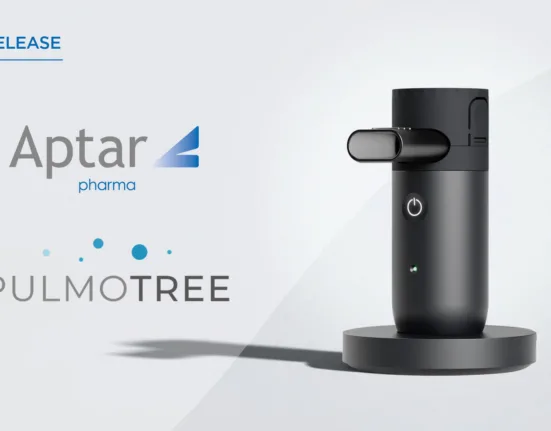
The controlled-substance registration follows other developments that have strengthened Aptar Pharma’s capabilities across pharmaceutical delivery systems and associated services. In October 2026, the company acquired Pulmotree, adding the Kolibri Non-Propellant Liquid Inhaler platform to its respiratory technology portfolio. The acquisition built on an earlier collaboration and expanded Aptar Pharma’s direct involvement in developing more complex pulmonary delivery technologies.
The company also maintains specialised inhalation development capabilities through Nanopharm, including formulation characterisation and analytical services for orally inhaled and nasal drug products. These operations support a wider strategy of combining delivery components, pharmaceutical analysis and development services rather than relying exclusively on sales of individual devices.
The Boonton announcement adds a different element to that strategy. Whereas the Pulmotree acquisition extended Aptar Pharma’s inhalation technology portfolio, the controlled-substance registration expands the range of active ingredients and development programmes that a particular services facility can support. Together, these capabilities may help the company engage pharmaceutical developers at an earlier stage, before delivery-system decisions and manufacturing processes become firmly established.
Earlier involvement can create opportunities for continued work as a development programme progresses from laboratory formulation to clinical supply manufacturing and potentially commercial production. However, customer retention is not automatic, and commercial manufacturing may involve additional capacity, validation and supply agreements. Aptar Pharma has not identified the expected revenue contribution of its new Boonton capabilities.
The company also faces competition from specialised contract development and manufacturing organisations that offer controlled-substance handling, formulation expertise and clinical manufacturing services. Its potential differentiation lies in combining those services with experience in drug delivery devices and product-system integration. Pharmaceutical customers will ultimately assess technical competence, regulatory performance, capacity, reliability and cost rather than the breadth of a supplier’s portfolio alone.
What regulatory and manufacturing safeguards will determine successful implementation?
Aptar Pharma described the Boonton operation as an FDA-inspected clinical trial materials manufacturing facility with existing high-potency handling capabilities. The additional Drug Enforcement Administration registration authorises defined controlled-substance activities, but it should not be confused with United States Food and Drug Administration approval of a pharmaceutical product or a blanket certification of every manufacturing process conducted at the site.
For pharmaceutical developers, effective compliance will require coordination between controlled-substance accountability and Good Manufacturing Practice systems. Material receipt, inventory reconciliation, batch records, analytical testing, deviation investigations and destruction procedures all require appropriate controls. The relevant security infrastructure and documentation must remain suitable for the quantities and categories of controlled substances being handled.
Manufacturing quality becomes especially important during technology transfer because seemingly modest differences in equipment, processes or environmental conditions can alter the performance of an inhaled or nasal formulation. A laboratory-scale method that produces acceptable results may require further development before it can consistently manufacture clinical batches. The facility’s existing experience may support that transition, but individual product processes must still be assessed and qualified.
The expansion also creates operational responsibilities for Aptar Pharma. Supporting more complex customer programmes can increase demands on specialist personnel, quality oversight, analytical resources and regulatory expertise. Sustainable commercial growth will depend on maintaining these capabilities while handling a wider mix of development projects without introducing bottlenecks.
Could Aptar Pharma’s expanded services translate into recurring pharmaceutical revenue?
The commercial attraction of integrated development services is that a pharmaceutical customer may require repeated work across several stages of a product’s development. Initial formulation studies can be followed by analytical method development, stability testing, process optimisation and production of successive clinical trial batches. A supplier that remains technically involved throughout these stages may establish a longer commercial relationship than one providing a standalone component.
For Aptar Pharma, such relationships could also support future demand for proprietary drug delivery technologies where those technologies are appropriate for the customer’s product. Nevertheless, successful integration of services and devices is not guaranteed, and developers may select different commercial manufacturing partners once a product reaches advanced development.
The announcement provides no quantified evidence of additional customer demand, contracted backlog or expected financial returns. Consequently, the registration should be interpreted as an enabling capability rather than an immediately measurable earnings catalyst for AptarGroup. Its commercial effect is more likely to emerge through new projects, broader service utilisation and potential follow-on manufacturing relationships.
The next meaningful evidence will come from whether Aptar Pharma discloses customer programmes that specifically use its expanded controlled-substance capabilities, demonstrates repeatable technical execution and converts development engagements into longer-term business. The Boonton registration removes an important facility-level regulatory constraint for eligible projects. Its eventual value will be determined by the medicines that developers can successfully advance through the expanded service offering and the commercial relationships that follow.