Stevanato Group S.p.A. (NYSE: STVN) and Aptar Pharma, part of AptarGroup, Inc. (NYSE: ATR), have announced a collaboration to generate system-level testing data for prefilled syringe configurations, aiming to help pharmaceutical manufacturers select compatible drug containment and delivery components earlier in development. Announced on October 27, 2026, the initiative combines Stevanato Group’s glass syringe technologies with Aptar Pharma’s elastomeric plungers and rigid needle shields.
The work focuses on assembled syringe systems rather than evaluating individual components in isolation. It covers selected 1 mL long and 2.25 mL configurations, including applications involving sensitive biologics, concentrated injectable formulations and systems intended for use with autoinjectors.
The collaboration expands on an integrated framework launched by Aptar Pharma in July 2026. Its objective is to generate performance data that can inform pharmaceutical packaging decisions and support manufacturers working to address United States Pharmacopeia General Chapter 382 requirements.
The announcement does not represent the approval of a new injectable medicine or the launch of a jointly owned drug product. Instead, it reflects a growing emphasis on evaluating how containment components interact before a pharmaceutical developer commits to a particular delivery system.
Why are Stevanato Group and Aptar Pharma evaluating assembled syringes rather than separate components?
A prefilled syringe is more than a glass container filled with medicine. Its performance depends on the interaction between the barrel, plunger, needle or tip closure, and any associated delivery device.
Each component may meet its own manufacturing specifications while the assembled system still performs differently from expectations.
For example, a plunger that moves smoothly in one syringe barrel may require greater force when paired with another barrel or exposed to a different formulation. Likewise, sealing performance may depend on the dimensions and material properties of components supplied by different manufacturers.
These interactions become particularly important with modern injectable medicines, which may contain complex biological molecules and relatively high concentrations of active substance.
Aptar Pharma and Stevanato Group are seeking to examine these relationships before customers reach advanced development or commercial manufacturing stages.
Earlier identification of problems may allow manufacturers to change components or investigate alternative configurations before substantial investment has been committed to device selection, stability testing and industrial processes.
The commercial rationale is that late changes to a primary packaging system can create additional validation, testing and regulatory obligations.
However, the October announcement does not provide quantified evidence that the collaboration reduces development time, lowers costs or prevents a specific percentage of packaging failures.
Those potential benefits remain objectives of the framework rather than demonstrated outcomes.
Which Stevanato syringe and Aptar elastomer technologies are included in the collaboration?
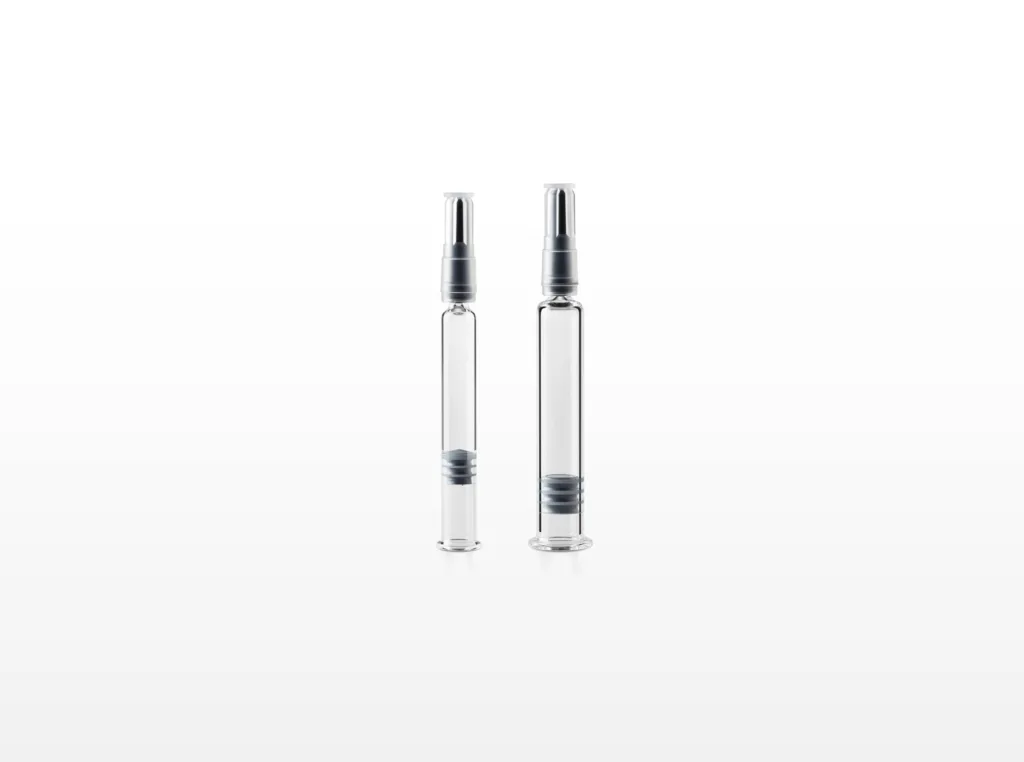
The programme combines Stevanato Group’s EZ-fill Nexa and Alba glass syringe platforms with selected Aptar Pharma elastomer components.
Nexa syringes are designed for high-value injectable medicines, including sensitive biologics, with an emphasis on drug-container compatibility and suitability for combination-device applications.
The Nexa platform incorporates features intended to support sensitive formulations, including controls addressing tungsten residues and silicone coating characteristics.
Alba syringes provide another high-performance containment option designed for medicines where interactions between the formulation and container materials may require particular attention.
The EZ-fill platform supplies ready-to-use syringe systems that have undergone relevant preparation steps before pharmaceutical filling.
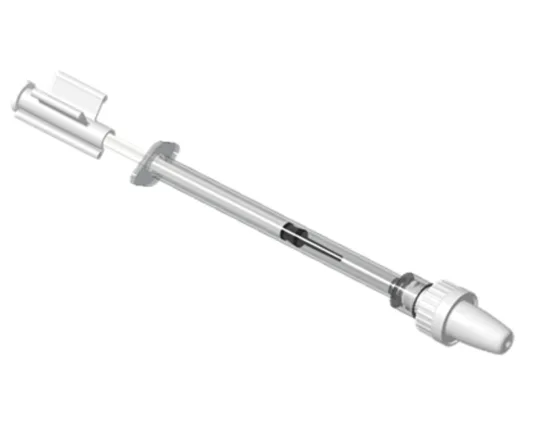
Aptar Pharma contributes PremiumCoat plungers, uncoated plunger options and selected rigid needle shields.
PremiumCoat is a coated elastomer technology intended to help manage interactions between the drug formulation and the sealing component. The suitability of any particular plunger nevertheless depends on the formulation, syringe configuration and product requirements.
The collaboration examines how these different components perform in combination.
The companies are not announcing a single universally compatible syringe. Their approach involves generating information across selected configurations so pharmaceutical developers can evaluate potential options.
A configuration suitable for one medicine may not be appropriate for another, even when both medicines use the same nominal syringe volume.
What does USP General Chapter 382 require from injectable packaging and delivery systems?
United States Pharmacopeia General Chapter 382 addresses the functional suitability of elastomeric components when used within parenteral pharmaceutical packaging and delivery systems.
The chapter focuses on whether components function appropriately as part of their intended system, including the ability to protect the medicine and support access or administration.
Its emphasis is relevant because testing a plunger or stopper independently does not fully establish how that component will behave after assembly with a particular syringe or container.
The chapter became applicable through the USP’s implementation framework in December 2025, increasing attention on system-specific functional suitability assessments.
The Stevanato and Aptar collaboration is designed to support customers addressing these requirements by providing selected system-level performance information.
However, a supplier’s data package does not automatically establish that a completed drug product complies with every applicable requirement.
Pharmaceutical manufacturers remain responsible for demonstrating suitability within the final intended configuration and for considering the characteristics of the individual medicine.
Depending on the product, additional studies may be needed to assess drug-container compatibility, extractables and leachables, stability, sterilisation and delivery performance.
The United States Pharmacopeia also provides supporting guidance on assessing elastomeric component functional suitability, reinforcing the need for scientifically justified testing.
The collaboration is therefore best understood as a way to support customer evaluation and regulatory preparation rather than a substitute for product-specific qualification.
Why are break-loose and extrusion forces important for prefilled syringe performance?
Break-loose force measures the force required to initiate movement of the plunger within a syringe barrel.
Extrusion or glide force describes the force needed to continue moving the plunger and expel the liquid formulation.
These measurements are important because they influence how easily a medicine can be administered manually or through an automated delivery device.
If the break-loose force is excessively high, the initial movement of the plunger may be difficult or inconsistent. If force varies substantially during delivery, the injection process may become less predictable.
These considerations are especially relevant to autoinjectors, which have defined mechanical or electromechanical capabilities.
An autoinjector designed to deliver a particular volume within a target period must generate sufficient force to move the plunger and expel the formulation.
High-concentration biologics may have increased viscosity, potentially making administration more demanding.
Needle geometry can also affect the pressure and force required for injection. A smaller internal needle diameter may increase resistance to liquid flow, while other design choices can alter the balance between injection performance and patient experience.
Stevanato and Aptar are investigating how needle characteristics, plunger selection and syringe design influence these force measurements.
The programme does not establish a universal optimal force or configuration. Appropriate performance thresholds depend on the drug, device, intended user population and administration conditions.
How will container closure integrity and plunger seal testing support biologic stability?
Container closure integrity concerns the ability of a pharmaceutical container to maintain an effective barrier against unintended ingress or leakage.
For injectable medicines, a reliable seal is important for protecting product quality during storage, transport and use.
Biological medicines may be particularly sensitive to environmental conditions and interactions with packaging materials.
A compromised closure could create risks involving contamination or changes in product quality, depending on the nature of the failure.
Plunger seal integrity is therefore one of the areas included in the joint testing programme.
The companies are examining whether selected assembled configurations maintain appropriate performance under defined conditions.
Such work may help pharmaceutical developers identify combinations that warrant further product-specific evaluation.
However, system-level integrity testing does not independently demonstrate long-term drug stability.
A particular biologic may interact with silicone, elastomer materials, glass surfaces or other components in ways that are not fully captured by mechanical integrity measurements.
Extractables and leachables assessments may also be necessary to evaluate substances that could migrate from packaging materials into a formulation.
Drug-specific stability, compatibility and integrity evidence will remain central to any final commercial decision.
The value of the collaboration is in narrowing technical uncertainty before these larger product-specific studies are completed.
Why could high-concentration biologics and autoinjectors increase demand for integrated testing?
Biological therapies increasingly use subcutaneous administration, with some programmes investigating higher drug concentrations to reduce the volume or frequency of injections.
These formulations can create competing design requirements.
A smaller injection volume may improve convenience, but increasing concentration can affect viscosity, molecular stability and the force required for administration.
The choice of syringe barrel, plunger material, needle and delivery device can therefore influence whether a proposed formulation is practical.
Autoinjectors add another layer of system integration because the filled syringe must operate reliably within the mechanics of the device.
A syringe that performs acceptably during manual laboratory testing may still create challenges when installed in a particular autoinjector configuration.
This is one reason why the collaboration includes rigid needle shield options for standard and autoinjector applications.
Needle-shield removal force can affect usability and device activation, while the interaction between the syringe and autoinjector may influence delivery reliability.
Testing these attributes earlier could help drug developers identify more suitable configurations before committing to large-scale device validation.
Nevertheless, no particular biologic medicine, customer contract or approved autoinjector programme was identified in the October announcement.
The companies are expanding a technical evaluation service rather than reporting that a specific pharmaceutical product has entered the market.
How does the collaboration build on Aptar Pharma’s injectable system-level framework launched in July 2026?
Aptar Pharma announced an integrated system-level framework for injectable drug delivery in July 2026.
The framework was intended to combine partner collaboration, component expertise and testing data to support earlier decisions about injectable packaging and administration systems.
The Stevanato collaboration provides a concrete application of that strategy through the evaluation of selected glass syringe, plunger and needle-shield configurations.
It also extends an existing business relationship between the two suppliers, rather than establishing a completely new commercial connection.
Aptar Pharma has experience in elastomeric components, drug delivery technologies and pharmaceutical support services. Stevanato Group contributes expertise in glass containment, prefilled syringes and pharmaceutical manufacturing systems.
The combination may allow customers to review technical information that would otherwise need to be gathered through separate supplier discussions.
A more integrated data package could also help development teams evaluate trade-offs between component configurations earlier.
However, the programme’s effectiveness will depend on the quality and relevance of the data generated.
Standardised testing may be valuable, but it cannot capture every difference between real pharmaceutical formulations or eliminate the need for further validation.
The collaboration should therefore be regarded as an expansion of development support capabilities, with commercial value dependent on customer adoption.
What commercial opportunities could the testing partnership create for Stevanato Group and AptarGroup?
The initiative gives both companies an opportunity to deepen their relationships with biotechnology and pharmaceutical customers developing complex injectable medicines.
For Stevanato Group, the collaboration may strengthen the positioning of its higher-value syringe platforms by providing additional evidence about their performance in complete delivery systems.
For Aptar Pharma, it may support broader adoption of elastomeric components and associated development services.
This strategy could be particularly relevant when pharmaceutical companies are selecting systems for biologics, where qualification work can become technically demanding.
The companies may benefit from engagement earlier in development, potentially creating opportunities to remain involved as customers progress towards commercial manufacturing.
However, the October announcement does not disclose a joint venture, equity investment, licensing payment or exclusive supply arrangement.
It also does not identify expected revenue, specific customer commitments or the financial contribution of the new testing activities.
Stevanato Group and AptarGroup remain independent suppliers, and their collaboration concerns designated technical work rather than the creation of a separate jointly owned pharmaceutical business.
Any eventual financial benefits will depend on demand for data packages, component selection and subsequent supply relationships.
The strategic rationale is credible, but its commercial significance remains unquantified.
What evidence will determine whether earlier syringe testing reduces development risk?
The most useful measure of success would be whether pharmaceutical customers can use the assembled-system data to identify suitable components more efficiently.
That could be evaluated through reductions in repeated feasibility testing, fewer late-stage configuration changes or more consistent performance during subsequent validation.
Evidence that the tested configurations remain suitable when filled with actual pharmaceutical formulations would strengthen the relevance of the approach.
Additional evaluation may also examine how performance changes during storage, transportation and use, particularly for sensitive biologics.
The programme’s relevance to autoinjectors will depend on whether the syringe configurations operate reliably within representative delivery devices.
Regulatory usefulness will require clear documentation of test methods, acceptance criteria, component traceability and the limitations of the underlying data.
The collaboration’s immediate achievement is the establishment of a structured technical evaluation programme involving named components and defined performance attributes.
It has not yet demonstrated quantified development savings or regulatory approval advantages.
For Stevanato Group and Aptar Pharma, the longer-term opportunity lies in making assembled-system evidence a more useful part of early injectable drug development. Whether this creates a meaningful competitive advantage will depend on reproducible technical results and adoption by pharmaceutical manufacturers.