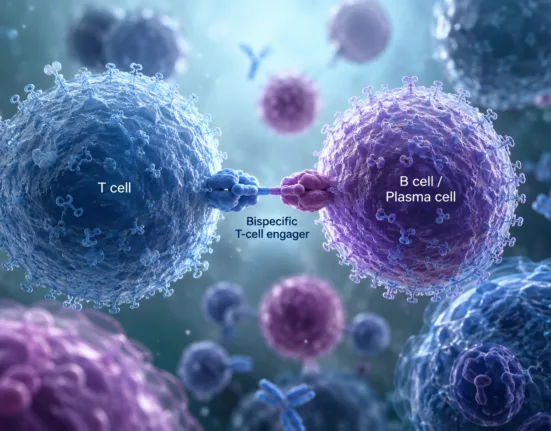
Hinge Bio, Inc. has dosed the first healthy volunteer in the first-in-human Phase 1 clinical trial of HB2198, its multispecific B-cell depleting antibody candidate for autoimmune disease, while a separate Phase 1 study in patients with systemic lupus erythematosus is already open for screening. The milestone moves the privately held biotechnology company from preclinical validation into clinical execution at a time when the autoimmune treatment landscape is increasingly focused on whether deep B-cell depletion can deliver durable immunological remission with a more practical safety and access profile than cell-based approaches.
How HB2198’s Phase 1 entry could reshape the emerging immune-reset treatment paradigm in lupus
The real significance of this development lies less in the trial initiation itself and more in what it signals about where lupus therapeutics may be heading next. Over the past two years, the autoimmune sector has increasingly gravitated toward the immune-reset thesis, the idea that sufficiently deep depletion of autoreactive B cells may suppress disease activity for materially longer periods than chronic maintenance immunosuppression. This shift has already begun reshaping strategic thinking across systemic lupus erythematosus and lupus nephritis. Cell therapies, especially CD19-directed CAR-T programs, have generated strong scientific interest after early clinical signals suggested that profound B-cell elimination may induce drug-free remissions in select patients. Yet those approaches continue to face structural barriers, including manufacturing complexity, hospital-based administration, cytokine release concerns, and significant cost intensity.
HB2198 enters this space with a differentiated commercial and clinical proposition. Rather than relying on patient-specific cell engineering or T-cell activation, Hinge Bio, Inc. is advancing an off-the-shelf antibody-based therapeutic designed to achieve similarly deep depletion through dual targeting of CD19 and CD20. For industry observers, that distinction may ultimately become more important than the Phase 1 headline itself. If HB2198 can demonstrate meaningful depletion depth with outpatient convenience and a more controlled safety profile, it may begin to occupy an attractive middle ground between conventional biologics and highly complex immune-reset cell therapies.
Why dual CD19 and CD20 depletion may prove more clinically consequential than conventional B-cell targeting in systemic lupus erythematosus
The scientific differentiation of HB2198 rests squarely on its dual-targeting design. Legacy B-cell depletion therapies have long validated the importance of this pathway in autoimmune disease, but they have also exposed limitations around depletion breadth and durability. CD20-directed agents have demonstrated clear utility across several immune-mediated disorders, yet incomplete depletion of certain B-cell compartments and eventual repopulation can restrict the duration of disease control.
By simultaneously targeting both CD19 and CD20, Hinge Bio, Inc. is clearly attempting to widen the depletion footprint across multiple B-cell populations, including memory B cells that may be central to autoantibody persistence and relapse dynamics. That matters especially in systemic lupus erythematosus, where disease heterogeneity and immune complexity have historically made durable control difficult. A broader depletion profile could, in theory, strengthen the immunological remission thesis by reducing both circulating and tissue-resident B-cell populations.
Preclinical data previously disclosed by the biotechnology company indicated rapid and deep depletion exceeding 99% in vivo, including durable depletion of memory B cells. While translation risk remains significant, those data help explain why HB2198 is drawing attention as more than a routine antibody program. Clinicians following the field are likely to focus on whether this mechanistic promise translates into meaningful human pharmacodynamic data, particularly around depletion depth, duration, and recovery timelines.
How the healthy volunteer study may become the first decisive test of HB2198’s safety and pharmacodynamic differentiation
The decision to begin dose escalation in healthy volunteers is analytically important because it allows Hinge Bio, Inc. to establish an early safety and pharmacodynamic profile before moving deeper into patient populations with active autoimmune disease. The study is evaluating safety, tolerability, pharmacokinetics, and pharmacodynamic activity, which means early data may provide the first credible signal as to whether the company’s safety narrative can hold up clinically.
This is particularly relevant because the company’s positioning explicitly emphasizes deep B-cell depletion without T-cell activation and without the cytokine-release liabilities associated with CAR-T and T-cell engager strategies. In practical terms, the market will likely focus on how rapidly peripheral CD19-positive and CD20-positive B-cell counts decline after dosing, whether infusion-related adverse events or cytokine signaling emerge even at early dose levels, and how durable the depletion signal appears over the follow-up period. For lupus-focused clinicians and regulatory watchers, this may become the first meaningful test of whether HB2198’s off-the-shelf immune-reset narrative is scientifically credible.
Which translational, safety, and competitive risks could still materially limit HB2198’s long-term lupus thesis
Despite the compelling strategic narrative, several important risks remain unresolved. The most immediate risk is biological translation. Lupus drug development has repeatedly shown that strong mechanistic logic and encouraging preclinical data do not necessarily translate into clinical success. Systemic lupus erythematosus remains biologically heterogeneous, with variable organ involvement, biomarker profiles, and immune drivers, meaning deep peripheral blood depletion alone may not be sufficient.
The more decisive question is whether HB2198 can meaningfully deplete tissue-resident B cells in lymphoid structures and inflamed organs, particularly in patients with lupus nephritis or more severe systemic disease. Safety durability also remains a major analytical concern. While deeper depletion may improve efficacy potential, it simultaneously raises concerns around infection risk, prolonged immunoglobulin suppression, delayed B-cell reconstitution, and opportunistic complications. For a therapy positioned as safer than cell-based immune reset strategies, this issue could become central to future valuation and partnership discussions.
A further risk lies in competitive timing. The autoimmune landscape is rapidly evolving, with several B-cell depletion, FcRn, and cell therapy platforms already advancing. HB2198 may need to demonstrate not only biological activity but also a clearly differentiated balance of convenience, safety, and remission durability to secure strategic relevance.
What early depletion kinetics and lupus cohort data may reveal about HB2198’s class-defining potential through 2026
The next major catalyst will likely be early human pharmacodynamic data from the healthy volunteer study. Specifically, clinicians and industry analysts are likely to watch whether HB2198 can produce rapid, deep, and durable depletion across the targeted B-cell compartments without significant cytokine-related toxicity. After that, focus will likely shift quickly to the parallel Phase 1 study in systemic lupus erythematosus patients.
That study may begin to reveal whether the mechanistic promise can translate into clinically relevant signals such as biomarker normalization, flare reduction trends, or early evidence supporting a broader immune-reset thesis. If these signals are constructive, HB2198 may increasingly be viewed not simply as another lupus program, but as a potential new class-defining antibody-based B-cell depletion platform for autoimmune disease.
For the sector, that would represent more than a promising lupus development program; it could mark an early validation point for a new therapeutic class that sits between conventional biologics and cell-based immune reset strategies, potentially redefining how the industry approaches scalable remission-driven treatment across lupus and other B-cell mediated autoimmune diseases.