Imviva Biotech has disclosed clinical findings from its ongoing Phase 1/2 study of CTA313, a CD19 and B-cell maturation antigen dual-targeted allogeneic CAR-T cell therapy, in patients with systemic lupus erythematosus, with data scheduled for presentation at the American Society of Gene and Cell Therapy annual meeting. The program is designed to evaluate whether a single administration can induce rapid B-cell depletion and generate an immune-reset profile, positioning CTA313 within a growing class of cellular therapies targeting autoimmune disease rather than oncology.
The strategic importance of this development lies in how it reframes the role of CAR-T therapy beyond cancer. Systemic lupus erythematosus remains a disease defined by chronic management rather than cure, with most therapies focused on suppressing immune activity rather than eliminating its underlying drivers. CTA313 represents a shift toward disease modification, where the goal is to reset immune function rather than continuously control it.
CTA313’s dual-target design reflects an effort to overcome a well-recognized limitation in earlier CAR-T approaches. CD19-targeted therapies have demonstrated the ability to deplete circulating B cells, but plasma cells often persist and continue producing pathogenic autoantibodies. By incorporating B-cell maturation antigen targeting, the Imviva Biotech program aims to extend depletion across a broader spectrum of disease-driving cells, potentially improving durability of response.
What CTA313’s immune-reset profile signals about the viability of CAR-T therapy as a disease-modifying approach in lupus
The immune-reset concept has gained attention following early reports of sustained remission in refractory lupus patients treated with CAR-T therapies. CTA313’s early immunologic profile aligns with this narrative, suggesting that deep B-cell depletion may allow the immune system to reestablish tolerance.
However, durability remains the central question. Systemic lupus erythematosus is highly heterogeneous, and early-phase data derived from small, open-label studies often fail to capture long-term variability. Industry observers note that while rapid B-cell depletion is encouraging, sustained remission without relapse will ultimately determine clinical relevance.
Long-term follow-up will be critical. Regulators and clinicians are likely to focus on whether patients remain free from disease flares, maintain normalized serologic markers, and reduce or eliminate background immunosuppressive therapy. Without consistent outcomes across these measures, the immune-reset concept may remain promising but unproven.
How dual-target CD19 and BCMA strategy reflects an attempt to differentiate within an emerging CAR-T lupus landscape
The competitive landscape for CAR-T therapies in autoimmune disease is expanding, with multiple programs targeting CD19. Imviva Biotech’s dual-target strategy introduces a potential point of differentiation, particularly if it can demonstrate improved durability.
From a biological perspective, targeting both CD19 and B-cell maturation antigen addresses different stages of B-cell development. This broader coverage could reduce the risk of residual disease-driving cells surviving treatment. Clinicians tracking the field suggest that incomplete depletion has been a key factor in relapse, making this approach strategically relevant.
Yet differentiation must be demonstrated clinically. Theoretical advantages alone are unlikely to influence adoption. Physicians and payers will prioritize measurable outcomes such as remission duration, safety profile, and overall treatment value. In the absence of direct comparative data, CTA313 will need to rely on durability signals and real-world evidence to establish its position.
What allogeneic CAR-T platform design reveals about scalability ambitions and commercial strategy in autoimmune indications
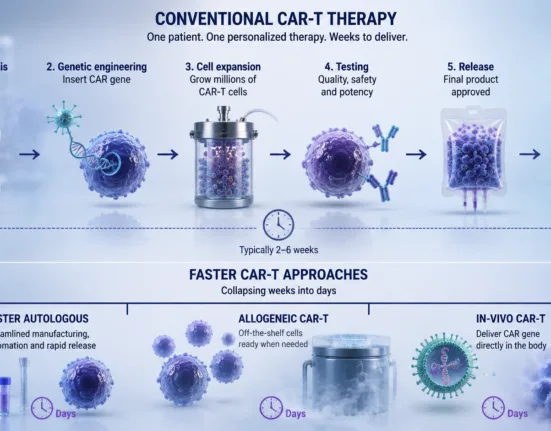
A defining feature of CTA313 is its allogeneic design, which allows for off-the-shelf use rather than patient-specific manufacturing. This approach addresses one of the most significant barriers to CAR-T expansion beyond oncology, namely cost and logistical complexity.
In cancer settings, autologous CAR-T therapies have been accepted despite high costs due to the severity of the disease. In chronic autoimmune conditions like lupus, such constraints are less sustainable. Allogeneic platforms aim to reduce manufacturing time and enable broader access, which is essential if CAR-T therapies are to move beyond highly refractory patients.
However, this strategy introduces trade-offs. Host immune rejection may limit cell persistence, potentially affecting durability. There is also a need to manage risks such as graft-versus-host responses, although advances in cell engineering have reduced these concerns. The balance between scalability and sustained efficacy will be a defining factor in CTA313’s long-term viability.
From a commercial standpoint, scalability is critical. Expanding into larger patient populations requires consistent manufacturing and predictable supply. Imviva Biotech’s platform suggests a focus on this objective, but execution will be closely monitored as development progresses.
How regulatory expectations and endpoint selection could shape CTA313’s transition from early-phase signal to clinical validation
The regulatory pathway for CAR-T therapies in lupus remains less defined than in oncology. Regulators are likely to require evidence that reflects the chronic nature of the disease, including sustained efficacy and manageable safety over extended periods.
Endpoints such as disease activity scores, reduction in flare frequency, and steroid-sparing effects will be central to evaluation. However, these measures may not fully capture the impact of an immune-reset approach. Regulatory observers suggest that composite endpoints combining clinical and immunologic data may be necessary to demonstrate meaningful benefit.
Safety will also be a key consideration. CAR-T therapies are associated with risks such as cytokine release syndrome and neurotoxicity. While these risks may be acceptable in oncology, they must be carefully managed in autoimmune populations where alternative treatments exist. Demonstrating a tolerable safety profile will be essential for broader use.
Trial design will play a critical role in addressing these expectations. Longer follow-up periods and more diverse patient populations will be needed to establish reliability and reproducibility of outcomes. These requirements may extend development timelines but are necessary to support regulatory approval.
What adoption dynamics and reimbursement considerations could determine whether CAR-T therapies gain traction in lupus treatment pathways
Clinical success alone will not guarantee adoption. Reimbursement dynamics are likely to be a major determinant, given the high cost associated with CAR-T therapies. Payers will require clear evidence that upfront costs are justified by long-term benefits, including reduced healthcare utilization and improved patient outcomes.
Physician adoption will depend on both clinical results and logistical feasibility. CAR-T therapy requires specialized infrastructure, which may initially limit use to major treatment centers. Expanding access will require simplified delivery models and broader institutional readiness.
Patient acceptance is another factor. While the prospect of long-term remission is compelling, the intensity of CAR-T therapy may deter some patients, particularly those with less severe disease. Clear communication of risks and benefits will be essential to support informed decisions.
What unresolved translational risks and competitive pressures could still constrain CTA313’s long-term impact in autoimmune disease
Despite encouraging early signals, several uncertainties remain. The limited scale of early-phase studies restricts confidence in the findings, and larger trials will be needed to confirm both efficacy and safety.
Manufacturing consistency presents another challenge, particularly for allogeneic platforms. Variability in cell products could impact clinical outcomes and regulatory approval. Ensuring reproducibility at scale will be essential.
Competitive pressure is also intensifying. Multiple companies are exploring CAR-T and related approaches in autoimmune disease, including alternative targets and engineered cell types. This evolving landscape means that differentiation must be continuously demonstrated.
CTA313’s trajectory will depend on whether early immune-reset signals translate into durable and reproducible outcomes. If successful, the therapy could redefine how autoimmune diseases like systemic lupus erythematosus are treated. If not, it may highlight the complexities of applying oncology-derived technologies to fundamentally different disease settings.