Apotex Inc. has received Health Canada approval for Apo-Semaglutide Injection, a generic equivalent of Novo Nordisk’s Ozempic, for once-weekly treatment of adults with type 2 diabetes mellitus. The approval makes Apotex the first Canadian-based pharmaceutical company authorized to market a generic Ozempic equivalent, arriving just days after Canada became the first G7 market to approve generic semaglutide.
Why does Apotex’s Apo-Semaglutide approval matter for Canada’s GLP-1 market?
The significance of Apotex’s approval is not simply that another semaglutide product has cleared regulatory review. The more important shift is that Canada is moving from theoretical generic competition in GLP-1 medicines to a live market with multiple authorized alternatives. Dr. Reddy’s Laboratories secured the first Health Canada approval for generic semaglutide earlier in the same week, while Apotex has now added a domestic challenger with Canadian commercial infrastructure and a long-standing presence in the generic medicines market.
That sequencing matters because semaglutide is not an ordinary small-molecule generic opportunity. It is a peptide medicine, administered through a prefilled injection pen, in a therapeutic class where demand has been unusually intense, payer scrutiny has been rising, and branded market leaders have enjoyed enormous pricing power. Generic entry in Canada therefore becomes a test of whether complex GLP-1 products can move into a more conventional generic pricing model without creating supply, substitution, or prescriber confidence issues.
For patients and payers, the immediate attraction is obvious. Lower-cost semaglutide could widen access for adults with type 2 diabetes who meet prescribing criteria but face affordability barriers, private plan limits, or formulary restrictions. However, the unresolved question is whether approved generic semaglutide products can scale quickly enough to meaningfully affect real-world access, especially when global demand for GLP-1 medicines remains far above what many supply chains were originally designed to support.
What changes when generic semaglutide is no longer only a future threat?
The approval changes the competitive psychology around Ozempic in Canada. Until now, generic semaglutide was mostly discussed as a future event tied to patent timelines, regulatory review, and manufacturing readiness. Canada has now crossed that threshold, which means branded GLP-1 economics are being tested in a real G7 reimbursement environment rather than in analyst models or emerging-market pricing debates.
Health Canada has said the Apotex product is the second generic semaglutide approved in the country, and that other submissions remain under review. Reuters also reported that Health Canada had been reviewing several additional applications, indicating that the market could become more crowded if further products receive authorization.
The commercial risk for Novo Nordisk is not that Canada alone will reset the global Ozempic franchise. The Canadian market is meaningful, but it is not the core profit engine in the same way as the United States. The bigger issue is precedent. Once a high-income, tightly regulated market approves multiple generic semaglutide injections, other regulators, payers, and procurement bodies will study the outcome closely. Canada could become the industry’s first real-world case study for how fast peptide generics can erode GLP-1 pricing power when regulatory barriers fall.
Why is Apo-Semaglutide more than a routine generic launch?
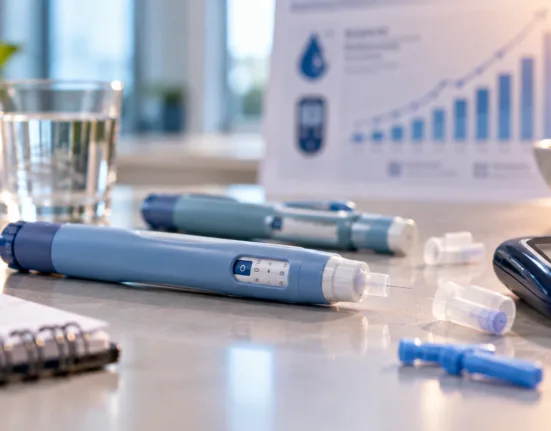
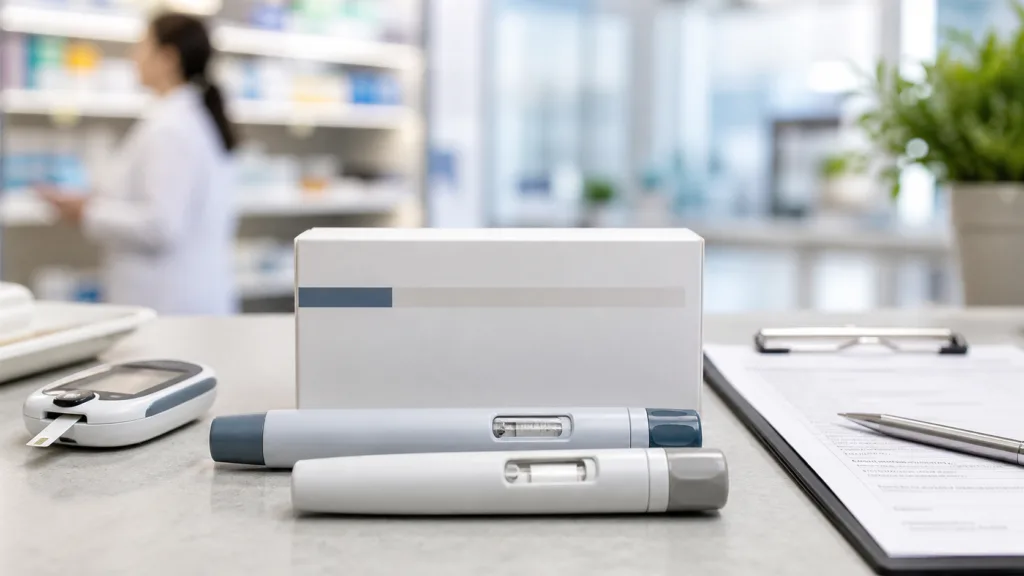
Apo-Semaglutide is commercially important because it mirrors key Ozempic pen formats. Apotex said its authorization includes a 2 mg per pen format delivering 0.25 mg or 0.5 mg doses and a 4 mg per pen format delivering 1 mg doses, aligning with brand-equivalent stock keeping units. Health Canada’s drug product information also lists Apo-Semaglutide Injection as a multidose prefilled pen that dispenses 1 mg doses.
That pen-format alignment matters for prescribers, pharmacists, and reimbursement systems because generic substitution is easier when product presentation does not create new workflow friction. In diabetes care, dose titration, patient familiarity, injection training, and pharmacy handling all influence adoption. A generic that matches the practical structure of the reference product can reduce transition resistance, especially in a market where clinicians may be cautious about switching stable patients.
The limitation is that device familiarity does not remove every adoption barrier. Semaglutide therapy remains clinically monitored, and patients may still be sensitive to changes in pen design, supply availability, and insurance coverage. For Apotex, the challenge will be to prove not only regulatory equivalence but also reliable commercial execution. In GLP-1s, a product can be approved and still fail to change the market if pharmacies cannot consistently obtain it.
How does this affect Novo Nordisk and investor sentiment around Ozempic?
Novo Nordisk remains the global originator and dominant semaglutide player, but the Canadian approvals add another pressure point to an already more complicated investor story. Novo Nordisk’s U.S.-listed shares traded at $43.88 on May 1, 2026, with a market capitalization of about $193.7 billion, reflecting a company still valued as a major metabolic disease franchise but no longer viewed as untouchable in GLP-1s.
The sentiment issue is less about a single Canadian approval and more about convergence. Branded GLP-1 leaders are facing manufacturing demands, payer pushback, competitive escalation from Eli Lilly, oral GLP-1 development, obesity reimbursement debates, and now visible generic entry in Canada. Reuters has described Canada as a test case for generic impact on branded GLP-1 therapies, while noting that U.S. patent protections may limit near-term spillover into the most lucrative market.
That creates a nuanced investor read-through. Canada’s generic semaglutide market may not materially dent Novo Nordisk’s global revenue in the near term, but it weakens the perception that semaglutide’s branded economics can remain uniformly insulated across developed markets. The market will likely watch whether price discounts become aggressive, whether payers quickly prefer generics, and whether Novo Nordisk responds with contracting, alternative branding, or lifecycle management moves.
What does the approval reveal about peptide generic manufacturing and regulatory confidence?
Apotex developed Apo-Semaglutide in partnership with Orbicular Pharmaceutical Technologies, and that partnership points to a broader industry trend. Complex generics are no longer limited to traditional tablets and capsules. They increasingly involve peptides, injectables, delivery systems, and manufacturing processes that require deeper chemistry, device, and quality-control capabilities.
For regulators, the key question is whether a generic semaglutide product can meet expectations for quality, comparability, dosing accuracy, stability, and patient usability. Health Canada’s approval suggests confidence that Apo-Semaglutide meets the required regulatory standard for market authorization. The original Ozempic authorization in Canada was based on Health Canada’s assessment of quality, nonclinical, and clinical information, with a favourable benefit-risk profile for once-weekly treatment of adults with type 2 diabetes mellitus to improve glycemic control.
The unresolved issue is how these standards translate into public and clinician perception. Peptide generics occupy a middle ground in the public imagination. They are not biologics in the strict biosimilar sense, yet they are more complex than many older generics. That distinction may require careful education across pharmacy, prescribing, and payer channels. If confidence is high, adoption could be swift. If concerns emerge around supply consistency or patient switching, uptake could be slower than pricing models assume.
Why could payers become the real force behind Canada’s generic Ozempic shift?
The biggest practical impact may come from formularies rather than physicians alone. Public and private drug plans in Canada have strong incentives to encourage lower-cost alternatives once generic versions are available. That is particularly true for GLP-1 therapies, where demand has strained budgets and where diabetes and obesity-related prescribing discussions often intersect, even when specific products have different approved indications.
Apo-Semaglutide is indicated in Canada for adults with type 2 diabetes mellitus to improve glycemic control, in combination with diet and exercise. This is important because the approval should not be read as a broad obesity-drug authorization. The product’s commercial opportunity is therefore anchored in diabetes treatment, even though the semaglutide class carries broader public attention because of weight-loss use.
The payer question is whether generic semaglutide becomes a preferred reimbursed option quickly enough to influence prescribing habits. If public plans and private insurers move decisively, Apotex and other generic entrants could gain traction faster than a typical new generic in a less scrutinized category. If reimbursement decisions are fragmented, or if supply is limited, the approval may initially create headlines faster than it changes treatment patterns.
What should clinicians, regulators, and industry observers watch next?
The next phase will be less about authorization and more about execution. Clinicians will watch whether Apo-Semaglutide is consistently available, whether switching from Ozempic is operationally straightforward, and whether patient support needs differ in practice. Pharmacists will monitor pen handling, counselling requirements, product substitution rules, and payer instructions. Regulators will likely remain focused on post-market quality, labelling clarity, and adverse event monitoring.
For Apotex, the launch is strategically well timed. It gives the Canadian-based pharmaceutical manufacturer a high-visibility role in one of the most commercially important drug classes in the world. It also strengthens the argument that generic manufacturers with complex development partnerships can compete in categories once viewed as relatively protected from rapid generic erosion.
For Novo Nordisk, the story is more defensive but not catastrophic. The Danish drugmaker still has global scale, brand recognition, clinical data depth, and major markets where patent and regulatory protections differ. However, Canada has now shown that GLP-1 generic competition can arrive in a high-income market earlier than many patients and investors expected. That makes every future semaglutide approval, pricing decision, and payer response worth watching closely.
Why this approval could become a reference point for the global GLP-1 market
The Apotex approval is a access story, but it is also a market-structure story. Canada is testing whether blockbuster GLP-1 medicines can move from scarcity-driven brand economics toward a more competitive, payer-led model without undermining clinical confidence or supply reliability.
The most important takeaway is that generic semaglutide competition is no longer hypothetical. Apotex gives Canada a domestic generic player, Dr. Reddy’s Laboratories gives the market an early international entrant, and additional submissions suggest more competition could follow. For patients with type 2 diabetes, that could improve affordability. For payers, it could create leverage. For Novo Nordisk and the wider GLP-1 sector, it is a reminder that even the hottest therapeutic classes eventually meet the cold math of generics.