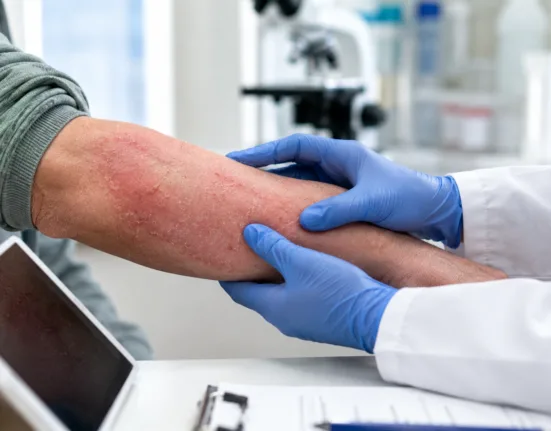
Alphyn Biologics has secured $25 million in a twice-oversubscribed Series B financing round to support its clinical pipeline for dermatologic conditions. The funding will enable the company to advance a global Phase 2b trial of its lead asset, Zabalafin Hydrogel, for atopic dermatitis, while also launching a second Phase 2 program for molluscum contagiosum virus. Additional capital will be used to expand raw material supply, positioning the clinical-stage dermatology firm to scale up both clinical development and manufacturing ahead of anticipated pivotal trials.
The Series B funding arrives just weeks after the United States Patent and Trademark Office granted Alphyn Biologics a new patent covering the active pharmaceutical ingredient in Zabalafin Hydrogel. With exclusive rights now extending through 2041 for the API and through 2043 for the broader formulation, the company is building a robust intellectual property estate in both the United States and Europe. This financing and IP momentum suggest that Alphyn is moving aggressively to carve out a differentiated space in a dermatology market long dominated by single-target topicals and biologics.
Why multi-target dermatology may be gaining traction with investors
Investor enthusiasm around Alphyn Biologics appears closely tied to its multi-target approach, which contrasts with the narrower focus of most approved dermatology products. Rather than isolate a single driver of inflammation or itch, Zabalafin Hydrogel is being developed to treat multiple biological pathways simultaneously. The company claims that for atopic dermatitis, the formulation directly addresses inflammation, pruritus, bacterial colonization, and xerosis. In the case of molluscum contagiosum virus, it is expected to act on the virus itself while also mitigating itch, inflammation, and the secondary bacterial infections that often accompany lesions.
The financing round, led by QCA Investment Group, attracted both new and returning investors including Angel Physicians Fund and Serial Stage Venture Partners. Industry analysts view this as a strong vote of confidence in Alphyn’s ability to transition from early-stage development to late-stage trials. The dual-indication strategy adds further appeal, offering two parallel regulatory paths that could help diversify risk while increasing commercial upside.
In a market where many dermatology biotechs struggle to differentiate, the combination of platform breadth and mechanism diversity is increasingly being viewed as a strategic advantage. Alphyn Biologics is positioning itself not only as a single-product company, but as a platform innovator capable of generating multiple first-in-class therapeutics for underserved skin diseases.
What Zabalafin Hydrogel aims to change in clinical dermatology
Zabalafin Hydrogel is being developed as a topical therapy, but its mechanism of action stands apart from traditional topicals that typically target inflammation alone. Alphyn Biologics believes that treating all drivers of atopic dermatitis at once can reduce treatment cycling, minimize flare-ups, and support long-term disease control. For patients with mild to moderate disease who do not qualify for systemic biologics, a topical with multi-target potential could represent a much-needed alternative.
For molluscum contagiosum, the unmet need is arguably more urgent. The virus predominantly affects children and currently lacks an FDA-approved antiviral that is both effective and well-tolerated. Many existing treatments rely on destructive agents like cantharidin or cryotherapy, which can cause skin blistering and pain. Alphyn’s candidate may become the first direct antiviral that offers efficacy without harsh side effects. This distinction could make it particularly attractive for pediatricians, dermatologists, and public health programs seeking safer outpatient options.
Clinicians tracking the field note that Zabalafin’s broad-spectrum activity could help address the multifactorial nature of skin barrier diseases, which often involve microbial imbalance, immune dysregulation, and chronic inflammation. If trial data confirm these mechanisms translate to durable clinical outcomes, the hydrogel may shift treatment practices that currently rely on layering multiple monotherapies.
How Alphyn Biologics is leveraging patent strength to build competitive insulation
The recent issuance of a new U.S. patent covering the active pharmaceutical ingredient in Zabalafin Hydrogel marks a pivotal development in Alphyn Biologics’ intellectual property strategy. This patent, valid through 2041, complements an earlier patent covering the hydrogel formulation and method of use, which extends to 2043. Both patents will be eligible for listing in the U.S. Food and Drug Administration’s Orange Book following regulatory approval. An Orange Book listing provides additional protections against generic entry, bolstering the company’s commercial runway.
Beyond the United States, Alphyn has also received a Notice of Allowance for a European patent covering Zabalafin Hydrogel. The growing international IP portfolio may be critical as the company considers future licensing or co-development deals in markets with distinct reimbursement landscapes and pediatric treatment needs.
Regulatory watchers believe this IP strength could be a key asset if Alphyn decides to seek strategic partnerships ahead of Phase 3 trials. A layered patent estate not only signals innovation but also provides leverage in commercial negotiations. For a company operating in a competitive space with several adjacent players, these protections could create real commercial defensibility.
Why tolerability and pediatric use may define the product’s real-world potential
A critical area of differentiation for Zabalafin Hydrogel is its tolerability profile. Alphyn Biologics has emphasized that the product is designed to be gentle enough for long-term, continuous use, particularly in children. While systemic therapies like dupilumab have transformed care for severe atopic dermatitis, they are not indicated for all patients and come with higher costs and risk profiles.
Topical corticosteroids, long a mainstay of treatment, are increasingly falling out of favor due to skin thinning and rebound risks. Non-steroidal options like tacrolimus and crisaborole face limitations in efficacy or acceptability, especially in young children. If Zabalafin can demonstrate strong results in safety and tolerability while maintaining efficacy across multiple endpoints, it could emerge as a frontline option for pediatric and mild-to-moderate adult patients.
Clinicians believe this combination of safety and multi-target coverage may prove particularly advantageous in scenarios where off-label or sequential therapies are common. Given the chronic nature of atopic dermatitis and the viral persistence of molluscum contagiosum, a therapy suitable for repeat use without cumulative side effects could find a distinct clinical niche.
What uncertainties remain as Alphyn enters pivotal development stages
Despite the funding momentum and patent wins, Alphyn Biologics still faces multiple hurdles. The Phase 2b trial in atopic dermatitis has yet to report data, and the Phase 2 program for molluscum contagiosum is still in its early stages. Clinical validation of the drug’s multi-target mechanism remains the next major challenge, particularly as endpoints in dermatology trials are often subjective and prone to placebo effect.
There are also manufacturing considerations to address. Alphyn’s decision to use some of the Series B funds to increase raw material supply indicates a proactive approach to scaling. However, the company has not yet disclosed whether it plans to internalize production or work with third-party manufacturers. This could become a gating issue if demand outpaces supply post-approval.
From a regulatory perspective, it is still unclear whether Alphyn will pursue priority review pathways or pediatric exclusivity extensions, both of which could significantly affect timelines and commercial strategy. Payer attitudes will also shape adoption. If Zabalafin Hydrogel enters the market with a price point comparable to premium topicals, payers may require head-to-head trials or real-world evidence to justify reimbursement.
What industry observers will track in the next 12 months
The next year will be pivotal for Alphyn Biologics. Topline data from the Phase 2b trial in atopic dermatitis will likely set the tone for regulatory engagement, partnership opportunities, and eventual market positioning. Early signals from the molluscum contagiosum program will also help clarify whether Alphyn can maintain a dual-indication pipeline or will need to prioritize one path over the other.
Beyond clinical outcomes, industry observers will watch for signals about the company’s commercialization intent. If Alphyn begins building out a field force or signs distribution partnerships, it may be preparing for independent launch. Alternatively, a licensing deal or acquisition by a larger dermatology player would suggest a shift toward external commercialization.
In either scenario, the convergence of capital, IP strength, and dual-indication ambition sets Alphyn apart from many early-stage dermatology players. If it can navigate clinical, regulatory, and manufacturing hurdles effectively, Zabalafin Hydrogel may not only redefine expectations for topical therapies but also reframe what a successful dermatology platform can look like.