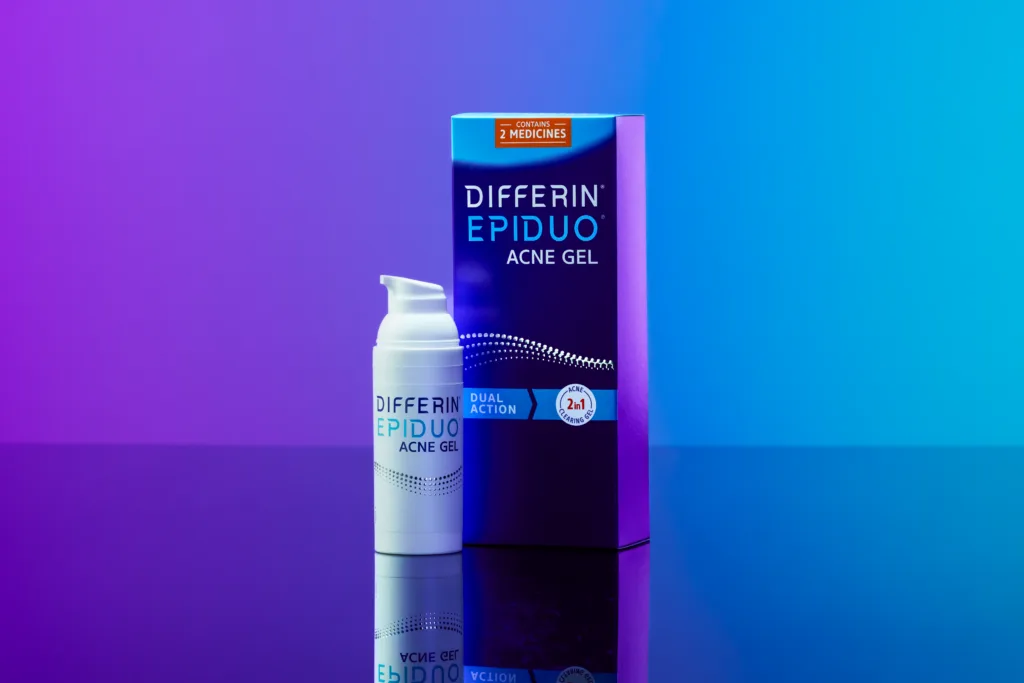
Galderma has received United States Food and Drug Administration approval to switch Differin Epiduo Acne Gel, a fixed dose combination of adapalene 0.1% and benzoyl peroxide 2.5%, from prescription status to over the counter use for people aged 12 years and older. The decision moves a dermatologist established dual active acne treatment into mainstream retail channels and gives Galderma a broader consumer access route within its integrated dermatology portfolio.
Why Galderma’s over the counter Epiduo switch matters beyond wider acne access in the United States
The approval is more than a distribution change for a familiar acne brand. It shows how prescription dermatology assets with long clinical use histories can be repositioned into consumer health without abandoning the scientific credibility that made them valuable in the first place. For Galderma, the switch sits at the intersection of therapeutic dermatology, dermatological skincare and retail consumer behaviour, which is precisely where the dermatology market has been moving as patients increasingly seek clinically grounded products outside the physician office.
The strategic significance is that Galderma is not simply placing another benzoyl peroxide product on the shelf. Differin Epiduo combines a retinoid and an antimicrobial agent in one formulation, placing it above many traditional over the counter acne options that have historically relied on single active ingredients such as benzoyl peroxide, salicylic acid or sulfur. That distinction matters commercially because acne care is a high repeat use category, but also clinically because adherence often weakens when patients must combine multiple products across separate routines.
The limitation is that wider access does not automatically translate into better outcomes. Acne remains a condition with variable severity, different inflammatory profiles and strong adherence challenges. Moving a prescription strength combination into retail may help early treatment access, but it also places more responsibility on labelling, consumer education and appropriate product positioning. The product could broaden Galderma’s reach, but the switch will need to avoid being understood by consumers as a universal substitute for clinician managed acne care.
How the adapalene and benzoyl peroxide combination changes the competitive OTC acne shelf
Differin Epiduo’s most important commercial advantage is its dual mechanism. Adapalene addresses clogged pores and inflammatory pathways as a topical retinoid, while benzoyl peroxide targets acne associated bacteria and has a long established place in acne management. Together, the combination gives Galderma a differentiated proposition in a retail category where many products compete through branding, formats and cosmetic claims rather than through a prescription heritage clinical profile.
This matters because acne is not only a teenage skincare issue. It affects adolescents and adults, with patients often cycling through washes, spot treatments, gels, moisturisers and online recommended regimens before seeking professional care. A once daily fixed combination product could appeal to consumers who want a simpler step that feels closer to dermatologist logic than trend driven skincare experimentation. That is a useful positioning lane for Galderma, particularly as the Differin brand already carries prescription to OTC credibility in the United States.
The risk is irritation and persistence. Retinoid based acne products can be effective, but they require consistent use and realistic expectations. Benzoyl peroxide can also be drying or irritating for some users. In a prescription setting, clinicians can guide gradual use, moisturiser pairing and escalation decisions. In a retail setting, the product’s success will partly depend on whether consumers understand that visible improvement may take time and that tolerability affects adherence. A strong OTC launch can expand access, but weak consumer education can limit repeat use.
What this approval reveals about Galderma’s integrated dermatology strategy
The approval fits neatly into Galderma’s broader positioning as a pure play dermatology company rather than a narrow aesthetics or prescription drug business. Its portfolio spans injectable aesthetics, dermatological skincare and therapeutic dermatology, and Differin Epiduo gives the group another bridge asset between medical credibility and consumer availability. That bridge is valuable because dermatology is increasingly shaped by hybrid demand, where consumers want physician backed science but prefer retail convenience when possible.
For Galderma, the switch also creates a portfolio flywheel. Prescription heritage supports trust. Retail access supports scale. Consumer familiarity supports brand extension. The company can use Differin Epiduo to strengthen its acne care ecosystem alongside cleansers, moisturisers and other Differin products, while continuing to benefit from the perception that the brand comes from dermatology rather than purely cosmetic skincare.
However, the strategy is not without tension. A prescription to OTC switch can expand volumes, but it can also alter the brand’s perceived clinical exclusivity. Galderma must manage the product as both accessible and science led, avoiding the trap of turning a clinically meaningful switch into another crowded retail skincare launch. The challenge will be to preserve professional credibility while competing in stores and online platforms where price, placement, reviews and influencer narratives can shape demand as much as clinical data.
Why clinicians and regulators will watch consumer use, labelling and real world tolerability
From a regulatory perspective, the key implication is that FDA approval reflects confidence that consumers can use the product appropriately under over the counter conditions. The long prescription history of Epiduo and the broader real world familiarity with adapalene and benzoyl peroxide likely helped support the switch. The product’s clinical programme also gives Galderma a stronger evidence base than many cosmetic acne offerings.
For clinicians, the switch may create both opportunity and inconvenience. Easier access could help patients start evidence based treatment earlier, especially those with mild to moderate acne who may otherwise rely on less targeted products. At the same time, dermatologists may see patients who have used the product inconsistently, layered it with harsh skincare routines or expected rapid clearance without understanding acne biology. That creates a practical need for clearer patient discussions around when OTC care is enough and when medical review is necessary.
The unresolved question is how real world OTC use will compare with supervised prescription use. Trial data can establish efficacy and tolerability under controlled conditions, but consumer behaviour is messier. Patients may use too much product, stop too early, combine incompatible products or misunderstand irritation as treatment failure. The FDA switch expands access, but post launch experience will determine whether Differin Epiduo becomes a durable OTC standard or mainly a strong brand extension.
How Galderma’s retail access push could reshape acne care economics
The economics of this approval are attractive because acne is a large, recurring and brand sensitive category. Over the counter availability through major retailers such as Walmart, Ulta, Target and Amazon gives Galderma access to high traffic channels that can scale faster than prescription routes. It also allows the company to participate more directly in consumer search, social media discovery and retail driven replenishment behaviour.
This is particularly important because dermatology companies are increasingly looking for products that can sit across medical and consumer pathways. Prescription drugs can produce strong margins but are constrained by access, reimbursement and clinician prescribing patterns. Consumer products can scale rapidly but often lack differentiation. Differin Epiduo sits between those models, giving Galderma a product with clinical depth and retail reach.
The commercial risk is that retail acne care is intensely competitive. The shelf includes low cost generics, legacy acne brands, dermatologist founded skincare lines, social media driven products and private label alternatives. Galderma’s advantage is evidence and brand heritage, but it will still need effective pricing, education and shelf visibility. A strong launch could reinforce Differin as a leading acne franchise. A poorly differentiated retail message could make even a clinically stronger product look like one more gel in a crowded aisle.
What investors may read into Galderma’s latest dermatology portfolio move
For investors, the Differin Epiduo approval is not likely to be viewed as a single transformational catalyst on the scale of a major biologic launch. The more important signal is portfolio quality. Galderma has been building investor confidence through broad based dermatology growth, with record 2025 net sales of $5.207 billion and strong momentum across injectable aesthetics, dermatological skincare and therapeutic dermatology. Its first quarter 2026 update also showed net sales of $1.473 billion, supported by strong growth in therapeutic dermatology and dermatological skincare.
That matters for sentiment because Galderma’s equity story has increasingly depended on execution across categories rather than reliance on one product cycle. The Differin Epiduo OTC switch reinforces that narrative. It shows the group can extract additional value from established dermatology science while continuing to scale newer growth drivers such as Nemluvio and its aesthetics portfolio. For a company listed on the SIX Swiss Exchange, the approval adds a consumer health access catalyst to an already growth oriented dermatology platform.
The neutral reading is that this is a strategically positive but execution dependent development. It should support Galderma’s acne care franchise and strengthen its U.S. consumer presence, but the financial impact will depend on launch pricing, channel uptake, repeat purchase behaviour and whether the product can win share without heavy promotional spend. Investor sentiment is likely to remain more influenced by the company’s broader growth guidance, margin delivery and therapeutic dermatology ramp, with Differin Epiduo acting as a useful supporting signal rather than the central valuation driver.
What the Differin Epiduo approval could mean for future prescription to OTC dermatology switches
The broader industry implication is that dermatology may be entering a more active phase of prescription to OTC switching for well characterised topical products. Acne is a logical starting point because it is common, visible, recurring and often self treated before patients see clinicians. If Differin Epiduo performs well in retail, it could encourage other dermatology companies to evaluate whether mature prescription assets can be responsibly moved into consumer channels.
That does not mean every prescription dermatology product is a candidate for OTC conversion. Regulators will remain cautious where safety monitoring, diagnosis complexity, misuse risk or unclear consumer self selection creates problems. Products that require clinician evaluation, lab monitoring or careful differential diagnosis will not move easily. The best candidates are likely to be established topical therapies with predictable safety profiles, clear labelling and strong evidence in common conditions.
For Galderma, the opportunity is to use Differin Epiduo as proof that medical dermatology and consumer dermatology are not separate worlds. They are increasingly connected. The company now has to prove that this connection can produce better access, reliable consumer use and commercially meaningful growth without weakening the clinical trust behind the brand. If it succeeds, the approval could become a useful case study in how dermatology companies turn long used prescription science into scalable retail healthcare.