Phillips Medisize is using the Respiratory Drug Delivery 2026 Conference in Phoenix to present new research on dry powder inhaler platform products, connected inhalation devices and patient-centric product development. The Molex-owned drug delivery and medtech device manufacturer is positioning its RDD 2026 work around a central industry challenge: how to make inhaled combination products more usable, clinically reliable and commercially scalable without adding avoidable development risk.
Why Phillips Medisize’s RDD 2026 focus matters for inhaled drug delivery developers
The significance of Phillips Medisize’s RDD 2026 participation is not simply that the medical device manufacturer is presenting at a major respiratory drug delivery conference. The more important signal is that inhalation development is becoming a systems problem rather than a device-only problem. Dry powder inhalers, connected modules, formulation characteristics, human factors engineering and real-world patient behaviour are increasingly being treated as interdependent variables that can determine whether an inhaled therapy succeeds beyond controlled development settings.
That matters because inhaled therapies sit at a difficult intersection of engineering, clinical performance and patient behaviour. A molecule may look promising, and a device may perform acceptably in bench testing, but real-world outcomes depend on whether patients can use the inhaler correctly, consistently and confidently. For drug developers, that raises the stakes around early device-formulation alignment. A poorly matched formulation and inhaler platform can create performance variability, delay clinical progress or force expensive redesign decisions late in development.
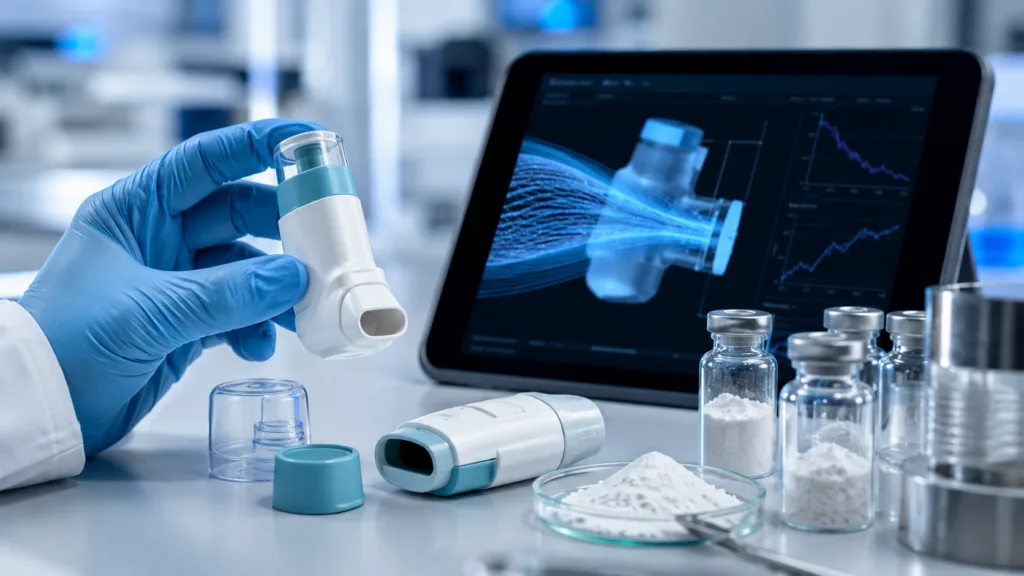
Phillips Medisize’s emphasis on dry powder inhaler platform products reflects a wider shift in the respiratory drug delivery sector. Rather than treating the device as a final packaging step, developers are increasingly integrating device strategy earlier in the product lifecycle. The commercial logic is clear: respiratory therapies face intense scrutiny not only from regulators, but also from clinicians, payers and patients who need confidence that the product can deliver consistent benefit in routine use.
How connected inhaler modules could change adherence without disrupting device performance
One of the more commercially relevant themes in the Phillips Medisize RDD 2026 programme is the development of a connectivity module for an open-inhale-close dry powder inhaler device. The company’s research examines whether optional digital connectivity can support dose tracking, inhalation technique feedback and patient training while preserving a non-intrusive user experience and maintaining minimal impact on airflow resistance.
That combination is important because connected inhalation devices have long promised better adherence insights, but the practical challenge is more complicated. Digital features can improve visibility into how patients use a therapy, yet they can also add cost, complexity, battery constraints, data-management requirements and usability risks. In respiratory care, even small changes to device handling or airflow dynamics can matter. A connectivity module that interferes with the core inhalation process would weaken the very outcome it is meant to improve.
The strategic question is whether connected inhalers can move from being attractive innovation concepts to practical tools that improve real-world therapy performance. For pharmaceutical partners, the value proposition is strongest when connectivity can generate actionable adherence and technique data without forcing a redesign of the core inhaler. That is why non-intrusive integration is more than a design preference. It is a commercial and regulatory risk-control mechanism.
What patient-centric design reveals about the next phase of DPI product development
Phillips Medisize’s patient-centric product development workshop points to a broader truth in inhalation medicine: the user is part of the delivery system. Dry powder inhalers rely heavily on patient interaction, including adequate inspiratory effort, correct preparation, proper inhalation technique and consistent use over time. That makes patient variability a major development risk, especially when products target broad respiratory populations with different ages, disease severity levels and physical capabilities.
The industry’s move toward patient-centric design is not new, but it is becoming more technically embedded. Human factors engineering is no longer just a usability checkpoint near the end of development. For complex inhaled products, it increasingly informs device architecture, feedback mechanisms, error reduction, training strategy and clinical usability assumptions. This is especially relevant for dry powder inhalers, where patient technique can influence dose delivery and therapeutic consistency.
However, patient-centric design also creates a harder evidence burden. Developers need to show that the device can work across realistic patient groups, not only under idealized testing conditions. That can increase upfront development work, but it may reduce the chance of late-stage surprises. For clinicians, the main question is whether these design improvements translate into easier prescribing confidence and better patient persistence. For regulators, the question is whether usability claims are supported by robust evidence rather than intuitive design logic.
Why formulation-device alignment is becoming a commercial risk issue, not just a technical one
The strongest analytical thread running through Phillips Medisize’s RDD 2026 agenda is formulation-device integration. Inhaled therapies depend on a tightly controlled relationship between powder properties, aerosolization behaviour, device mechanics and patient inhalation. If those elements are not aligned early, developers can encounter performance inconsistency that affects clinical interpretation, regulatory confidence and commercial readiness.
This is particularly important for combination products, where the therapy is judged as an integrated drug-device system. A dry powder formulation cannot be evaluated in isolation from the device that delivers it. Similarly, a device platform cannot be assessed only by mechanical elegance if it fails to support clinically relevant delivery performance for a specific formulation. That is why critical quality attributes are becoming central to inhaled product development strategy.
The risk for developers is that formulation-device mismatch may remain hidden until costly stages of development. A product can perform adequately in limited settings, only to reveal variability when exposed to broader patient populations, scaled manufacturing or more demanding clinical endpoints. Phillips Medisize’s emphasis on clinically relevant critical quality attributes speaks directly to that risk. The goal is not merely to engineer a better inhaler, but to create an evidence-supported development pathway that reduces the probability of late-stage failure.
How AI, sensors and electromechanical inhalers could reshape respiratory drug delivery
Phillips Medisize is also highlighting advanced inhalation devices, including the potential role of micro-sensors, artificial intelligence, machine learning and advanced aerosolization methods. This points to a future in which inhalers may function less like passive delivery tools and more like intelligent therapeutic interfaces. In theory, a more advanced device could detect usage patterns, support technique correction, generate data for clinicians and help patients manage therapy more consistently.
The commercial opportunity is attractive, especially for chronic respiratory diseases where adherence problems can weaken outcomes and increase healthcare utilization. A connected or sensor-enabled inhaler could help pharmaceutical sponsors differentiate products in crowded markets, particularly when clinical efficacy differences are narrow. It could also support value-based care models by generating real-world evidence on usage and response patterns.
The limitation is that smarter devices are not automatically better devices. More complex inhalers must still satisfy cost, reliability, manufacturability, data security, battery life and training requirements. Regulators are also likely to scrutinize how digital features affect core delivery performance and whether AI-enabled claims are adequately validated. For many developers, the winning model may not be the most technologically ambitious inhaler, but the device that adds just enough intelligence to improve adherence and usability without creating new failure points.
What this means for pharmaceutical partners choosing DPI development platforms
For pharmaceutical companies, the Phillips Medisize RDD 2026 positioning reinforces a practical message: inhaler platform decisions need to happen early, and they need to be linked to clinical, regulatory and commercial objectives. Selecting a dry powder inhaler platform is not just a procurement decision. It can shape study design, patient selection, usability testing, manufacturing planning and eventual launch execution.
This matters most for developers working on respiratory therapies, inhaled biologics, repurposed molecules or differentiated delivery strategies where the device can become a critical part of the value proposition. In those cases, a platform approach may shorten development timelines by providing an established engineering foundation. However, platform use does not remove the need for formulation-specific validation. A platform can reduce risk only when it is adapted thoughtfully to the drug, patient group and intended clinical use.
The unresolved question is how broadly platform DPI products can be applied without compromising differentiation. Pharmaceutical sponsors often want proven device reliability, but they also want product-level distinction. That creates tension between standardization and customization. Phillips Medisize appears to be positioning its inhalation capabilities around that balance, using platform thinking while emphasizing device-formulation alignment and patient-specific usability.
What clinicians, regulators and industry observers are likely to watch after RDD 2026
The most important post-conference question is whether the ideas presented at RDD 2026 translate into product development decisions by pharmaceutical partners. Conference presentations can showcase technical direction, but the real test comes when those concepts influence clinical-stage inhaled product programmes, regulatory submissions or commercial launch platforms.
Clinicians will likely focus on whether patient-centric and connected inhaler features can meaningfully improve adherence and technique in real-world use. Regulators will focus on evidence quality, especially where connectivity, sensors or AI-linked capabilities are presented as part of product performance. Pharmaceutical sponsors will focus on whether these approaches reduce risk, improve development efficiency and support differentiation in respiratory drug delivery markets.
For Phillips Medisize, the opportunity is to strengthen its role as a development and manufacturing partner for inhaled combination products at a time when respiratory drug delivery is becoming more complex. The challenge is that complexity cuts both ways. More integrated systems can improve outcomes, but they can also raise development expectations. The medical device manufacturer’s RDD 2026 agenda suggests that the next phase of inhalation innovation will be decided not by any single device feature, but by how well formulation science, device engineering, digital functionality and patient behaviour are brought into one coherent development strategy.