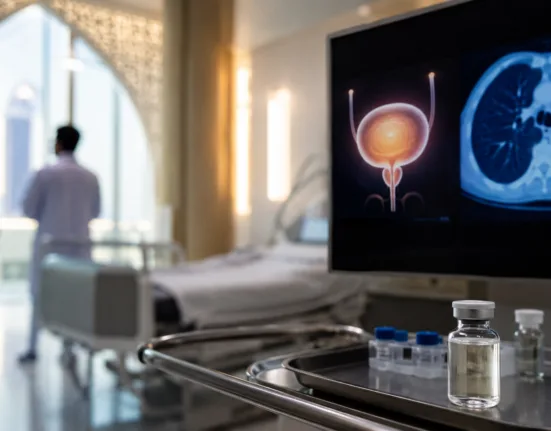
ImmunityBio, Inc. has signed an exclusive U.S. development and supply agreement with Japan BCG Laboratory for Tokyo-172 BCG, a Tokyo strain of Bacillus Calmette-Guérin being positioned for potential use in high-grade non-muscle invasive bladder cancer. The agreement gives ImmunityBio exclusive U.S. rights to develop, import and commercialise intravesical Tokyo-172 BCG, following a positive Phase III readout from the National Cancer Institute-sponsored SWOG S1602 trial.
Why ImmunityBio’s Tokyo-172 BCG agreement matters in a supply-constrained bladder cancer market
The strategic significance of the agreement is not simply that ImmunityBio has added another asset to its urologic oncology portfolio. The more important point is that the U.S. bladder cancer market has lived with a structurally fragile BCG supply chain for more than a decade, leaving urologists dependent on constrained access to an old but clinically essential immunotherapy. For high-risk non-muscle invasive bladder cancer, intravesical BCG remains one of the most important bladder-preserving treatment tools, particularly in patients who are still in earlier lines of disease management.
That makes Tokyo-172 BCG more than a conventional product licensing opportunity. ImmunityBio is attempting to build a second potential BCG supply route in the United States while also maintaining access to investigational recombinant BCG through its separate Serum Institute of India partnership. If successful, the strategy could give the U.S.-based biotech firm a broader role in the bladder cancer ecosystem, extending beyond ANKTIVA in BCG-unresponsive disease into the BCG-naïve setting where supply reliability has direct implications for standard-of-care treatment.

The unresolved question is whether regulators will view the available clinical and manufacturing package as sufficient for a viable U.S. approval pathway. Tokyo-172 BCG has not been approved by the U.S. Food and Drug Administration, and the planned Biologics License Application strategy will likely depend on how ImmunityBio, SWOG Cancer Research Network, the National Cancer Institute and Fred Hutchinson Cancer Research Center structure access to the S1602 dataset. The opportunity is clear, but the regulatory burden remains substantial because the product is not merely being imported as a commodity supply fix. It must meet U.S. biologics standards, data expectations and manufacturing controls.
How the SWOG S1602 trial strengthens the case for Tokyo-172 BCG
The strongest element in ImmunityBio’s case is the Phase III SWOG S1602 trial, which enrolled roughly 1,000 patients with BCG-naïve high-grade non-muscle invasive bladder cancer and compared intravesical Tokyo-172 BCG with intravesical TICE BCG. The study met its non-inferiority objective, with Tokyo-172 BCG showing a hazard ratio of 0.82 for high-grade recurrence-free survival against TICE BCG, with the upper confidence bound below the pre-specified non-inferiority margin.
That trial design matters because BCG supply alternatives cannot be judged only on availability. Urologists and regulators need confidence that any substitute strain preserves meaningful disease-control outcomes in a population where recurrence risk, progression risk and cystectomy timing carry serious consequences. A randomized Phase III comparison against TICE BCG provides a stronger evidentiary foundation than smaller bridging studies or real-world-only arguments, especially because the primary endpoint directly addressed high-grade recurrence-free survival.
However, non-inferiority does not automatically eliminate adoption questions. The complete response rate in carcinoma in situ at six months was numerically lower for Tokyo-172 BCG than TICE BCG, while progression-free survival was described as similar across arms. That does not undermine the positive trial conclusion, but it gives clinicians and regulators details to examine carefully. For a market that has endured shortage-driven compromises, the key question will be whether Tokyo-172 BCG is viewed as clinically interchangeable enough for routine use, or as a valuable but still separately evaluated strain with its own positioning and evidence profile.
What this could change for urologists treating high-risk NMIBC
For urologists, the most immediate potential change would be greater confidence in BCG availability, particularly for patients who are BCG-naïve and still eligible for intravesical therapy. In a constrained supply environment, treatment allocation can become a practical and ethical challenge. Physicians may need to ration induction courses, alter maintenance schedules or shift patients toward alternative options earlier than they otherwise would. A second validated BCG source could reduce that pressure if it reaches the market at sufficient scale.
The broader clinical implication is that bladder cancer treatment pathways could become less distorted by supply scarcity. BCG is not a new therapy, but its shortage has made an old medicine feel like a fragile strategic asset. If Tokyo-172 BCG gains approval, the U.S. market could move closer to a more resilient model in which strain diversity and supplier diversity reduce dependence on a single production base.
The limitation is timing. ImmunityBio has not yet provided a defined BLA submission schedule, and the regulatory engagement process could take time. Manufacturing readiness, import logistics, comparability expectations and post-approval commitments may all affect the speed at which Tokyo-172 BCG could become commercially meaningful. Clinicians may welcome the direction of travel, but they will still need near-term clarity on when, where and how additional supply would reach practices.
Why ImmunityBio’s bladder cancer strategy is becoming more layered
ImmunityBio already has an approved bladder cancer presence through ANKTIVA in combination with BCG for adult patients with BCG-unresponsive non-muscle invasive bladder cancer with carcinoma in situ, with or without papillary tumours. That approved indication sits in a later and more difficult treatment context, where patients have already failed or not responded adequately to BCG. The Tokyo-172 BCG agreement points to a different but connected part of the treatment continuum.
This creates a more layered commercial and clinical strategy. ANKTIVA addresses an immunotherapy combination opportunity in BCG-unresponsive disease, while Tokyo-172 BCG could support supply in BCG-naïve high-grade disease if approved. Recombinant BCG through the Serum Institute of India partnership adds another investigational track under expanded access. Together, these elements suggest that ImmunityBio is trying to become a broader bladder cancer immunotherapy infrastructure player rather than a single-product oncology company.
That ambition also raises execution risk. Managing an approved IL-15 receptor agonist, an investigational recombinant BCG programme and a potential Tokyo-172 BCG regulatory pathway requires different operational capabilities. Commercial launch execution, biologics supply coordination, physician education and FDA engagement must all work in parallel. The strategy could create a powerful position if aligned well, but fragmentation would be a real risk if timelines, messaging or manufacturing readiness diverge.
What regulators are likely to scrutinise next
The U.S. Food and Drug Administration’s next area of scrutiny will likely involve how much of the SWOG S1602 data can support a regulatory filing and whether the dataset is sufficiently complete for a BLA package. Because the study was publicly sponsored and not originally designed as a conventional company-run registration programme, data access, formatting, quality control and regulatory documentation will be important. ImmunityBio’s planned Data Use Agreement with SWOG, the National Cancer Institute and Fred Hutchinson Cancer Research Center will therefore be a critical enabling step.
Regulators are also likely to focus on manufacturing consistency. BCG products are biologically complex, and differences between strains, production methods and quality systems can matter. The Tokyo strain’s long use in Japan provides supportive context, but U.S. approval will depend on whether the product can satisfy FDA expectations for safety, potency, manufacturing controls and reliable supply.
The risk is that a strong clinical trial result may not be enough by itself to accelerate access. In oncology, especially for biologic products used in curative-intent or bladder-preserving settings, regulatory flexibility still has boundaries. If the FDA requests additional manufacturing data, bridging analysis or post-marketing commitments, the timeline could stretch. Industry observers will therefore be watching not only whether ImmunityBio files, but what kind of filing pathway the FDA appears willing to accept.
Why the commercial opportunity depends on reliability, not novelty
Tokyo-172 BCG is not a flashy new oncology mechanism. Its commercial value is tied to reliability, credibility and clinical familiarity. In a normal market, a decades-old BCG strain might not attract major attention. In the U.S. bladder cancer market, however, chronic shortage has turned dependable supply into a strategic advantage.
That could make adoption relatively intuitive if approval is granted and supply is sufficient. Urologists already understand BCG’s role. The hurdle is not creating an entirely new treatment category, but persuading clinicians that Tokyo-172 BCG can be used with confidence in appropriate patients. The Phase III non-inferiority data help with that transition, particularly because the comparator was TICE BCG, the strain most closely associated with current U.S. practice.
Still, commercial success would depend on more than regulatory approval. Reimbursement, distribution logistics, hospital formulary decisions, physician comfort and production capacity will shape the real-world impact. If supply remains limited or rollout is slow, Tokyo-172 BCG could become a symbolic solution rather than a practical one. The market does not merely need another approved label. It needs consistent vials reaching clinics.
What industry observers should watch after the AUA update
The next meaningful signals will come from ImmunityBio’s regulatory timeline, its ability to secure and integrate SWOG S1602 data, and the level of detail it provides around Japan BCG Laboratory’s manufacturing and supply capacity for the U.S. market. Any clarity on pre-BLA discussions with the FDA would help define whether Tokyo-172 BCG is moving toward a near-term filing or a longer development process.
For clinicians, the focus will remain on whether Tokyo-172 BCG can preserve outcomes while easing access constraints. For regulators, the issue will be whether an established foreign-manufactured BCG strain supported by a large U.S.-sponsored Phase III trial can be brought into the American market without lowering evidentiary or manufacturing standards. For ImmunityBio, the test is whether it can convert a strategically attractive agreement into a credible regulatory and supply execution story.
The agreement gives ImmunityBio a stronger bladder cancer narrative, but it does not close the loop. Tokyo-172 BCG could become an important answer to a long-running U.S. shortage, yet the decisive chapter will be written in FDA interactions, BLA preparation and manufacturing execution. In that sense, this is less a product announcement than a regulatory stress test for how the U.S. bladder cancer system responds when an old therapy becomes a modern access bottleneck.