Novanta Inc. said Chief Financial Officer Robert Buckley is scheduled to present at the Jefferies Global Healthcare Conference on June 4, 2026, in New York. The appearance places the Nasdaq-listed supplier of precision technology for medical and advanced industrial equipment makers in front of healthcare investors shortly after a stronger first-quarter revenue performance and renewed attention on medtech automation, robotics, and precision manufacturing.
The presentation itself is not a clinical, regulatory, or product milestone. The more important signal is timing. Novanta is entering the investor conference window with a story that sits between medical technology, industrial automation, and high-precision manufacturing, three areas where investors are increasingly separating companies with durable design-in exposure from those still dependent on cyclical equipment demand. For a supplier like Novanta, the Jefferies platform offers an opportunity to explain whether recent growth is being driven by temporary recovery, acquisition contribution, foreign exchange effects, or deeper demand from original equipment manufacturers building next-generation medical and automation systems.
Why Novanta’s investor narrative now depends on quality of growth, not just revenue expansion
Novanta reported first-quarter 2026 revenue of $257.7 million, up 10.4% year over year. That headline growth is useful, but investors are likely to look beneath the surface because the composition of the increase matters as much as the number itself. Acquisition activity contributed a net revenue increase of $9.0 million, while foreign exchange provided another favourable contribution. That means the core question for Novanta is not whether revenue rose, but how much of that growth reflects sustainable organic demand from medical and advanced technology customers.
For a medtech and industrial technology supplier, quality of growth is especially important because design cycles are long, customer qualification can be demanding, and revenue visibility often depends on whether components become embedded inside customer platforms. Novanta’s strength has historically come from supplying core technologies rather than selling finished medical devices directly. That model can create attractive durability when equipment manufacturers standardise around its precision motion, photonics, vision, and automation capabilities. However, it can also make growth harder for generalist investors to read because the business is several layers removed from hospital purchasing decisions or patient-facing product launches.
The Jefferies presentation therefore gives Novanta a chance to translate technical positioning into investor language. Investors will likely want to hear whether demand is broad-based across medical and advanced industrial customers, whether new product revenue is becoming a larger driver, and whether the U.S.-based technology supplier can maintain margin discipline while investing in growth platforms. The risk is that a strong revenue print may be treated as less meaningful if investors view it as too dependent on acquisitions, currency effects, or near-term order timing.
How precision medicine and robotics are reshaping Novanta’s addressable market
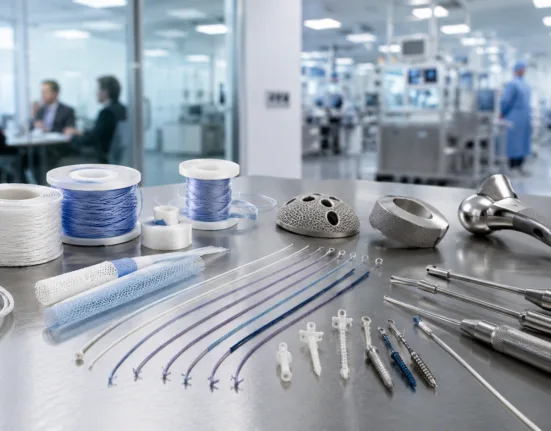
Novanta’s appeal lies in its exposure to markets where equipment makers need extreme precision, repeatability, and performance. Precision medicine, medical solutions, robotics, and automation are not just marketing categories for the group. They are tied to real changes in how medical and industrial equipment is being designed. Surgical robotics, advanced diagnostics, minimally invasive procedures, laboratory automation, ophthalmology systems, and high-end manufacturing platforms all require components and subsystems that can operate with tight tolerances.
That matters because original equipment manufacturers are increasingly looking for technology partners that can reduce development risk. A medical device manufacturer building a robotic or image-guided platform may not want to develop every optical, motion control, or precision subsystem internally. Suppliers that can deliver proven modules, engineering support, and reliability at scale become strategic enablers rather than commodity vendors. Novanta’s investor story is strongest when it is viewed through that lens.
However, this model also carries execution risk. Supplying sophisticated components into regulated or mission-critical platforms means product cycles can be slow, qualification hurdles can be high, and customer concentration can become important. A delayed customer launch, a platform redesign, or a downturn in capital equipment demand can affect revenue even when the underlying technology remains attractive. That is why investors at Jefferies are likely to focus not only on end-market opportunity, but also on backlog quality, customer mix, product lifecycle visibility, and the balance between medical and advanced industrial exposure.
Why the Jefferies conference matters for a company that sits between medtech and industrial technology
The Jefferies Global Healthcare Conference is a useful venue for Novanta because the group does not fit neatly into a single public-market bucket. It is not a pure-play medical device manufacturer, not a diagnostics company, and not a conventional industrial automation supplier. It operates in the middle layer of the value chain, where enabling technologies support medical and advanced equipment makers.
That middle-layer position can be powerful, but it needs explanation. Healthcare investors may understand the demand drivers behind robotic surgery, diagnostic automation, and precision medicine. They may be less familiar with how component and subsystem suppliers participate economically in those growth curves. Novanta’s challenge is to make the case that it can capture value from these markets without taking on the full clinical, regulatory, and commercial risks of device makers.
The flip side is that supplier models can face valuation questions. Investors may ask whether Novanta deserves to trade like a high-quality medtech enabler or more like a diversified industrial technology company exposed to cyclical equipment spending. The answer will depend on the perceived durability of its medical revenue, the strength of its design-win pipeline, and its ability to turn innovation into margin-accretive growth. The Jefferies presentation gives Robert Buckley a chance to address that positioning directly, especially after recent share-price volatility around earnings and broader Nasdaq sentiment.
What investors may watch after Novanta’s recent stock movement
Novanta shares recently traded around the low-to-mid $150 range on Nasdaq, with market data showing a pullback after a sharp post-earnings move earlier in the week. The stock’s recent action suggests that investor sentiment has improved from earlier levels, but remains sensitive to valuation, earnings quality, and growth durability. A one-day share move is not enough to define the story, but it does show that the market is actively reassessing Novanta after its first-quarter update.
A neutral reading suggests the stock is now in a prove-it phase. Revenue growth above 10% provides a constructive base, while the company’s exposure to healthcare technology and automation gives investors a credible long-term theme. However, the market will likely demand clearer evidence that organic growth, new product adoption, and operating leverage can support the valuation. For a company positioned at the intersection of medtech and advanced industrial systems, the share-price debate may increasingly turn on whether investors see it as a structural compounder or a high-quality supplier still tied to capital equipment cycles.
The upcoming Jefferies appearance may not produce new financial guidance, but it could still shape sentiment. CFO presentations often matter because they clarify capital allocation, acquisition integration, margin priorities, and how management interprets recent demand trends. For Novanta, those topics may be more important than headline commentary about the conference itself.
What Novanta must clarify as healthcare technology suppliers face tougher scrutiny
The healthcare technology supply chain has become more strategically important, but also more closely scrutinised. Medical equipment manufacturers want greater precision, automation, miniaturisation, and software-enabled performance. At the same time, customers are watching cost, supply resilience, and speed to market. Suppliers such as Novanta must show that they can meet technical requirements while maintaining scalability and commercial discipline.
The unresolved question is whether Novanta can convert its engineering strengths into a more visible and defensible financial profile. Its technology stack gives it exposure to attractive markets, but investors will want proof that those markets are translating into recurring demand rather than uneven project-based revenue. They will also watch how Novanta balances acquisitions with organic innovation, because inorganic growth can expand capabilities but may raise integration and margin questions if not executed carefully.
Industry observers are likely to track three broad signals after the Jefferies event: whether management points to sustained demand from medical original equipment manufacturers, whether new product revenue is becoming a stronger growth lever, and whether margin commentary supports confidence in operating leverage. Those signals could matter more than any single conference headline.
Why Novanta remains a strategic medtech enabler, but not a risk-free growth story
Novanta’s strategic positioning remains attractive because the company supplies technologies that sit inside some of the most important equipment trends in healthcare and advanced manufacturing. Precision medicine, robotics, automation, and medical solutions are all areas where original equipment manufacturers need reliable technology partners. That gives Novanta a role in the broader shift toward more automated, data-rich, and precision-driven healthcare infrastructure.
Still, the story is not risk-free. The company must manage customer timing, acquisition integration, foreign exchange effects, and cyclical exposure outside healthcare. It must also keep proving that its technology advantage can translate into pricing power, repeat business, and durable margins. Investors may like the theme, but they will not give unlimited credit unless financial execution keeps pace with the narrative.
The Jefferies Global Healthcare Conference appearance should therefore be viewed less as a routine investor calendar item and more as a positioning moment. Novanta has a chance to explain why its role in medical and advanced technology equipment matters, why its first-quarter growth is more than a temporary rebound, and how it plans to remain relevant as precision manufacturing and healthcare automation become increasingly central to the next generation of medical technology.