Aphios Corporation has received a United States Patent and Trademark Office Notice of Allowance for a divisional patent application covering novel Bryoid compositions, methods of making them, and potential therapeutic uses across Alzheimer’s disease, multiple sclerosis, HIV latency, cancer, and other amyloid-mediated disorders. The allowed claims focus on a Bryoid composition designated B14B, including isolation, purification, and manufacturing methods, positioning the U.S.-based biotechnology firm to strengthen its intellectual property around marine-derived compounds that modulate protein kinase C pathways.
The development is not a clinical milestone, and that distinction matters. A patent allowance can protect a discovery platform, reinforce commercial optionality, and improve negotiating leverage, but it does not prove safety, efficacy, dosing practicality, or regulatory viability. For Aphios Corporation, the real importance of the allowance lies in whether its Bryoid platform can turn a difficult class of marine natural products into drug candidates with enough biological differentiation to justify further preclinical and clinical investment.
Why does the Aphios Bryoid patent matter for Alzheimer’s disease research?
The Aphios Corporation announcement matters because it targets a long-running tension in Alzheimer’s disease drug development: the field needs more mechanisms beyond amyloid clearance, but alternative biological pathways have struggled to move from compelling laboratory rationale to durable clinical benefit. Bryoid compounds sit in that difficult but intriguing zone. They are structurally related to bryostatins, which have drawn scientific interest because of their ability to modulate protein kinase C signalling, a pathway linked to synaptic function, alpha-secretase activity, neurodegeneration, viral latency, and cancer biology.
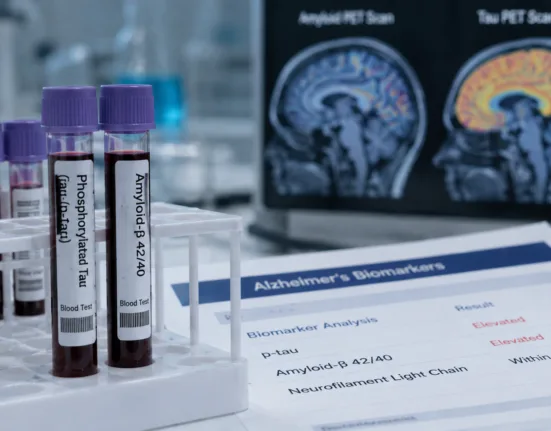
For Alzheimer’s disease, the scientific appeal is that PKC modulation may influence pathways upstream or adjacent to amyloid processing rather than simply removing deposited amyloid after disease biology is already well established. Aphios Corporation said the patent specification described Bryoid compositions that showed biological activity comparable to or greater than Bryostatin-1 in stimulating alpha-secretase activity and PKC signalling pathways associated with Alzheimer’s disease and other central nervous system disorders. That makes the platform strategically interesting because alpha-secretase activity is tied to non-amyloidogenic processing of amyloid precursor protein, a mechanism that has long attracted attention as a way to alter disease biology rather than chase downstream pathology alone.
However, the risk is equally clear. Alzheimer’s disease has repeatedly punished mechanisms that looked persuasive in cellular or animal systems but failed to translate into meaningful clinical outcomes. The use of SHSY-5Y neuroblastoma cells in experimental work can support early mechanistic activity, but it is not a substitute for human disease biology, especially in a heterogeneous, age-related neurodegenerative condition. The patent allowance strengthens the ownership position around B14B and related Bryoid compositions, but the clinical question remains whether PKC modulation can be tuned safely enough, delivered reliably enough, and tested rigorously enough to produce measurable patient benefit.
What is genuinely new in Aphios’ Bryoid composition allowance?
The genuinely new element is not the broad idea that bryostatin-like compounds may have therapeutic potential. That concept has been explored for years across neurological disease, oncology, and viral latency. The new element is the allowed claim set around a novel Bryoid composition, B14B, along with methods of isolation, purification, and manufacture. Aphios Corporation said the United States Patent and Trademark Office determined that the claimed Bryoid composition demonstrated novelty and non-obviousness over prior bryostatin-related art, which is the key legal threshold for strengthening a composition-focused intellectual property estate.
That distinction is important because composition patents are often more valuable than general method-of-use claims. If a biotechnology firm controls a specific compound or family of compounds, it may have a clearer path to licensing, partnership discussions, and exclusivity around development. For a small or emerging biotech firm, intellectual property can be the bridge between early scientific discovery and strategic financing, especially in areas where manufacturing complexity and long development timelines require outside capital or larger pharmaceutical partners.
Still, novelty in patent terms does not automatically equal superiority in drug-development terms. A compound can be patentable because it is structurally distinct, yet still face the same biological, toxicological, pharmacokinetic, or manufacturing challenges as earlier molecules. The phrase “comparable to or greater than Bryostatin-1” is scientifically meaningful at the assay level, but the industry will want to see whether B14B or related Bryoids can demonstrate a better therapeutic index, cleaner selectivity, more scalable production, and a stronger translational package than earlier PKC-modulating approaches.
Can marine-derived therapeutics overcome the manufacturing and scalability problem?
Aphios Corporation’s platform is notable because it combines marine natural product discovery with extraction, purification, and characterization technologies, including its SuperFluids processing platform. The stated source material, Bugula neritina and related marine organisms, is central to both the opportunity and the challenge. Marine-derived compounds have historically delivered important biological insights, but they often come with difficult questions around supply, purification, reproducibility, and cost-effective manufacturing.
This is where Aphios Corporation’s patent strategy becomes more than a legal update. If the Bryoid portfolio includes not only novel compositions but also practical methods for isolation, purification, and manufacture, the biotechnology firm may be attempting to solve one of the main bottlenecks that has limited marine natural product development. A compound that is biologically promising but hard to produce at consistent purity and scale rarely becomes a competitive therapeutic candidate. Manufacturing control can therefore become as strategically important as target biology.
The unresolved issue is whether proprietary purification can support a development-grade and eventually commercial-grade supply chain. Drug developers must produce material consistently under increasingly demanding quality standards as programs move from discovery to investigational new drug-enabling studies and human trials. For complex macrocyclic natural products, that challenge can be especially unforgiving. Aphios Corporation’s SuperFluids platform may help differentiate the Bryoid program, but the industry will need evidence that the process can support repeatable yields, high purity, batch consistency, and a cost structure compatible with chronic or long-duration diseases such as Alzheimer’s disease and multiple sclerosis.
Why are HIV latency and oncology part of the Bryoid platform story?
The broad disease language around Aphios Corporation’s Bryoid platform reflects the reach of PKC biology. Protein kinase C pathways are not confined to neurodegeneration. They have also been studied in relation to HIV latency reversal, cancer signalling, cellular differentiation, and immune modulation. That creates an unusually wide therapeutic canvas for Bryoid compounds, with Aphios Corporation positioning the platform across Alzheimer’s disease, multiple sclerosis, Parkinson’s disease, HIV-1 latency reversal, cancer, and amyloid-mediated disorders.
The strategic benefit of this breadth is optionality. A platform with activity across several disease-relevant pathways may allow a small biotechnology firm to pursue the indication where the preclinical package, regulatory path, and partnership interest are most favourable. HIV latency reversal, for example, remains a major challenge in cure-directed research because latent viral reservoirs are difficult to activate and eliminate safely. Oncology also offers a more established precedent for accepting targeted biological modulation if early signals are strong and patient selection is clear.
The risk is that breadth can become a liability if the platform story is not sharpened. Alzheimer’s disease, multiple sclerosis, HIV latency, and cancer are very different development environments. They require different endpoints, trial durations, patient populations, regulatory expectations, safety thresholds, and commercial strategies. A platform that appears broadly relevant at the pathway level must eventually become a focused drug-development program. Investors, partners, and regulators will likely look for prioritisation: which Bryoid compound, which indication, which biomarker strategy, and which clinical endpoint can generate the cleanest proof of concept?
How does this compare with existing Alzheimer’s disease drug development trends?
Aphios Corporation’s Bryoid patent allowance lands in an Alzheimer’s disease market that has changed significantly in recent years. The approval and commercial rollout of anti-amyloid antibodies has reset expectations around disease-modifying treatment, but it has not ended the search for complementary or alternative mechanisms. Safety monitoring, infusion logistics, patient eligibility, cost, and real-world implementation remain major constraints for antibody-based therapies. That creates room for other biological strategies, provided they can show credible clinical relevance.
PKC modulation offers a different proposition. Rather than focusing only on amyloid plaque reduction, the Bryoid platform points toward intracellular signalling, synaptic biology, and amyloid precursor protein processing. That could be attractive if the mechanism eventually supports cognitive, functional, or biomarker outcomes that complement the amyloid antibody era. It may also appeal to researchers who believe Alzheimer’s disease requires multi-pathway intervention rather than single-target correction.
However, comparison with approved or late-stage Alzheimer’s therapies also raises the bar. The field has become more demanding, not less. Developers must now show not only a plausible mechanism but also strong biomarker logic, well-defined patient selection, clinically meaningful endpoints, and a safety profile suitable for older adults with comorbidities. A patent allowance gives Aphios Corporation more control over its Bryoid technology, but it does not place the platform near the evidence threshold now expected for competitive Alzheimer’s disease programs.
What will regulators and industry observers watch next?
Regulatory watchers will focus less on the patent itself and more on the development package that follows. For a Bryoid candidate to advance meaningfully, Aphios Corporation would need to establish a clear candidate selection rationale, pharmacology, toxicology, pharmacokinetics, manufacturing controls, and disease-specific biomarker strategy. In Alzheimer’s disease, that may involve evidence linking PKC modulation and alpha-secretase activation to downstream changes relevant to cognition, synaptic function, or amyloid-related biology. In HIV latency, the key question would be whether latency reversal can occur without unacceptable immune activation or off-target risk.
Industry observers are also likely to watch whether Aphios Corporation uses the patent allowance to deepen internal development or to support partnering. A portfolio of more than 85 issued and pending United States and international patents gives the biotechnology firm a broader intellectual property base, but IP depth alone does not determine programme value. The next meaningful inflection point would be evidence that B14B or another Bryoid composition can be developed as a practical therapeutic candidate with defined disease positioning.
The commercial question is also unresolved. Alzheimer’s disease and multiple sclerosis require substantial development capital and long clinical timelines. Oncology and HIV latency may allow more focused early proof-of-mechanism studies, but they also demand intense competition for attention from larger players and grant-funded research networks. Aphios Corporation’s challenge will be to convert platform breadth into a prioritised development pathway that makes sense scientifically, financially, and clinically.
Why the Bryoid platform is promising, but still early
The Aphios Corporation patent allowance is best viewed as an enabling milestone rather than a therapeutic breakthrough. It strengthens the biotechnology firm’s position around novel Bryoid compositions and supports the argument that marine-derived macrocyclic compounds may still offer underexplored therapeutic value. It also reinforces the idea that drug discovery from natural products is not a relic of the past, particularly when paired with modern purification, characterisation, and intellectual property strategies.
A neutral reading suggests the opportunity is real but still early. The most compelling part of the announcement is the combination of novel composition claims, PKC-linked biological activity, and a manufacturing-oriented platform designed to handle complex marine-derived compounds. The most important limitation is that the available evidence remains preclinical and platform-oriented. The gap between stimulating alpha-secretase activity in cellular systems and changing the course of Alzheimer’s disease, multiple sclerosis, HIV latency, or cancer in patients is very large.
For Aphios Corporation, the patent allowance gives the Bryoid platform a stronger foundation. The next test is whether the science can be narrowed, validated, and advanced into a development programme that answers the hard questions patents cannot answer. In drug development, intellectual property protects the map. Clinical data proves whether the road actually goes somewhere.