Genentech has received FDA Priority Review for a supplemental Biologics License Application covering Tecentriq and Tecentriq Hybreza in combination with chemotherapy for stage III deficient DNA mismatch repair or microsatellite instability-high colon cancer after surgery. The filing is based on the Phase 3 ATOMIC study, which showed that adding atezolizumab to FOLFOX6 chemotherapy reduced the risk of disease recurrence or death versus chemotherapy alone, placing immunotherapy closer to a potential adjuvant role in a biomarker-defined early colon cancer population.
Why could Genentech’s Tecentriq filing matter in stage III dMMR/MSI-H colon cancer?
The importance of the Tecentriq filing lies in where Roche Holding AG is trying to move immunotherapy. Immune checkpoint inhibitors are already central to several advanced cancer settings, including parts of colorectal cancer care, but the adjuvant stage III colon cancer setting is a different clinical and commercial challenge. These patients have undergone surgery and are being treated to reduce the risk of recurrence, which means the tolerance for uncertainty can be lower than in metastatic disease.
Genentech’s filing targets a defined subgroup: patients whose tumors are deficient in DNA mismatch repair or microsatellite instability-high. These tumors have higher mutation rates and are more likely to be immunologically visible, making them biologically plausible candidates for checkpoint blockade. That is why the regulatory submission matters beyond one drug. It signals that precision oncology is moving further into earlier cancer stages, where molecular testing may shape treatment decisions immediately after surgery rather than only after relapse.
The unresolved question is whether the FDA and clinicians will view the ATOMIC data as strong enough to shift routine adjuvant practice. Reducing recurrence risk is highly meaningful, but immunotherapy also carries immune-related safety considerations. In earlier-stage disease, the benefit-risk balance must account for patients who may already be cured by surgery and chemotherapy alone. That makes patient selection, biomarker testing, and careful toxicity management central to the approval debate.
What does the ATOMIC study reveal about the strength of the clinical case?
The ATOMIC study gives Genentech a stronger clinical case because it was a Phase 3 randomized trial in a clearly defined patient population. The study enrolled 712 patients with stage III colon cancer and deficient DNA mismatch repair, comparing FOLFOX6 chemotherapy alone with FOLFOX6 plus Tecentriq followed by Tecentriq monotherapy. The primary endpoint was disease-free survival, a clinically relevant measure in the adjuvant setting because it reflects whether treatment can delay or prevent recurrence after curative-intent surgery.
The reported result is substantial. Tecentriq plus FOLFOX6 reduced the risk of disease recurrence or death by 50% compared with FOLFOX6 alone, and the 36-month disease-free survival rate was 86% in the Tecentriq combination arm compared with 76% in the chemotherapy-alone arm. That ten-point absolute difference at three years is the kind of signal that can influence treatment guidelines if regulators approve the regimen and if the broader data package supports manageable safety.
The limitation is that disease-free survival, while important, is not the same as mature overall survival. Adjuvant oncology decisions often evolve as longer follow-up clarifies whether preventing recurrence translates into survival benefit, whether late toxicities emerge, and whether the benefit remains consistent across subgroups. Clinicians will also want to understand how benefit varies by tumor characteristics, age, comorbidities, chemotherapy completion, and recurrence risk. The ATOMIC result is compelling, but implementation will depend on details beyond the headline hazard reduction.
Why does this filing raise the stakes for biomarker testing in colon cancer?
The Tecentriq filing makes deficient DNA mismatch repair and microsatellite instability-high testing more central to early colon cancer treatment strategy. These biomarkers are already important in colorectal cancer, but a potential adjuvant immunotherapy indication would increase the practical urgency of identifying eligible patients soon after surgery. A biomarker result would not merely inform prognosis or future treatment planning. It could directly determine whether a patient receives immunotherapy alongside chemotherapy.
That creates a major operational implication for hospitals. Pathology workflows, turnaround times, reflex testing protocols, and communication between surgeons, oncologists, and molecular laboratories would become even more important. If testing is delayed, patients may miss the window for timely adjuvant treatment planning. If testing is inconsistent, eligible patients could be overlooked. In precision oncology, the value of a drug is often limited by the reliability of the diagnostic pathway around it.
The risk is uneven implementation. Large academic centres may already have robust mismatch repair and microsatellite instability testing workflows. Community oncology settings may be more variable, especially where tissue handling, pathology resources, insurance processes, or referral patterns differ. If Tecentriq gains approval in this setting, Roche Holding AG and Genentech will need to support not only physician education around treatment, but also practical awareness around biomarker testing and workflow readiness.
How could Tecentriq plus chemotherapy change the current adjuvant treatment conversation?
The current adjuvant treatment conversation in stage III colon cancer has historically centred on surgery followed by chemotherapy to reduce recurrence risk. FOLFOX-based chemotherapy remains a key standard, but recurrence remains a major problem for a meaningful share of patients. Genentech’s application therefore addresses a persistent gap: how to improve outcomes after surgery for patients whose tumor biology may make them more responsive to immunotherapy.
If approved, Tecentriq plus chemotherapy could create a more biologically tailored adjuvant approach. Instead of treating all stage III colon cancer patients through broadly similar chemotherapy logic, clinicians would have a pathway in which tumor mismatch repair status helps determine whether immunotherapy should be added. That would mark another step away from one-size-fits-all adjuvant treatment and toward risk-adapted, biomarker-driven cancer management.

The challenge is that adding immunotherapy also adds complexity. Patients would receive chemotherapy plus Tecentriq for six months, followed by Tecentriq monotherapy for another six months in the ATOMIC regimen. That creates a longer treatment arc, additional infusion visits, immune-related adverse event monitoring, and potentially more healthcare resource use. The clinical benefit may justify that burden for many patients, but oncologists will need to discuss the trade-off carefully, especially for patients with lower recurrence risk or significant comorbidities.
Why is the Priority Review timeline commercially and clinically important?
The FDA Priority Review designation is important because it places the application on a faster regulatory track, with an expected decision date of October 9, 2026. That timeline gives Genentech a clearer near-term opportunity to expand Tecentriq into a new early-stage colon cancer setting. For clinicians, the date matters because it could shape treatment planning discussions before the end of the year, especially in centres already tracking the ATOMIC results closely.
Commercially, an adjuvant colon cancer approval would extend Tecentriq’s relevance in oncology at a time when checkpoint inhibitor markets are increasingly competitive. Tecentriq already has approved uses across multiple tumor types, but immuno-oncology growth increasingly depends on earlier lines of therapy, biomarker-defined populations, combination regimens, and differentiated formulations. A stage III colon cancer indication would give Roche Holding AG a meaningful expansion opportunity in a disease area with high clinical visibility.
The unresolved question is label breadth. The FDA could approve the regimen for a tightly defined population based on deficient DNA mismatch repair or microsatellite instability-high status, with specific treatment conditions tied to chemotherapy use. The label language will shape eligible patient numbers, payer policies, guideline interpretation, and physician confidence. In oncology, the difference between a broad and narrow label can determine whether a clinical win becomes a major commercial opportunity or a more selective specialist use.
How does Tecentriq Hybreza add another layer to Roche’s strategy?
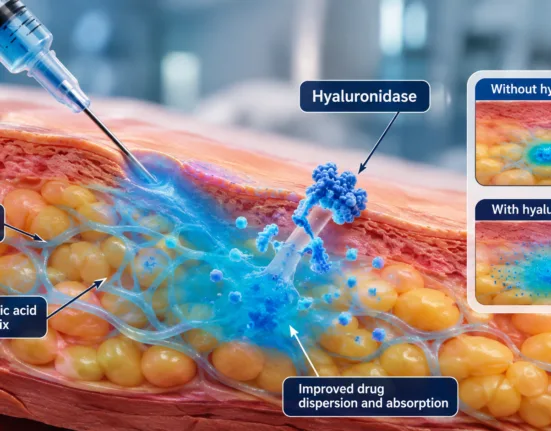
The inclusion of Tecentriq Hybreza adds a practical angle to the filing because Roche Holding AG has been developing subcutaneous immunotherapy delivery as a way to reduce infusion burden. Tecentriq Hybreza combines atezolizumab with hyaluronidase and offers an alternative route to intravenous Tecentriq in approved settings. In adjuvant treatment, where patients may receive therapy over many months, administration convenience can matter for both patients and cancer centres.
This could be strategically useful if the colon cancer indication is approved. A therapy that requires prolonged treatment after surgery must fit into real oncology workflows. Patients may be returning to work, recovering from surgery, managing chemotherapy effects, and attending repeated appointments. A subcutaneous option could potentially support convenience where appropriate, while also helping cancer centres manage chair time and operational capacity.
However, convenience cannot carry the clinical argument alone. The core regulatory question remains whether adding atezolizumab to chemotherapy improves disease-free survival enough to justify the regimen’s risks and burden. Administration flexibility can support adoption after approval, but it does not substitute for mature clinical confidence. Clinicians will still focus first on efficacy, safety, and patient selection.
What are the safety and clinical caution points in earlier-stage immunotherapy?
Safety is especially important in adjuvant therapy because treatment is being given after surgery to reduce recurrence risk, not to treat measurable metastatic disease. Checkpoint inhibitors can produce immune-mediated adverse events affecting organs such as the colon, liver, lungs, endocrine glands, kidneys, and skin. Many events are manageable when identified early, but some can be serious, prolonged, or life-threatening. That risk calculus is different when some patients may never have relapsed without added immunotherapy.
Genentech has reported that the safety profile in the ATOMIC study was consistent with previous studies of Tecentriq and FOLFOX6. That is reassuring, but it does not eliminate the need for careful patient counselling and monitoring. Oncologists will need to consider autoimmune history, performance status, chemotherapy tolerance, patient preference, and the ability to manage immune-related toxicity over a year-long treatment course.
The broader caution is overtreatment. A recurrence-risk reduction may be clinically meaningful at the population level, but the individual patient question remains complex. Some patients would be cured with surgery and chemotherapy alone, while others may need more aggressive adjuvant treatment. Biomarker selection helps sharpen the population, but it does not perfectly identify who will relapse or who will benefit. That is why long-term follow-up and subgroup analysis will be important after any approval.
What does this mean for Roche Holding AG’s oncology market position?
For Roche Holding AG, the Genentech filing supports a wider strategy of defending and extending its oncology franchise as immuno-oncology becomes more crowded. Tecentriq faces intense competition from other checkpoint inhibitors, but differentiated indications, biomarker-defined use, and formulation flexibility can still create durable commercial value. A successful move into adjuvant stage III dMMR/MSI-H colon cancer would deepen Roche’s presence in gastrointestinal oncology and reinforce its precision oncology positioning.
The stock market signal is measured rather than explosive. Roche Holding AG shares were trading around CHF 324.80 on June 11, 2026, up 0.28% on the Swiss market, with the stock higher over the previous 12 months. The U.S. ADRs were trading around $50.42. That suggests investors view Roche as a large, diversified pharmaceutical group where individual regulatory milestones matter strategically, but rarely transform sentiment by themselves unless they materially change revenue expectations.
For market watchers, the Tecentriq filing is a constructive oncology catalyst, not a standalone valuation reset. Roche’s broader investor narrative still depends on pipeline productivity, diagnostics integration, oncology renewal, immunology, neuroscience, and competition across legacy and growth products. Still, an adjuvant colon cancer approval would strengthen the perception that Roche can continue extracting value from established immuno-oncology assets through smarter biomarker positioning and lifecycle development.
What should clinicians, regulators, and industry observers watch next?
Clinicians should watch the FDA decision on October 9, 2026, but also the details around labeling, treatment duration, eligible biomarker population, and how the regimen is incorporated into guidelines. If approved, the immediate practical question will be how quickly oncology centres can make dMMR/MSI-H testing routine enough to support timely adjuvant decisions. The strongest clinical impact will occur only if eligible patients are identified early and reliably.
Regulators will be weighing the strength of disease-free survival benefit against safety, treatment burden, and unmet need in a population where recurrence risk remains significant despite current therapy. The ATOMIC trial’s randomized design and magnitude of recurrence-risk reduction support the filing, but the final decision will define how confidently immunotherapy can move into this earlier colon cancer setting.
For the pharma industry, the larger signal is that immunotherapy’s next growth phase is increasingly moving through molecularly selected early-stage disease. Genentech’s Tecentriq filing is not just another checkpoint inhibitor update. It is a test of whether biomarker-defined adjuvant immunotherapy can meaningfully reduce recurrence after surgery in colon cancer. If the FDA approves the regimen, the treatment conversation in stage III dMMR/MSI-H colon cancer could shift from chemotherapy alone toward a more biologically targeted standard. If the review is more cautious, it will remind the sector that moving immunotherapy earlier requires not only strong data, but an especially careful balance of benefit, risk, and real-world readiness.