GSK plc’s latest agreement with the United States Administration to lower the price of respiratory medicines, including its inhaled asthma and chronic obstructive pulmonary disease (COPD) portfolio, signals a shift in how global pharmaceutical companies are choosing to respond to increasing U.S. political pressure around drug affordability. The agreement, announced on December 22, 2025, satisfies all four actions requested by President Donald Trump in a July 2025 letter and includes a commitment to expand direct patient access channels while exempting the company from punitive trade tariffs for the next three years.
What this signals about the future of voluntary price negotiations in the U.S.
While much of the industry has resisted government-led pricing mandates, GSK plc’s move could mark a broader shift toward preemptive compliance through bilateral agreements. By agreeing to reduce the price of selected medicines in Medicaid and by offering direct-to-consumer purchase options with discounts of up to 66 percent, GSK has effectively chosen voluntary price reduction over legislative confrontation. Industry observers note this could pave the way for other pharmaceutical companies to strike similar agreements that provide policy certainty and regulatory insulation in exchange for targeted cost concessions.
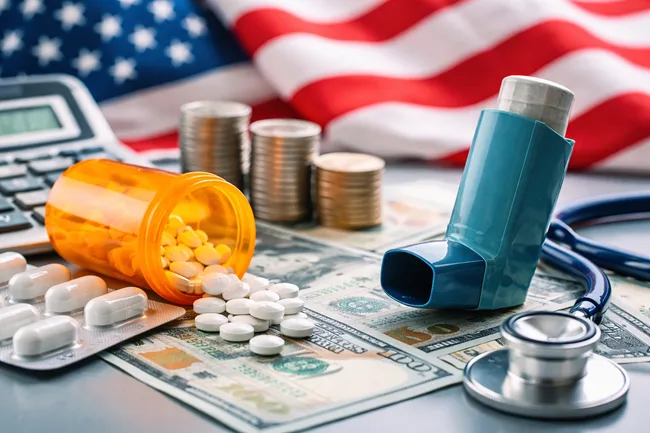
The most significant departure from prior strategies is GSK’s willingness to commit to value-based launch pricing for future medicines—particularly respiratory drugs—in the U.S., a move that has traditionally been resisted by pharmaceutical multinationals due to concerns around reference pricing in other jurisdictions. By linking innovation to a broader affordability narrative, GSK is repositioning itself as a cooperative actor in U.S. healthcare policy, even while maintaining that innovation must be sustainably rewarded.
What this changes for U.S. respiratory market dynamics and payer models
With more than 40 million Americans living with asthma or COPD, GSK’s inhaled respiratory portfolio—led by brands such as Advair, Trelegy Ellipta, and Ventolin—has long been a dominant player in the segment. Making these therapies more accessible at reduced prices via direct-purchase platforms is likely to put pressure on competitors like AstraZeneca, Teva Pharmaceuticals, and Viatris to revisit their own pricing structures or risk ceding market share to a now more price-transparent peer.
Furthermore, industry analysts believe GSK’s approach may alter the dynamics of how Pharmacy Benefit Managers (PBMs) negotiate rebates. If direct purchasing becomes a significant access point for patients, traditional PBM-led discounting models may be bypassed, introducing a new pricing channel that is not reliant on formulary tiering. Clinicians and patient advocacy groups may welcome this shift if it results in lower out-of-pocket costs and better medication adherence in chronic disease management.
What this enables for supply chain resilience under the SAPIR program
A potentially underappreciated element of the announcement is GSK’s participation in the Strategic Active Pharmaceutical Ingredients Reserve (SAPIR), a Trump Administration initiative to localize critical drug ingredient capacity. By agreeing to secure a national reserve of albuterol, the active compound in many rescue inhalers, GSK is playing a key role in reshoring part of the respiratory supply chain. This aligns with broader federal efforts to reduce dependence on overseas API manufacturers, especially for widely used medications.
Although GSK has not disclosed the production or warehousing specifics, its September 2025 pledge to invest over $30 billion in research and development and manufacturing in the United States—including $2 billion earmarked for AI and advanced technologies—suggests it may leverage domestic facilities for this stockpiling initiative. Regulatory watchers suggest the move could earn GSK further goodwill with U.S. agencies such as the Department of Health and Human Services (HHS) and the Centers for Medicare & Medicaid Services (CMS), which are increasingly tying procurement preferences to supply chain sovereignty.
What risks and unresolved questions remain despite the agreement
Despite its political and commercial benefits, the agreement introduces potential friction points. First, the specific pricing formulas, products covered, and savings thresholds have not been disclosed. This lack of transparency limits the ability of payers, regulators, and competitors to assess whether the reductions are material across all income levels or primarily symbolic in headline terms. Industry critics argue that without mandated disclosure, such voluntary pricing initiatives risk being insufficient in addressing systemic cost challenges.
Second, the durability of tariff exemptions is uncertain. GSK’s exclusion from Section 232 tariffs is only guaranteed for three years and remains subject to future policy shifts. This short time horizon raises the question of whether GSK—and other companies that follow this model—will be able to lock in longer-term stability around manufacturing inputs and pricing rights.
Third, the broader respiratory pipeline context must be considered. GSK’s willingness to price new launches in line with developed-market affordability expectations could complicate reimbursement discussions if clinical differentiation is modest or real-world outcomes do not align with trial-based claims. Payers may increasingly demand demonstrable comparative effectiveness before endorsing premium-tier coverage.
What regulators and industry stakeholders will watch closely next
Stakeholders are likely to monitor two primary outcomes from this deal. First is the uptake rate of GSK’s direct-to-consumer respiratory product platform. If significant volumes shift away from insurer-intermediated dispensing, it could influence broader policy shifts toward price transparency and consumer access models.
Second is whether GSK’s competitors will feel compelled to follow suit. AstraZeneca, in particular, faces reputational and pricing pressure in the U.S. respiratory market, especially with its Symbicort franchise competing head-to-head with GSK’s inhaled therapies. Failure to match GSK’s affordability measures could trigger formulary disadvantages or public backlash.
Separately, health economists will be evaluating whether agreements like this meaningfully reduce Medicaid expenditure trends or whether cost burdens are simply being reshuffled across stakeholders. Early analysis will likely focus on utilization data, adherence metrics, and price-per-inhaler comparisons across states.
What this reveals about U.S. pharmaceutical pricing power in 2025
The broader implication of the GSK deal is that the power dynamics around U.S. drug pricing may be entering a new phase—one where voluntary corporate compliance is used as a hedge against regulatory intervention. Unlike past efforts that were largely reactive or court-contested, GSK’s proactive engagement suggests a maturing view of pricing diplomacy as a strategic asset rather than a liability.
For clinicians and policymakers, the shift opens a possible third path between status quo pricing opacity and full legislative price control. Whether this model becomes a sustainable template will depend on how other major players respond, how patients experience the changes, and how quickly measurable impact can be demonstrated in real-world settings.