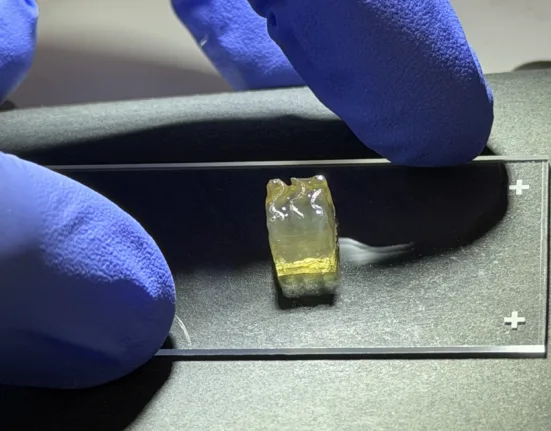
A peer-reviewed study published in Cytotherapy has spotlighted Ossium Health’s proprietary cryopreserved bone marrow platform as a viable, off-the-shelf alternative for allogeneic hematopoietic cell transplantation (alloHCT). The U.S.-based bioengineering company reported that three high-risk acute myeloid leukemia (AML) patients treated under an expanded access program experienced timely engraftment and immune reconstitution, with no infusion-related toxicities, cytokine release syndrome, or dimethyl sulfoxide (DMSO)-associated complications. The results position cryopreserved marrow as a potential disruptor in a field long dependent on live donor grafts.
Why standardized cryopreservation could be the inflection point for transplant logistics
The traditional allogeneic transplant model has relied on fresh grafts from HLA-matched living donors, a system that—despite improvements in registry matching—still introduces considerable uncertainty and delay. Donor attrition, last-minute health ineligibility, and geographic complications frequently disrupt scheduling, often resulting in missed transplant windows. For aggressive hematologic malignancies like AML, such delays can mean the difference between remission and relapse.
Ossium’s cryopreserved marrow platform challenges this structural bottleneck. By sourcing bone marrow from cadaveric organ donors and applying a centralized, GMP-compliant manufacturing process, the company decouples transplantation from the unpredictable rhythms of donor coordination. Instead, transplant centers can access a ready-to-use, quality-controlled graft within days—potentially transforming transplant workflows and patient triage.
The emphasis on engineered cryopreservation is not a trivial distinction. Historically, cryopreservation in alloHCT was site-specific and technician-dependent, resulting in variable product quality and outcomes. Ossium’s model introduces industrial rigor into a previously artisanal process—moving cryopreservation from the realm of academic lab technique into regulated biomanufacturing.
What this reveals about clinical assumptions on cryopreserved versus fresh marrow
For decades, fresh grafts have been perceived as biologically superior due to higher viability and engraftment rates. This perception, however, has been based on flawed comparisons—namely, poorly standardized freezing practices executed under time pressure or suboptimal conditions.
What Ossium’s platform demonstrates is that cryopreserved marrow, when produced under tightly controlled and validated conditions, can match or even exceed the reliability of fresh transplants. In the Cytotherapy report, all three AML patients achieved rapid neutrophil and platelet engraftment, full donor chimerism, and immune reconstitution, with no major complications. Importantly, the absence of cytokine release syndrome or DMSO toxicity suggests that consistent product handling reduces the adverse event profile often associated with frozen grafts.
Clinicians tracking these findings believe this could shift long-standing preferences. If larger cohorts confirm equivalent or superior clinical outcomes, fresh marrow may lose its status as the default gold standard. Instead, cryopreserved products may become the preferred first-line option, particularly in centers seeking to streamline scheduling and minimize treatment delays.
What this enables for transplant accessibility and system-level redesign
The implications of an off-the-shelf graft model are wide-reaching. First, it shortens the lead time from indication to transplant. In the current paradigm, patients must wait for registry matching, donor availability, medical clearance, and travel coordination—all of which can take weeks to months. Ossium’s model could compress this into a matter of days, unlocking transplant eligibility for patients previously considered too unstable to wait.
Second, the model opens new possibilities for just-in-time graft selection, allowing clinicians to make decisions based on real-time patient risk rather than the constraints of donor availability. This could be particularly valuable in relapsed AML, where urgent bridging to transplant is often required following induction chemotherapy.
Third, it simplifies logistics for transplant centers—especially those in underserved or resource-limited settings. Without the need for complex donor coordination, cross-country courier systems, or emergency rescheduling, centers could improve throughput and reduce cancellations.
Industry observers suggest that this model aligns with a broader shift toward centralized, scalable platforms in transplant and regenerative medicine—mirroring trends seen in off-the-shelf CAR-T manufacturing, decellularized scaffolds, and universal donor organ technologies.
How the regulatory landscape could evolve in response to this model
The introduction of a cryopreserved, industrially manufactured bone marrow product introduces new questions around regulatory classification. Currently, most alloHCT procedures are regulated under transplant-specific frameworks, with limited oversight over how grafts are procured or processed if performed in-hospital. Ossium’s GMP-based production—registered with the U.S. Food and Drug Administration and operating under Clinical Laboratory Improvement Amendments (CLIA) certification—blurs the line between a transplant procedure and a biologic product.
Regulatory watchers suggest that Ossium’s approach could set a precedent for tighter oversight and potentially require other graft sources to meet similar standards if they aim to compete in the off-the-shelf space. This could drive a long-overdue modernization of how bone marrow, cord blood, and even mobilized peripheral blood stem cells are regulated when used outside of traditional site-collected workflows.
It also opens the door to eventual Investigational New Drug (IND) pathways or Biologics License Applications (BLAs) if the product is expanded to new indications or modified with additional engineering steps, such as ex vivo expansion or immunoediting.
What manufacturing scale and clinical scope will determine long-term viability
Despite promising clinical results, Ossium’s model will be tested on two fronts: manufacturing scalability and disease applicability. The company must demonstrate that it can bank and distribute cryopreserved marrow consistently across hundreds or thousands of patients, while maintaining quality metrics under operational stress. Any disruption in donor acquisition, cleanroom capacity, or distribution logistics could create downstream bottlenecks.
Equally important will be proving that the platform is not limited to AML or urgent access cases. Success in more indolent conditions—such as myelodysplastic syndromes, chronic leukemias, or lymphomas—will be necessary to position cryopreserved marrow as a universal graft alternative. Clinicians and payers may also look for data in graft-versus-host disease (GvHD) incidence, long-term survival, and relapse rates to inform adoption curves.
Several transplant centers and cooperative groups are already exploring opportunities to initiate multicenter trials or retrospective analyses comparing Ossium grafts with matched unrelated donor (MUD) transplants and cord blood alternatives.
What competitive implications this creates for donor registries and traditional banks
The emergence of a cryopreserved, scalable graft platform introduces potential strategic pressure on traditional donor registries like the National Marrow Donor Program (NMDP)/Be The Match and international counterparts like DKMS. These entities have invested heavily in growing diverse, searchable donor databases, yet their operational models depend on a live-donor-to-patient handoff.
If off-the-shelf cryopreserved marrow becomes clinically equivalent and logistically simpler, it may reduce reliance on active donor pools. Over time, this could reorient registry priorities toward donor tissue procurement and cryobank partnerships instead of live match-making.
Cord blood banks—often viewed as backup graft sources for patients without suitable donors—may also face renewed scrutiny. While cryopreserved cord blood has demonstrated utility, it is limited by cell dose constraints and delayed engraftment. Ossium’s adult marrow grafts, by contrast, are potentially higher volume, better matched, and more consistently viable.
Analysts believe that unless traditional registries innovate their sourcing and preservation strategies, their role in the transplant ecosystem may be disrupted by proprietary platforms like Ossium’s.
What clinicians, payers, and policymakers will watch in 2026 and beyond
Looking ahead, several key developments will shape Ossium Health’s trajectory and the broader cryopreserved graft segment:
Larger-scale clinical validation: Whether Ossium can replicate results in a 50–100 patient cohort across multiple sites will be essential for institutional trust.
Regulatory engagement: Any movement toward product designation under FDA biologics or cell therapy frameworks could signal broader industry reclassification.
Reimbursement clarity: If cryopreserved marrow is priced at a premium, insurers will demand cost-benefit justification compared to donor-derived transplants.
Operational resilience: The ability to maintain uninterrupted supply during periods of donor scarcity, global events, or logistics slowdowns will be closely watched.
Ethical considerations: Broader use of cadaveric marrow raises questions around consent, public education, and cultural acceptance that may require policy support.
Ossium’s early data point to a future in which transplant timelines are dictated by clinical readiness, not donor availability. If the model proves robust at scale, it may not only redefine the logistics of alloHCT, but also introduce a new commercial category of cryopreserved graft products that blend the rigor of biotech with the lifesaving mission of transplant medicine.