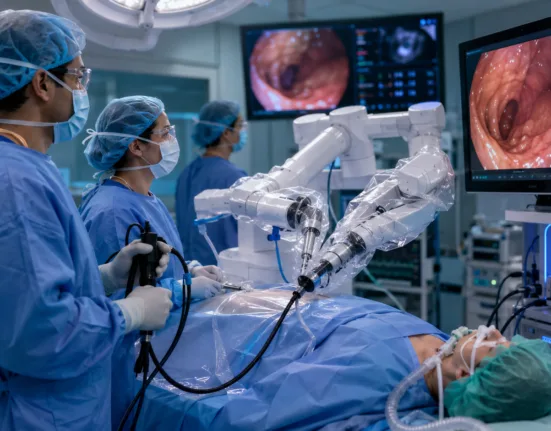
The U.S. Food and Drug Administration has approved EndoQuest Robotics, Inc. to proceed with the final enrollment stage of its ongoing PARADIGM Trial evaluating the Endoluminal Surgical (ELS) System in robotic endoscopic submucosal dissection (ESD) procedures. The pivotal trial, operating under an Investigational Device Exemption, marks the final step before a planned De Novo submission for U.S. marketing authorization.
Why this FDA greenlight marks a turning point in scar-free colorectal procedures
This milestone may be incremental in regulatory terms, but for the gastrointestinal (GI) surgical field, it could be transformative. EndoQuest’s ELS System is not another variation of laparoscopic robotics. Instead, it represents a novel attempt to combine the flexibility of an endoscope with the articulation and precision of robotic surgical tools—all while operating through natural orifice access. That makes it a candidate to open a new class of endoluminal procedures that are less invasive than current minimally invasive techniques.
By clearing EndoQuest to complete enrollment in the PARADIGM Trial, the FDA has effectively acknowledged favorable safety data from early-stage use in colorectal and gastroenterological cases. This includes the first-ever fully robotic ESD procedure performed by a gastroenterologist within an IDE trial setting. The regulator’s go-ahead also reflects productive alignment through the Safer Technologies Program (STeP), designed to expedite access to medical devices with meaningful patient benefit and lower risk profiles.
What sets the ELS System apart from conventional endoscopic platforms
Unlike existing ESD tools that rely on manual dexterity and are limited in scope when addressing complex GI lesions, the ELS System offers a potentially higher level of control and maneuverability inside the GI tract. Its architecture allows robotic actuation within the curvatures of the colon and rectum—areas that are often difficult to reach or treat with existing technologies without external incisions.
The system’s key clinical hypothesis is that full-thickness resections, precise closures, and control of bleeding can all be performed from within the lumen itself, using robotic precision, rather than resorting to laparoscopic or open techniques. In doing so, the platform may bridge the historical divide between endoscopy and surgery—creating a hybrid domain that could be especially valuable for patients with high comorbidity risks or those unsuitable for traditional interventions.
Clinical trial design and the road to De Novo classification
The PARADIGM Trial is enrolling 50 subjects across five leading U.S. medical centers, including Mayo Clinic, Cleveland Clinic, and Brigham and Women’s Hospital. While the trial’s sample size is modest, its structure as a multicenter, IDE-backed pivotal trial provides a clear regulatory framework for De Novo evaluation.
What remains unclear is whether this trial alone will be sufficient to support a De Novo classification without a follow-up post-market surveillance component or supplementary trial data. Much will depend on how convincingly the final dataset demonstrates not only safety but also meaningful procedural and recovery advantages over conventional ESD tools and techniques.
The IDE pathway also carries inherent limitations. As the ELS System remains investigational, real-world learning on device reliability, physician training, and system scalability is still lacking. Questions remain about reproducibility of outcomes across non-tertiary settings and among less experienced operators.
Regulatory watchers signal growing confidence in FDA’s STeP program efficiency
The PARADIGM Trial’s momentum may also be a proxy indicator of how the STeP program is beginning to influence U.S. medical device innovation timelines. By facilitating earlier and clearer communication between innovators and the FDA, STeP is intended to streamline the development of lower-risk devices that offer significant clinical advancements.
EndoQuest’s positive feedback loop with regulators suggests that STeP may be delivering on its goal of collaborative device development without diluting evidentiary rigor. Observers note that this could set a precedent for other robotic or digitally enabled surgical systems attempting to break into the endoluminal or transoral space.
Potential adoption risks still linger around training, cost, and institutional inertia
Even if the ELS System gains De Novo clearance, broad adoption may take time. Clinicians familiar with manual ESD tools may require extensive retraining to operate a robotic platform effectively. Moreover, the capital and operating costs associated with robotic systems could limit penetration outside of high-volume academic centers.
Hospital procurement departments may also view the platform skeptically if its reimbursement pathway remains unclear. Robotic endoscopy sits at the intersection of procedure codes traditionally associated with either endoscopy or surgery, and that may complicate billing frameworks—particularly in outpatient or ambulatory surgical center (ASC) environments.
From a staffing perspective, the multidisciplinary nature of this platform—bridging gastroenterology and colorectal surgery—could pose workflow or credentialing challenges within institutional hierarchies not used to such cross-functional operating room setups.
Why industry observers see this as a critical validation of the endoluminal robotics thesis
EndoQuest’s progress, while still early-stage, offers a tangible signal that endoluminal robotics is moving from theoretical possibility to procedural reality. The involvement of key opinion leaders in the trial, including Dr. Norio Fukami and Dr. Eric Haas, lends credibility and peer endorsement that could accelerate broader physician interest.
This is not the first attempt at robotic assistance in natural orifice surgery, but it may be one of the first with a viable commercial and regulatory pathway. Prior efforts in NOTES (natural orifice transluminal endoscopic surgery) stumbled on training and scalability hurdles. The difference this time may be in the device’s hybrid identity—offering familiar robotic control within a flexible endoscope form factor.
What to watch as EndoQuest heads toward submission
Regulatory observers and device analysts will be focused on three key areas in the coming quarters. First, whether the final patient cohort validates the early safety and performance data. Second, how closely the company can align its De Novo filing to existing classification precedents. Third, how the company plans to address physician training and infrastructure enablement—both necessary for commercial launch readiness.
If these levers move in the right direction, EndoQuest’s ELS System could anchor a new class of therapeutic robotics—offering scar-free access with surgical control, and potentially reshaping how early GI lesions are treated.