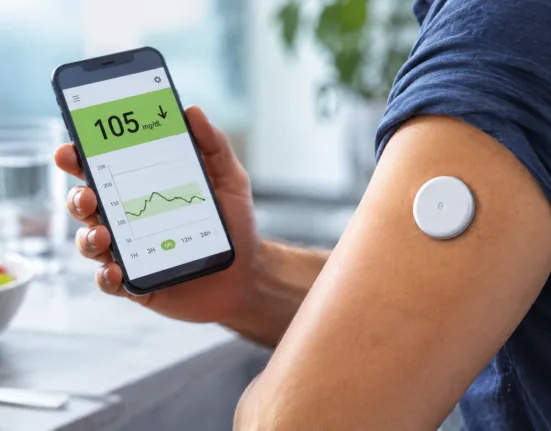
Glucotrack, Inc. has submitted an Investigational Device Exemption application to the U.S. Food and Drug Administration to begin a U.S. clinical study of its fully implantable continuous blood glucose monitoring technology. The filing moves the diagnostics-focused medical technology company toward human evaluation of a long-term, blood-based glucose monitoring system designed for people with diabetes, at a time when continuous glucose monitoring has become central to diabetes management but remains dominated by wearable sensor platforms.
Why Glucotrack’s FDA filing matters for the next phase of continuous glucose monitoring
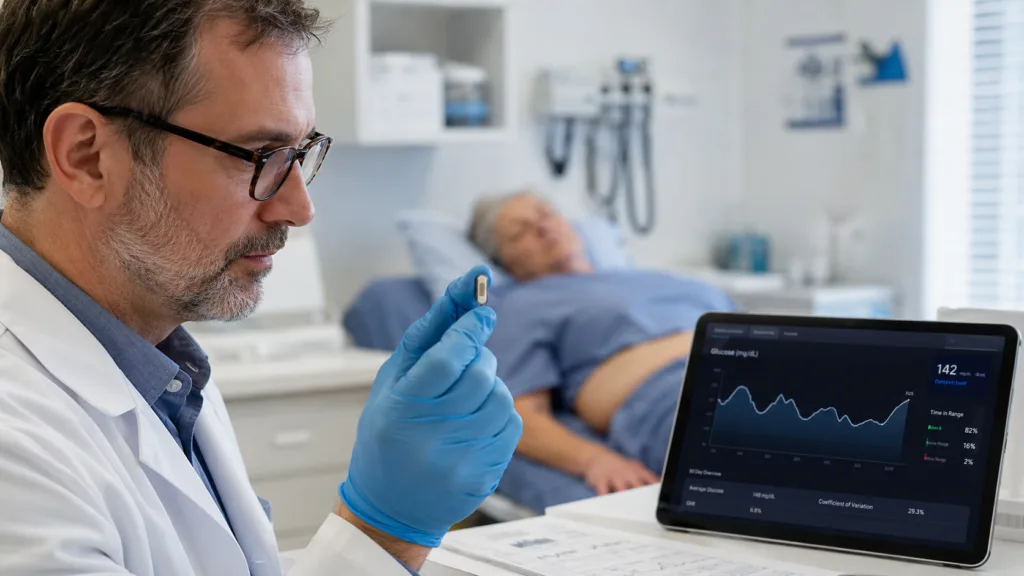
Glucotrack’s filing matters because it is not simply another continuous glucose monitoring update in a crowded device category. The U.S.-based medical technology developer is attempting to shift the monitoring site, user experience, and durability equation at the same time. Instead of relying on a short-wear sensor placed on the skin, the Glucotrack continuous blood glucose monitoring system is being developed as a fully implantable device that measures blood glucose continuously and is designed to operate without an on-body wearable component.
That distinction is commercially meaningful because today’s continuous glucose monitoring market has already proven the value of frequent glucose visibility. Abbott Laboratories, Dexcom, Inc., Medtronic plc, and Senseonics Holdings, Inc. have helped move glucose monitoring from episodic fingerstick testing toward trend-based, real-time decision support. The next competitive question is not whether continuous data matters. The harder question is whether users, clinicians, regulators, and payers will reward a device that reduces visible hardware and sensor replacement burden while introducing the clinical and procedural considerations of implantation.
This is where Glucotrack’s CBGM technology sits in an interesting but risky middle ground. A long-term implantable platform could address adherence fatigue, skin irritation, device visibility, and repeated supply management, all of which remain real-world barriers for some users. However, the same design also raises questions that wearable systems do not face in the same way, including implantation workflow, long-term device stability, retrieval or replacement strategy, infection risk, procedural reimbursement, and clinician confidence in managing device-related follow-up.
What makes blood-based CBGM different from conventional interstitial glucose sensors?
The most important technical difference in Glucotrack’s positioning is the emphasis on continuous blood glucose monitoring rather than conventional interstitial glucose sensing. Most widely used continuous glucose monitoring systems estimate glucose trends through interstitial fluid, which has become clinically accepted and increasingly integrated with insulin delivery ecosystems. Glucotrack is instead trying to build a platform around direct blood-based monitoring, aiming to combine continuous data frequency with a measurement approach that may be perceived as closer to traditional blood glucose testing.
That proposition is attractive on paper because accuracy, lag time, and clinical trust remain central issues in glucose monitoring. Clinicians and users have grown comfortable with interstitial CGM trends, but therapy decisions still depend on confidence that device readings can be trusted across daily conditions such as meals, exercise, sleep, medication changes, and hypoglycemia risk. A successful blood-based implantable monitor could create a differentiated narrative around accuracy and durability, especially if clinical data show strong performance across the glucose ranges that matter most for insulin-using patients.
The limitation is that the word “blood-based” does not automatically resolve the evidence burden. Regulators will still need to evaluate whether the system performs reliably in real clinical use, whether sensor function remains stable over time, whether calibration demands are acceptable, and whether the device can generate actionable data without creating new safety concerns. In practical terms, Glucotrack must show not only that CBGM technology can work, but that it can work consistently enough to justify a different device architecture.
Why the IDE pathway is a gatekeeper rather than a commercial turning point
An Investigational Device Exemption application is an important regulatory step because it can allow an investigational device to be used in a clinical study to collect safety and effectiveness data. For Glucotrack, the filing is therefore a move from engineering and preclinical preparation toward U.S. clinical evidence generation. That is a meaningful transition, but it should not be confused with product approval, market clearance, or commercial readiness.
The reason the distinction matters is that diabetes device markets are unforgiving. A new glucose monitoring system must satisfy regulators on safety and performance, but it must also convince clinicians that the device fits into care workflows, persuade payers that it improves outcomes or reduces burden, and persuade users that the benefits outweigh any procedural friction. This is especially true for an implantable platform, where the adoption question extends beyond the sensor itself into training, insertion logistics, follow-up visits, and long-term support.
Regulatory watchers are likely to focus on the design of the U.S. clinical study if the FDA allows it to proceed. Key questions will include the study population, comparator method, intended use, performance endpoints, data capture expectations, safety monitoring, device longevity assessment, calibration requirements, and the extent to which the study reflects daily life rather than controlled conditions. A small or tightly controlled study may help validate feasibility, but broader commercial confidence will require evidence that the system performs under real-world variability.
How Glucotrack’s CBGM technology compares with the current glucose monitoring landscape
Glucotrack is entering a field where the competitive bar is already high. Wearable continuous glucose monitoring systems have benefited from miniaturization, smartphone connectivity, pharmacy distribution, broader reimbursement, and integration with digital diabetes platforms. Some systems have also expanded beyond intensive insulin users into non-insulin populations, wellness-adjacent metabolic tracking, and over-the-counter use cases. That expansion has made CGM more familiar and more accessible, but it has also made the incumbents harder to displace.
Glucotrack’s potential advantage is not that it can simply copy the existing CGM model. Its best chance is to define a different user proposition. A fully implantable, long-term system with no visible wearable component could appeal to patients who dislike adhesive sensors, want reduced device management, or prefer a more discreet monitoring experience. In certain high-burden diabetes populations, reducing replacement frequency and visible hardware may be more than a convenience feature. It could influence persistence and quality of life.
However, the comparison cuts both ways. Wearables have become easier to prescribe, easier to replace, and easier to discontinue if the patient does not tolerate them. An implantable device introduces more commitment. Even if the implantation procedure is relatively simple, users and clinicians will judge the system through a different risk-benefit lens. For Glucotrack, the commercial challenge is therefore not merely to show comparable accuracy. The platform must show enough incremental value to justify a more involved route to adoption.
What clinicians and regulators are likely to watch in the CBGM clinical study
Clinicians tracking the glucose monitoring field will likely focus first on accuracy, safety, and usability. Accuracy will need to be convincing across low, normal, and high glucose ranges, because errors during hypoglycemia or rapid glucose change can carry significant clinical consequences. Safety will need to include both immediate procedural outcomes and longer-term implant-related events. Usability will extend beyond the patient interface to include clinician training, data review, calibration burden, and device maintenance.
The study’s strength will depend heavily on whether it can answer questions that matter beyond initial feasibility. A trial that shows the device can generate readings is useful, but not enough. A stronger clinical package would show reliable data capture, stable sensor behavior, low serious adverse event rates, acceptable calibration requirements, and performance that remains credible over the intended wear period. For an implantable system, durability is not a marketing detail. It is part of the clinical value proposition.
The unresolved issue is how much evidence will be needed before payers, endocrinologists, and diabetes care teams view the device as a practical alternative to established CGM options. A novel platform can win attention with a differentiated design, but adoption in diabetes care usually follows evidence, reimbursement, guideline familiarity, and patient demand. Glucotrack’s clinical study, if cleared, will be an early test of whether CBGM technology can begin building that evidence base.
Why implantable glucose monitoring could be strategically important for diabetes care
The diabetes device sector is moving toward more continuous, connected, and automated care. Continuous glucose monitoring data increasingly feeds insulin dosing decisions, digital coaching, remote monitoring, and automated insulin delivery systems. In that environment, a long-term implantable glucose monitor could become strategically important if it improves data continuity and reduces the everyday friction that leads some users to stop wearing or inconsistently use current devices.
This is where Glucotrack’s approach could have relevance beyond a single product. If a durable implantable CBGM system produces reliable data over long periods, it could support a future in which glucose monitoring becomes more passive, less visible, and potentially less supply-chain intensive for the user. That would align with a broader medical device trend toward embedded sensing, continuous monitoring, and lower-burden chronic disease management.
The risk is that strategic relevance does not guarantee commercial success. Implantable monitoring systems must overcome a different psychology of adoption. Some patients may welcome an invisible device, while others may resist anything requiring a procedure. Some clinicians may see long-term implantation as a way to improve adherence, while others may prefer the reversibility and familiarity of wearables. For Glucotrack, the next phase will test whether its CBGM concept can move from engineering promise to clinical credibility.
What investors should understand about Glucotrack’s regulatory and market risk
For investors, the IDE submission is a milestone, but it is not the same as regulatory clearance or revenue visibility. Glucotrack remains a microcap medical technology company with a high-risk development profile. Its shares recently traded around $0.80, with a small market capitalization and negative earnings, underscoring that the market is treating the story as an early-stage device development bet rather than a mature diabetes technology franchise.
The investor appeal is easy to understand. Diabetes monitoring is a large, durable, and strategically important market. A differentiated implantable CBGM platform with long sensor life and no wearable component would be attention-grabbing if human data validate the concept. The upside narrative is built around clinical differentiation, user convenience, and potential positioning against a market dominated by major CGM incumbents.
The downside is equally clear. FDA review of the IDE application could raise questions, clinical study timelines could slip, trial data may not meet expectations, and even positive feasibility data may not be enough to establish a clear commercial pathway. Manufacturing scale, reimbursement strategy, physician training, and capital requirements could all become significant constraints. In other words, Glucotrack has cleared an important internal development step, but the harder external validation is still ahead.
What happens next if Glucotrack receives FDA clearance to begin the study?
If the FDA allows the U.S. clinical study to proceed, the next meaningful inflection point will be the quality and design of the trial rather than the mere start of enrollment. Industry observers will look for whether the study is structured to support a credible regulatory path, whether the endpoints align with established expectations for glucose monitoring performance, and whether the study duration is sufficient to assess the long-term claims embedded in the device’s positioning.
The most important signal will be whether Glucotrack can show that fully implantable CBGM technology is not just technically novel, but clinically useful and operationally practical. That means the device must produce reliable glucose data, maintain acceptable safety, and reduce user burden without creating new complexity for care teams. In diabetes technology, convenience matters, but only when it is anchored by trust.
Glucotrack’s FDA IDE submission therefore marks the beginning of a more demanding phase. The medical technology developer has put forward a differentiated vision for glucose monitoring that is less visible, longer-lasting, and blood-based. The market will now need evidence that the vision can survive clinical testing, regulatory scrutiny, and the daily realities of diabetes care.