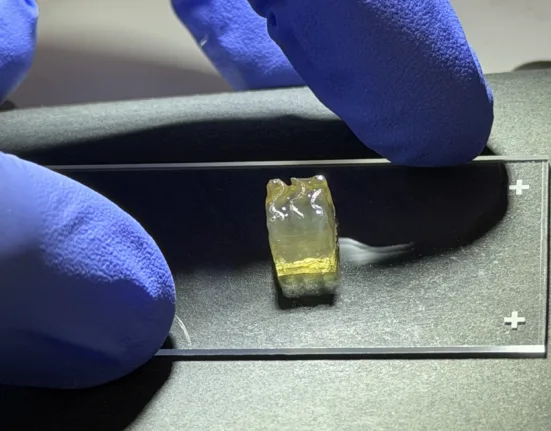
BioTissue Holdings, Inc. has completed the divestiture of its non-ocular surgical and wound care business to BioStem Technologies, Inc. in a transaction valued at approximately $15 million upfront, with potential earnouts tied to regulatory and commercial milestones. The deal transfers ownership of the Neox and Clarix product lines, along with a seasoned commercial team and group purchasing organization (GPO) access, to BioStem. BioTissue will retain manufacturing responsibilities and redirect its commercial efforts toward interventional therapies for ocular surface conditions.
Why the divestiture marks a turning point in BioTissue’s ocular-focused growth strategy
For BioTissue, the move represents a structural pivot toward becoming a singularly focused ocular regeneration company. By shedding a business segment that, while revenue-generating, diluted the firm’s strategic narrative, BioTissue is realigning its clinical and regulatory capital around the highest-value indication in its portfolio—interventional eye care. This includes expanding use of its cryopreserved amniotic membrane products, such as Prokera and AmnioGraft, in acute and chronic ocular surface diseases where unmet need and reimbursement alignment remain favorable.
The timing of this transaction also reveals BioTissue’s intention to prepare for deeper biologics market participation. The company has already initiated Investigational New Drug (IND) applications and is working toward Biologics License Applications (BLAs) in ophthalmic indications. Industry observers note that streamlining its operations could improve regulatory velocity, signal maturity to FDA stakeholders, and free up internal resources for BLA-enabling trials.
BioTissue’s strategic divestiture enables a tighter capital allocation lens. Rather than managing two regulatory tracks—ophthalmic and surgical wound care—the company can now prioritize deeper product differentiation, physician education, and clinical trial execution in the ocular segment, which holds clearer therapeutic focus and more favorable payer pathways.
What BioStem gains: commercial scale, new verticals, and potential EBITDA lift
From BioStem Technologies’ perspective, the acquisition is not merely additive—it is transformative. The transaction grants BioStem access to a mature, hospital-focused sales force and to top-tier GPO contracts that can often take years to secure organically. These elements alone could accelerate BioStem’s penetration in institutional care settings, particularly for advanced wound care and surgical applications.
The Neox and Clarix portfolios complement BioStem’s existing VENDAJE and AmnioWrap offerings by adding placenta-based and umbilical-derived tissue allografts with established market familiarity. The acquired assets reportedly generated $29 million in revenue during 2025. Assuming even modest operational synergies, BioStem expects these products to contribute positive EBITDA as early as 2026—a noteworthy milestone given the typical margin pressures in allograft manufacturing.
Clinicians tracking the wound care space will note that BioStem’s proprietary BioRetain processing method, which emphasizes molecular and structural retention of native tissue, could see enhanced applicability now that it is backed by an expanded set of surgical-grade offerings. The overlap in clinical use cases—such as burns, diabetic ulcers, and post-operative healing—positions the enlarged portfolio for rapid uptake in both inpatient and ambulatory surgical settings.
How this changes the competitive terrain in regenerative wound care and ocular biologics
The transaction redraws boundaries between two highly specialized but previously overlapping regenerative medicine firms. BioTissue now becomes a more streamlined player in ophthalmic biologics, akin to a boutique version of larger eye-focused biotechs advancing topical or surgical interventions. Meanwhile, BioStem elevates itself from a niche tissue processor to a diversified wound care contender with both chronic and acute care exposure.
The segmentation may also impact how institutional investors, particularly in the private equity-backed roll-up space, evaluate consolidation targets. With BioTissue firmly in the biologics-led, regulated-device realm, it may attract interest from ophthalmic strategics or mid-cap biologics firms seeking FDA-cleared and BLA-pathway ocular platforms. BioStem, with its focus on FDA-registered and AATB-accredited allografts, may now be better positioned as a bolt-on or roll-up consolidator in MedTech’s advanced wound care vertical.
Industry watchers suggest that this transaction may also reflect broader investor sentiment favoring focused growth narratives over diversified platform plays in small to mid-sized MedTech and biotech firms. As capital becomes more selective, companies able to demonstrate domain leadership—rather than adjacent-market sprawl—could see valuation premiums.
Execution and integration risks that could affect both parties’ growth trajectories
While strategically sound, the transaction comes with tangible risks for both entities. For BioTissue, shedding a $29 million revenue stream may create a short-term top-line contraction, raising pressure to rapidly execute on its IND-to-BLA transition strategy in ophthalmology. If the BLA path proves slower or more resource-intensive than anticipated, the company could face a near-term cash flow gap.
For BioStem, integration will be key. Absorbing an entire sales team and support staff into its existing structure could introduce friction, particularly in commission models, product messaging, or post-acute distribution channels. The acquisition also brings the challenge of maintaining quality management systems across different product lines, all under the scrutiny of FDA cGMP and AATB standards.
Commercially, success hinges on BioStem’s ability to not just sustain the acquired business but to leverage it into adjacent segments like surgical burns or soft-tissue repair. Reimbursement dynamics for hospital-based wound care differ significantly from outpatient advanced wound care centers. Failure to align with these payer requirements could limit the full commercial impact of the expanded portfolio.
Why this deal signals a bifurcation in regenerative medicine commercial models
The BioTissue–BioStem transaction is illustrative of a broader bifurcation in regenerative medicine: one path focused on regulated biologic progression in high-value indications (e.g., ophthalmology), and another emphasizing surgical applicability and commercial execution in existing reimbursement environments (e.g., wound care). Each path demands different capabilities in regulatory engagement, clinical evidence, and payer strategy.
This segmentation may also be instructive for other companies with dual-platform portfolios. As reimbursement pressures and regulatory expectations diverge by indication and use case, mixed-model companies may find that strategic divestitures offer clarity—both to internal stakeholders and to the capital markets.
The appointment of Barry Hassett as BioStem’s Chief Commercial Officer further suggests that the company is serious about commercial scaling. Having prior experience at BioTissue during the formative years of its wound care division, Hassett is well-positioned to bridge both legacy cultures and execute with continuity.
Whether this acquisition becomes a textbook example of category leadership through consolidation or a cautionary tale of integration complexity will depend on how well BioStem aligns operational tempo with market pull—and how quickly BioTissue converts its narrowed focus into regulatory and clinical milestones that matter to payers and prescribers.