AbbVie Inc. (NYSE: ABBV) announced on October 13, 2026, new Phase 3 results showing that 35.8% of patients receiving subcutaneous Skyrizi (risankizumab-rzaa) achieved endoscopic remission at Week 24 in the AFFIRM study of moderately to severely active Crohn’s disease. The company also reported ulcer-free endoscopy in 36.6% of evaluated patients, expanding the clinical evidence supporting its application for a patient-administered induction regimen.
The findings were presented at the American College of Gastroenterology’s 2026 Annual Scientific Meeting and build on previously disclosed Week 12 results in which subcutaneous Skyrizi met both primary efficacy endpoints. At Week 12, clinical remission was achieved by 55% of Skyrizi-treated patients compared with 29.6% receiving placebo, while endoscopic response occurred in 44% versus 14.3%. The new analysis adds more stringent measures of intestinal healing and subsequent disease control.
AFFIRM enrolled 289 adults with moderately to severely active Crohn’s disease, including a substantial proportion with previous exposure to advanced therapies. Approximately 65% had already experienced treatment failure with at least one advanced therapy, making the population clinically relevant to patients whose disease remains difficult to manage. However, interpretation of the Week 24 outcomes requires attention to the trial design because treatment allocation after Week 12 depended on earlier clinical response.
The findings are commercially important for AbbVie because Skyrizi is already a major immunology product, generating $5.51 billion in worldwide net revenue during the second quarter of 2026. The proposed subcutaneous induction regimen could reduce reliance on healthcare-administered infusions during the initial treatment phase. Nevertheless, the new induction approach remains under regulatory review and should not be described as an already approved replacement for the existing intravenous regimen.
What do the new Week 24 endoscopic remission results reveal about Skyrizi?
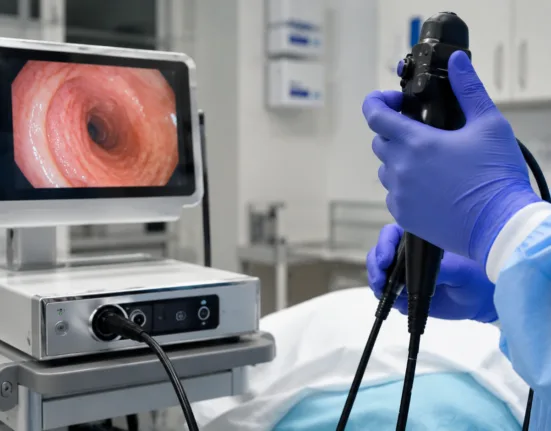
The latest AFFIRM findings focus on endoscopic remission, a measure of intestinal inflammation assessed directly through examination of the gastrointestinal tract. Unlike symptom-based outcomes, endoscopy allows investigators to evaluate visible inflammatory activity and tissue injury. This distinction matters because patients can experience an improvement in symptoms without achieving equivalent resolution of underlying intestinal inflammation.
AbbVie reported endoscopic remission at Week 24 in 35.8% of patients assigned to the subcutaneous Skyrizi treatment pathway, compared with 9.1% in the reported placebo comparison. This represents a numerical difference of 26.7 percentage points. The figures suggest greater control of visible inflammation among patients receiving the investigational treatment strategy.
The company defined endoscopic remission using the Simple Endoscopic Score for Crohn’s Disease. Patients needed a score of four or lower, an improvement of at least two points from baseline and no individual variable with a score exceeding one. The assessment was conducted by a central reviewer, helping standardize evaluation of the recorded endoscopic findings.
These criteria are more stringent than a conventional endoscopic response definition based on a substantial reduction in the severity score. Achieving remission suggests that inflammation has declined to a low measured level rather than merely improving from baseline. However, endoscopic remission does not necessarily mean that the underlying chronic disease has been permanently resolved.
The trial also examined ulcer-free endoscopy, which requires the absence of visible ulcers according to the prespecified endoscopic assessment. At Week 24, 36.6% of the relevant Skyrizi-treated population met this measure compared with 9.1% in the reported comparator group. This provides another perspective on disease control, particularly because intestinal ulceration is a clinically important manifestation of Crohn’s disease.
Why must the Week 12 and Week 24 AFFIRM comparisons be interpreted differently?
AFFIRM used a randomized, double-blind, placebo-controlled design during its initial 12-week induction period. Patients were allocated in a 2:1 ratio to receive subcutaneous risankizumab or placebo, allowing the study to assess the medicine’s initial efficacy against a concurrent control group. Its co-primary endpoints were clinical remission and endoscopic response at Week 12.
After the induction period, participants entered a second treatment phase extending to Week 24. During this period, treatment depended on clinical response at Week 12, with patients receiving blinded or open-label treatment according to the protocol. The study therefore did not simply maintain every participant on their original treatment assignment without modification for the entire 24 weeks.
This distinction is important when interpreting the newly reported Week 24 percentages. The results describe outcomes within the study’s extended treatment structure, but they should not automatically be presented as an uninterrupted 24-week placebo-controlled comparison. Patients following different treatment pathways may have different response histories and subsequent exposures.
The Week 12 findings provide the clearest direct evidence from the original randomized induction comparison. The Week 24 results add evidence about disease control during the extended treatment period, including more stringent endoscopic measures. Their interpretation depends on the analysis populations and treatment sequences used to calculate the reported percentages.
The new disclosure supports the clinical rationale for subcutaneous induction, but it does not establish that the investigational approach is superior to the existing intravenous Skyrizi induction regimen. AFFIRM was not presented as a direct randomized comparison between those two administration routes.
How did advanced therapy-naïve patients compare with patients who had failed earlier treatments?
One of the notable findings concerns differences according to previous advanced therapy exposure. At Week 24, 45.1% of patients without previous advanced therapy failure achieved endoscopic remission with the subcutaneous Skyrizi treatment pathway. In patients who had failed at least one advanced therapy, the corresponding rate was 30.1%.
The results were similar for ulcer-free endoscopy, which occurred in 49.0% of advanced therapy-naïve patients compared with 28.9% of those with previous treatment failure. Both subgroups showed measurable improvements, although the numerical results were stronger among patients without an established history of advanced treatment failure. This pattern is clinically plausible because patients with refractory disease may be more difficult to treat.
At Week 12, endoscopic remission was achieved in 44.8% of advanced therapy-naïve Skyrizi recipients and 18.5% of patients with previous advanced therapy failure. The corresponding placebo figures were 9.1% and 10.8%. These earlier measurements provide a clearer randomized comparison within the initial induction period.
However, subgroup analyses require careful interpretation, particularly when a trial is not powered to establish definitive treatment differences between patient categories. The findings do not prove that Skyrizi is intrinsically more effective in every treatment-naïve patient or that previous advanced therapy failure determines an individual’s response. Patient characteristics, disease severity and treatment history can influence outcomes.
The results nevertheless provide useful information for discussions about treatment sequencing. Clinicians increasingly evaluate Crohn’s disease medicines according to prior biologic exposure, endoscopic severity and the probability of achieving sustained disease control. AFFIRM contributes additional evidence on how an alternative induction route performs across these different clinical circumstances.
What did the original Week 12 clinical remission and endoscopic response endpoints establish?
AbbVie first reported positive topline AFFIRM findings in March 2026, confirming that the study had achieved both prespecified primary endpoints. Clinical remission, defined as a Crohn’s Disease Activity Index score below 150, occurred in 55% of patients receiving subcutaneous Skyrizi compared with 29.6% receiving placebo. The resulting absolute difference was 25.4 percentage points.
Endoscopic response was recorded in 44% of the Skyrizi group compared with 14.3% of placebo recipients, representing a 29.7-percentage-point difference. The endpoint generally reflected a substantial reduction in the Simple Endoscopic Score for Crohn’s Disease, with specified criteria for certain patients with isolated ileal disease. Both co-primary results were statistically significant.
Among advanced therapy-naïve patients, clinical remission occurred in 73.1% of Skyrizi recipients compared with 27.3% receiving placebo. Endoscopic response occurred in 61.2% versus 15.2%, respectively. These figures indicate particularly strong numerical treatment effects in the subgroup without previous advanced therapy failure.
For patients with prior advanced therapy failure, clinical remission was achieved by 45.2% receiving Skyrizi versus 30.8% receiving placebo. Endoscopic response occurred in 34.7% versus 13.8%. Although the magnitudes differed from those in the advanced therapy-naïve population, the overall primary analysis supported the treatment’s efficacy during subcutaneous induction.
The later endoscopic remission findings therefore build on a positive randomized foundation rather than representing the first evidence of treatment benefit. Their contribution is to provide a more detailed picture of intestinal inflammation control beyond the symptom and response measures initially reported.
Why could subcutaneous Skyrizi induction change the treatment experience for Crohn’s disease?
Skyrizi is already approved in the United States for adults with moderately to severely active Crohn’s disease, but its currently authorized induction regimen requires intravenous infusions. Patients receive 600 mg intravenously at Weeks 0, 4 and 8 before moving to subcutaneous maintenance beginning at Week 12. Approved maintenance dosing involves 180 mg or 360 mg administered every eight weeks according to the prescribed regimen.
Intravenous induction requires access to a healthcare facility or an appropriately managed infusion service. That can create practical burdens involving appointments, travel, administration time and coordination with professional staff. For patients requiring continuing treatment of a chronic disease, the initial infusion period may be a meaningful component of treatment logistics.
The proposed subcutaneous regimen is intended to offer an alternative induction approach that could be administered by patients or caregivers after suitable instruction. If authorized with appropriate administration requirements, it could reduce the need for the three initial intravenous appointments. This potential convenience would represent an administration change rather than a newly discovered therapeutic mechanism.
However, the announcement does not establish reduced total healthcare costs, improved adherence or better patient satisfaction under the proposed regimen. Those outcomes would require suitable evidence beyond clinical remission and endoscopic findings. The final approved dosing instructions, device presentation and patient eligibility requirements will also influence the practical value of self-administration.
AbbVie’s strategy is therefore focused on extending flexibility around a medicine that already has established clinical efficacy. The regulatory question is whether the new administration route and dose regimen demonstrate sufficient evidence of efficacy, safety and appropriate exposure to justify changing the product’s approved induction options.
What do the AFFIRM safety findings establish about subcutaneous induction?
AbbVie reported that the safety findings through Week 24 were consistent with Skyrizi’s known clinical profile. Treatment-emergent adverse-event rates were described as lower in the risankizumab treatment groups than in the placebo groups during the induction and maintenance periods. The company also reported low rates of adverse events of special interest and no new safety signals.
These observations support continued regulatory evaluation, particularly because a change in administration route must be assessed for potential differences in tolerability and exposure. However, the October announcement did not provide a complete adverse-event table with individual event frequencies, serious adverse-event rates or treatment discontinuations. It therefore does not support a numerical claim that subcutaneous induction is safer than intravenous treatment.
Risankizumab inhibits interleukin-23 by selectively binding to its p19 subunit, reducing signaling involved in immune-mediated inflammation. Its established prescribing information includes precautions concerning serious hypersensitivity, infections and tuberculosis evaluation. Liver-related monitoring is also relevant in inflammatory bowel disease treatment under the approved product information.
The broader AFFIRM population included patients with long-standing disease and previous treatment failure, making ongoing safety monitoring particularly important. Still, a trial involving 289 randomized patients cannot establish the frequency of every uncommon adverse event or determine long-term safety across all clinical populations. Additional exposure and pharmacovigilance will remain necessary if the new regimen receives authorization.
How important is subcutaneous induction to AbbVie’s $5.5 billion quarterly Skyrizi franchise?
Skyrizi has become a central growth driver for AbbVie following the decline of its former blockbuster Humira under biosimilar competition. The company reported worldwide Skyrizi net revenue of $17.56 billion during 2025. In the second quarter of 2026 alone, the medicine generated $5.51 billion, increasing 24.4% from the corresponding period a year earlier.
That growth spans several approved immune-mediated diseases, including plaque psoriasis, psoriatic arthritis, Crohn’s disease and ulcerative colitis. The Crohn’s disease opportunity is therefore part of a broader commercial franchise rather than the sole source of Skyrizi revenue. AbbVie has not disclosed the incremental sales contribution expected specifically from subcutaneous induction.
The commercial rationale is nevertheless clear. Treatment convenience can influence physician and patient preferences when multiple effective therapies are available, particularly in chronic diseases requiring prolonged management. An alternative induction route could improve Skyrizi’s flexibility while strengthening AbbVie’s ability to compete for patients beginning advanced treatment.
However, a simpler regimen does not guarantee increased market share. Treatment selection depends on efficacy, safety, previous therapy, reimbursement coverage and individual preferences. The new clinical evidence strengthens the registration package but cannot establish the size of any resulting commercial benefit before approval and adoption.
What regulatory milestones remain for Skyrizi’s new induction regimen?
AbbVie has submitted the subcutaneous induction regimen for review by the United States Food and Drug Administration and the European Medicines Agency. The latest AFFIRM analyses support those applications, but neither regulator has yet authorized the proposed induction approach as of the October 13 announcement. The existing intravenous induction and subcutaneous maintenance regimen therefore remains the relevant approved standard.
The regulatory reviews will evaluate whether the complete clinical and pharmacological package supports the proposed administration schedule. Efficacy results, safety findings, drug exposure and device-related considerations may all influence the final decisions. Approval timing and any additional conditions remain subject to the regulators’ assessments.
AFFIRM also includes longer follow-up beyond Week 24, with a 52-week open-label extension in which participants can receive approved risankizumab maintenance treatment. Those data may provide useful information on longer-term treatment experience, although open-label observations have different evidentiary limitations from the initial randomized phase. The extension will not independently establish superiority over intravenous induction.
The new results provide AbbVie with additional evidence that subcutaneous Skyrizi can produce substantial symptom improvement and measurable control of intestinal inflammation in patients with Crohn’s disease. The most important outstanding issue is whether regulators agree that the complete evidence package supports replacing the initial infusion requirement with an alternative patient-administered option.
For AbbVie, a successful regulatory outcome could extend the convenience of one of its largest medicines without requiring a new therapeutic indication. For patients, the potential benefit is a less burdensome treatment initiation process supported by positive Phase 3 clinical findings. The next decisive development will be the FDA and European regulatory decisions, followed by confirmation of the approved dosing and administration requirements if authorization is granted.