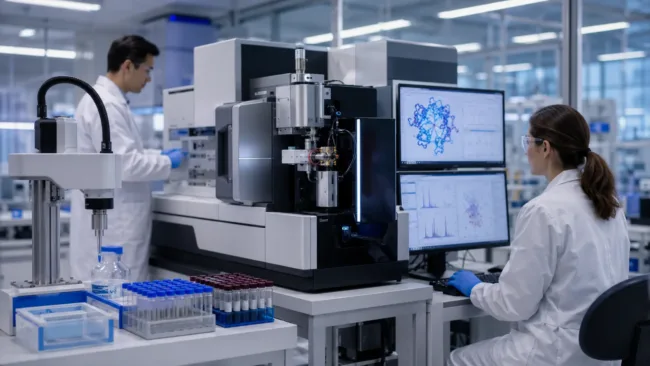
ACROBiosystems Group has upgraded its global license solution for HEK293 functional cell lines, allowing customers outside Greater China to use the products for internal research, drug discovery, assay development, quality assurance testing, and lot release analysis without additional licensing steps or fees. The move matters commercially because HEK293 functional cell lines sit inside a growing part of the biopharmaceutical R&D workflow, where assay reliability, documentation clarity, and intellectual property comfort can influence how quickly programs move from discovery into translational development.
Why ACROBiosystems’ HEK293 license upgrade matters for biopharma teams trying to reduce hidden R&D friction
The important change is not simply that ACROBiosystems Group has adjusted a license policy. The bigger shift is that the biotechnology tools supplier is trying to remove one of the less visible sources of delay in preclinical and translational research: uncertainty over how far a purchased functional cell line can be used before additional approval, review, or commercial-use interpretation is required.
For drug developers, this kind of friction rarely attracts the same attention as trial delays, manufacturing bottlenecks, or regulatory holds. Yet it can slow teams at precisely the point where speed matters. Functional cell lines are often used in target validation, potency assays, receptor binding studies, antibody screening, bioactivity testing, quality control workflows, and lot release support. If legal, procurement, scientific, and quality teams must revisit permitted-use terms for each internal workflow, the cost is not only administrative. The cost is also lost momentum across programs that are already under pressure to generate decision-grade data faster.
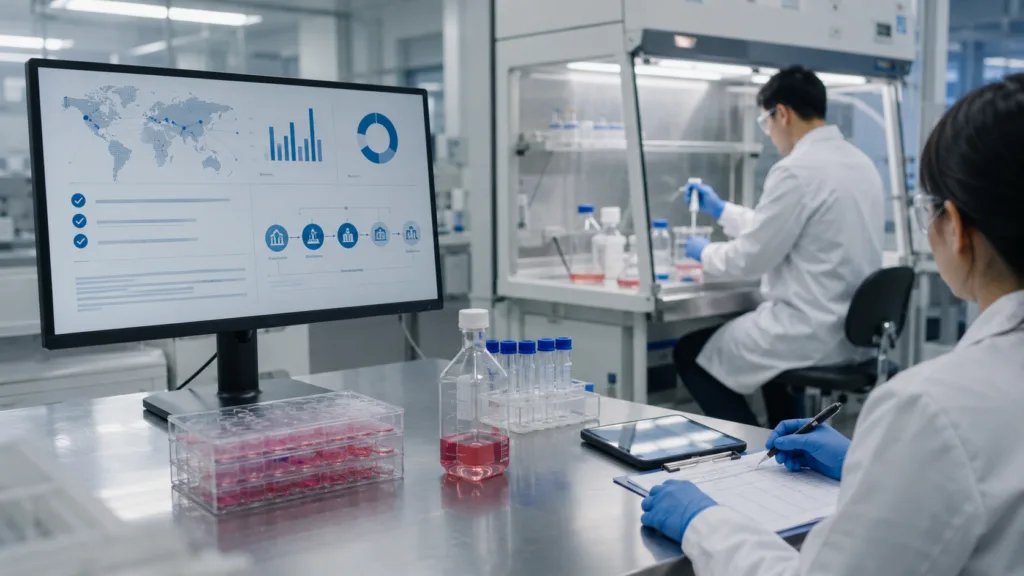
ACROBiosystems Group is therefore positioning licensing clarity as a practical R&D enabler. That is commercially relevant because outsourced and catalog-based research tools are no longer just lab consumables. They are part of the operating infrastructure of modern biologics, cell therapy, gene therapy, and immunology research. Suppliers that can combine product performance with cleaner usage rights may become more attractive to biopharma groups and contract research organizations that want fewer downstream surprises. The unresolved question is whether customers will view this as a material differentiator or as a necessary baseline in an increasingly competitive life science tools market.
What the HEK293 policy change reveals about the growing overlap between research tools, IP governance, and regulated development
HEK293 cells have long been widely used in biomedical research because of their utility in protein expression, transfection, receptor biology, viral vector research, and cell-based assay development. Functional HEK293 cell lines add another layer of value because they are engineered to express specific targets or pathways, making them useful for evaluating drug candidates against biologically relevant mechanisms. That makes them practical assets in discovery workflows, but it also makes their permitted-use boundaries more important as projects move closer to development-grade decision-making.
The ACROBiosystems Group upgrade reflects a broader reality in biopharma procurement: research tools increasingly need to satisfy scientific, legal, and quality expectations at the same time. A cell line may perform well in an assay, but if its license language is narrow, ambiguous, or difficult to interpret, the scientific value can be diluted by internal review cycles. This becomes especially relevant for global companies running parallel programs across the United States, Europe, and Asia-Pacific, where legal teams and operating units may interpret usage terms differently.
The policy also suggests that tool providers are being pushed to simplify not only product access but product governance. A cleaner license framework can help companies standardize how they use HEK293 functional cell lines across discovery and development-adjacent workflows. However, the limitation is clear. The upgrade applies outside Greater China, which means multinational users will still need region-specific compliance awareness if their research networks or affiliated operations cross that boundary. For global companies, simplification is valuable, but it is not the same as total harmonization.
How simplified HEK293 licensing could reshape assay development, quality testing, and lot release workflows
The most commercially interesting part of the upgrade is the explicit inclusion of assay development, quality assurance testing, and lot release analysis. These are not merely exploratory research activities. They sit closer to the structured data environment that supports development decisions, comparability assessments, product characterization, and manufacturing control strategies. By clarifying that customers may use HEK293 functional cell lines in these settings without added licensing charges, ACROBiosystems Group is reducing a potential point of hesitation for teams that want to carry a tool across multiple stages of internal work.
For assay development teams, continuity matters. A functional cell line used early in screening can become more valuable if it remains usable through assay optimization and internal quality workflows. Switching tools because of licensing limits can introduce variability, require revalidation, and complicate internal documentation. In an industry where reproducibility and comparability are central to decision-making, reducing unnecessary changes in assay components can be strategically useful.
Still, the upgrade does not remove all scientific risk. Functional cell lines must still demonstrate passage stability, expression consistency, assay window robustness, and relevance to the mechanism under investigation. A broader license cannot compensate for poor assay design, weak biological translatability, or insufficient validation. The practical benefit will depend on whether ACROBiosystems Group’s HEK293 functional cell line products can meet the performance expectations of demanding biopharma users across different targets, modalities, and quality environments.
Why this is more than a procurement tweak for CROs, CDMOs, and global drug developers
For contract research organizations and contract development and manufacturing organizations, the upgrade could be especially useful. These service providers often operate across multiple client programs, each with its own documentation requirements, contractual constraints, and audit expectations. A clearer upstream license can reduce the burden of explaining whether a cell line may be used for a given internal testing purpose, particularly when projects need rapid assay setup or repeatable quality workflows.
For biopharmaceutical sponsors, the attraction is slightly different. Sponsors increasingly depend on external partners for discovery support, bioassay development, analytical testing, and translational research. When research tools come with clear usage rights, sponsors and vendors can spend less time resolving operational ambiguity and more time generating usable data. That can matter in competitive areas such as antibody discovery, immuno-oncology, receptor biology, and biologics characterization, where timelines can influence partnering, financing, and portfolio decisions.
The risk is that broader authorized use may raise customer expectations faster than suppliers can support them. If a license upgrade encourages wider adoption across multiple departments and geographies, ACROBiosystems Group will need to ensure that technical support, documentation, quality records, and regional consultation remain consistent. A streamlined license creates value only if the supporting infrastructure is equally reliable. Otherwise, customers may still encounter delays, not from legal uncertainty but from data, documentation, or technical interpretation gaps.
What is genuinely new versus incremental in ACROBiosystems’ upgraded license framework
The upgrade appears incremental in a narrow technical sense because it does not introduce a new drug, device, assay platform, or regulatory approval. Its strategic significance lies elsewhere. It changes how a widely used class of research tools can be deployed by customers across multiple internal workflows without additional licensing friction. In the life science tools sector, that kind of operational improvement can be meaningful because buying decisions are often shaped by a mix of scientific performance, cost, documentation confidence, and workflow compatibility.
The genuinely new element is the expanded and clarified authorized-use scope. By covering internal research, drug discovery, assay development, quality assurance testing, and lot release analysis under a unified framework for global markets outside Greater China, ACROBiosystems Group is trying to make the license structure easier to operationalize. That is not glamorous, but it is practical. In biopharma, practical advantages often matter more than marketing claims when teams are under pressure to run faster and cleaner development programs.
However, industry observers are likely to watch whether this move pressures other research tool suppliers to revisit their own cell line license models. If customers begin treating simplified licensing as part of product quality, not just commercial convenience, competitive dynamics could shift. Suppliers may increasingly need to prove that their cell lines are not only biologically useful but also legally and operationally easy to integrate into global R&D systems.
What biopharma customers should watch next as functional cell line use becomes more standardized
The next test for ACROBiosystems Group is execution. A license policy can reduce barriers, but customer confidence will depend on how clearly the terms are communicated across regions, how quickly local teams respond to compliance questions, and how well technical documentation supports internal audits and quality review. The biotechnology tools supplier has highlighted localized support across the United States, Europe, and Asia-Pacific, which makes sense because licensing questions often become urgent when projects are already moving.
For drug developers, the bigger takeaway is that cell line sourcing and usage rights are becoming part of R&D risk management. As biologics and advanced therapies become more complex, the supporting tools used in discovery and development-adjacent workflows will face greater scrutiny. Teams may increasingly evaluate functional cell lines through a broader lens that includes target relevance, assay performance, passage stability, traceability, documentation, regional support, and permitted-use flexibility.
The unresolved issue is whether license simplification alone can translate into measurable R&D acceleration. It may not shorten timelines dramatically by itself. But it can remove a category of avoidable friction that affects project planning, procurement, quality review, and cross-functional coordination. In a sector where companies are trying to compress discovery timelines without weakening compliance discipline, that is a meaningful change. ACROBiosystems Group is betting that the next competitive advantage in research tools will come not only from better biology, but from making the entire workflow easier to trust.