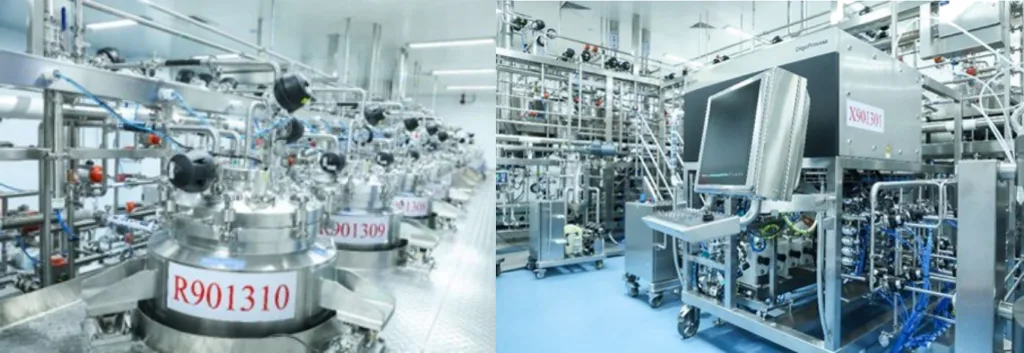
Aurisco Pharmaceutical Co., Ltd. (Shanghai Stock Exchange: 605116) has reported that its Yangzhou manufacturing site in China successfully completed a United States Food and Drug Administration pre-approval inspection associated with inclisiran sodium, an important manufacturing milestone in the still-emerging market for generic oligonucleotide active pharmaceutical ingredients. The five-day inspection ran from June 15 to June 19, 2026 and examined current Good Manufacturing Practice compliance across oligonucleotides, GLP-1 peptides including semaglutide and tirzepatide, and small-molecule manufacturing operations.
Aurisco described the facility as the first generic oligonucleotide API manufacturer globally to successfully undergo such an FDA inspection. That distinction should be treated as a company claim rather than an FDA-awarded status, since the regulator has not independently designated Aurisco as the world’s first generic oligonucleotide manufacturer. Other companies already operate FDA-inspected oligonucleotide manufacturing businesses, making the narrower wording around a generic oligonucleotide manufacturer and an inclisiran-linked pre-approval inspection particularly important.
The regulatory significance nevertheless extends beyond another factory inspection. FDA has acknowledged that development of generic oligonucleotide drugs presents unusual chemistry, manufacturing and control challenges, including questions around active ingredient sameness, complex chemical modifications, stereochemistry, impurity profiles and the control of product-related impurities. Aurisco’s inspection therefore offers an early indication that generic versions of increasingly important RNA-targeted medicines are moving from laboratory and regulatory-development discussions toward manufacturing systems designed for eventual commercial applications.
Why does the FDA pre-approval inspection matter for Aurisco’s generic inclisiran strategy?
An FDA pre-approval inspection is not an approval of inclisiran sodium, nor does it establish that an Aurisco-supplied generic inclisiran product can be marketed in the United States. FDA’s own inspection framework states that a pre-approval inspection evaluates whether manufacturing processes and control strategies are adequate to support consistent commercial product quality and whether the facility conforms with the application, facility and current Good Manufacturing Practice requirements. The agency then considers those findings together with the broader application record when deciding whether a drug application can be approved.
That distinction is particularly relevant because Aurisco said its Establishment Inspection Report confirmed that observations made during the inspection had been addressed through a corrective and preventive action plan. In other words, the site was not reported as moving through an entirely observation-free process. Rather, according to Aurisco, the company responded to the inspector’s observations and the resulting CAPA plan was accepted within the inspection process.
For customers considering Aurisco as an API supplier, however, successful resolution of the inspection process is commercially meaningful. An API manufacturer seeking to participate in a United States generic supply chain must demonstrate more than the ability to synthesize a molecule at laboratory scale. Its analytical methods, raw-material controls, manufacturing process, equipment, documentation, validation strategy, quality systems and ability to consistently reproduce the proposed commercial material can all become relevant to FDA’s assessment.
The June inspection therefore moves Aurisco further along the manufacturing-readiness pathway without removing the separate regulatory, intellectual-property and product-development barriers confronting any eventual generic inclisiran applicant.
Why are generic oligonucleotides more difficult than conventional small-molecule generics?
The significance becomes clearer when inclisiran itself is considered. Inclisiran is a chemically modified small interfering RNA designed to reduce production of PCSK9 in the liver. The molecule contains multiple modified nucleotides and a GalNAc ligand used to facilitate delivery to hepatocytes, making it structurally and analytically far more complicated than a conventional low-molecular-weight tablet API.
FDA has explicitly identified generic oligonucleotides as an emerging area requiring attention to questions such as active ingredient sameness and comparability of impurity profiles. Modified oligonucleotides can contain numerous structural elements, chemical modifications and stereochemical characteristics, while synthesis itself can generate closely related impurities that require sophisticated analytical characterization.
That means the economics of oligonucleotide generics may look quite different from those of mature commodity generics. Manufacturing know-how, purification, analytical characterization and regulatory experience could become more important competitive barriers, particularly for suppliers seeking to support abbreviated drug applications against complex RNA-based originator medicines.
Aurisco’s inspection can consequently be viewed as a test not merely of one production line but of whether the company’s quality and manufacturing infrastructure is developing sufficiently to participate in this more demanding category.
How close does the inspection bring a potential generic version of Novartis Leqvio?
Inclisiran is marketed by Novartis as Leqvio. The FDA initially approved the medicine in December 2021, and subsequent label expansions have broadened its use. In July 2025, the FDA approved a revised indication allowing Leqvio, alongside diet and exercise, to reduce low-density lipoprotein cholesterol in adults with hypercholesterolemia, including heterozygous familial hypercholesterolemia.
The drug’s commercial establishment makes it an obvious target for eventual generic competition, but Aurisco’s manufacturing milestone should not be interpreted as evidence that a United States generic launch is imminent.
A generic drug application has requirements extending well beyond an API manufacturer’s inspection. Depending on the application and product, the generic sponsor still has to satisfy FDA requirements covering pharmaceutical equivalence, manufacturing quality, the proposed finished product and other regulatory elements. Intellectual-property issues can also determine when a generic product can enter the market, with the Orange Book serving as a key FDA resource for approved products and associated patent and exclusivity information.
The identity of the applicant associated with the June pre-approval inspection was not disclosed in Aurisco’s announcement, nor did the company provide a timetable for an abbreviated new drug application approval or United States commercial launch. That missing information is important. Aurisco may be supplying API to a downstream generic developer rather than seeking to commercialize a finished inclisiran product itself.
What the inspection demonstrates more clearly is that an FDA-facing generic inclisiran supply chain is progressing far enough for the regulator to examine commercial manufacturing readiness at an API facility.
Could the same manufacturing platform extend to vutrisiran, nusinersen and eplontersen?
Aurisco is already positioning the Yangzhou development as broader than inclisiran. The company identified vutrisiran, nusinersen and eplontersen among the oligonucleotide APIs it sees as future generic opportunities, although it did not disclose regulatory filing dates or claim that FDA has approved generic versions manufactured by the site.
Those molecules represent commercially and clinically established oligonucleotide medicines rather than speculative targets. Vutrisiran is marketed as Amvuttra by Alnylam Pharmaceuticals and originally received United States approval in 2022. Nusinersen is Biogen’s Spinraza, initially approved in 2016 for spinal muscular atrophy. Eplontersen was approved as Wainua in December 2023, with the original United States application held by Ionis Pharmaceuticals.
The opportunity for an API manufacturer is therefore potentially platform-like. Once a company has invested in solid-phase synthesis, purification, analytical characterization, containment, quality systems and regulatory documentation for complex oligonucleotides, those capabilities may be adaptable across multiple molecules.
Adaptable does not mean interchangeable. Sequence, conjugation chemistry, impurity profiles, process controls and regulatory requirements can differ substantially from molecule to molecule. Each generic programme will still have to demonstrate that its proposed drug substance and finished product satisfy the requirements applicable to the reference product.
That is why the inspection is best interpreted as infrastructure validation rather than portfolio validation.
Why could manufacturing become a major competitive barrier in generic RNA medicines?
The pharmaceutical industry’s oligonucleotide manufacturing base is expanding rapidly as RNA interference and antisense technologies move beyond rare diseases into larger therapeutic categories. That transition creates demand not only for innovative drug manufacturing but eventually for lower-cost follow-on products once regulatory and intellectual-property conditions permit competition.
Manufacturing scale will matter because oligonucleotide production combines expensive raw materials, multiple synthesis steps, demanding purification and unusually intensive analytical requirements. A generic manufacturer that cannot control impurities or consistently reproduce an API matching the proposed regulatory specifications may struggle regardless of how attractive the eventual market appears.
FDA’s continuing work on generic oligonucleotide development also suggests that the regulatory framework is still maturing. The agency has publicly discussed the complexity of demonstrating sameness for oligonucleotides and the importance of understanding and controlling impurity profiles. That is a substantially different problem from reproducing many conventional small molecules whose characterization and generic-development pathways have been established for decades.
Aurisco therefore has an opportunity to turn early regulatory manufacturing experience into a commercial advantage, particularly if generic developers increasingly look for suppliers that can provide regulatory-support packages alongside physical API production.
The competitive test will be whether that capability translates into approved customer programmes rather than remaining principally a manufacturing credential.
Aurisco’s FDA inspection opens the door, but generic approvals remain the decisive milestone
Aurisco Pharmaceutical has reached a meaningful point in the development of a generic oligonucleotide manufacturing business. The inspection was tied specifically to inclisiran sodium, covered a broader set of manufacturing activities at Yangzhou and, according to the company, concluded after inspection observations were addressed through an accepted CAPA process.
Yet the strongest interpretation is narrower than Aurisco’s headline claim. Passing an FDA pre-approval inspection does not make an API an FDA-approved generic, does not establish therapeutic equivalence to Leqvio and does not indicate when a competing finished product will reach the United States market. FDA itself makes clear that pre-approval inspection findings form only one component of the agency’s wider application decision.
The milestone matters because it moves generic oligonucleotides one step closer to becoming a practical manufacturing category rather than mainly a future regulatory concept. Inclisiran, vutrisiran, nusinersen and eplontersen show how rapidly oligonucleotide medicines have moved into established therapeutic markets, while FDA’s own work on complex generic oligonucleotides shows why replicating them will require considerably more than conventional generic chemistry.
For Aurisco, the next evidence will therefore be more important than the “world first” label. Regulatory filings supported by its APIs, subsequent FDA decisions, commercial supply agreements and eventually approved generic products would demonstrate whether the Yangzhou inspection has created a durable position in the emerging generic oligonucleotide supply chain.