Rein Therapeutics, Inc. (NASDAQ: RNTX) has received US Food and Drug Administration Fast Track designation for LTI-03 in idiopathic pulmonary fibrosis, giving the clinical-stage company a more direct regulatory pathway as its approximately 120-patient Phase 2 RENEW study moves toward an initial data readout during the second half of 2026. LTI-03 is an inhaled synthetic peptide derived from caveolin-1 biology and is being developed around an unusually ambitious therapeutic proposition for IPF: suppress profibrotic signaling while preserving the alveolar epithelial progenitor cells needed for lung repair. FDA’s August 20 designation does not establish efficacy or increase the evidentiary weight of Rein’s early clinical results, but it allows more frequent interactions with the agency and could support mechanisms such as rolling review, Priority Review or Accelerated Approval later if the programme ultimately satisfies the relevant criteria.
The timing matters because LTI-03 is already beyond its initial safety study and is now being evaluated in RENEW across the United States, United Kingdom, Australia, Poland and Germany. Patients are being randomized to two LTI-03 dose levels or placebo, with safety assessed through week 24 and change in forced vital capacity serving as the principal efficacy measurement. Rein reported in August that it had passed the 25% enrollment threshold, meaning the next important question is no longer whether the drug can be inhaled safely for two weeks in a small early-stage study, but whether its molecular effects translate into preservation of lung function over a clinically meaningful treatment period.
Why is idiopathic pulmonary fibrosis still such a difficult drug-development problem?
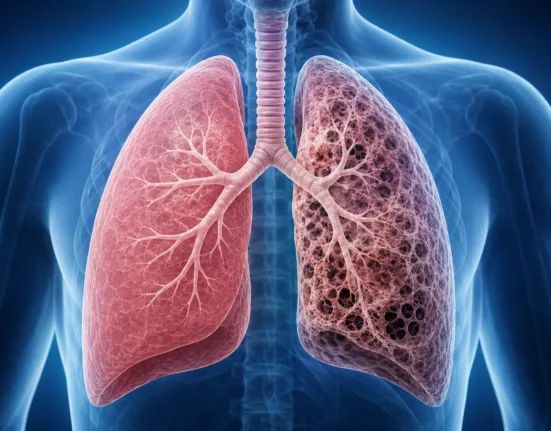
IPF is a progressive interstitial lung disease in which repeated epithelial injury, abnormal repair responses and fibroblast activation gradually replace functional lung architecture with scar tissue. Existing antifibrotic medicines can slow the rate of decline for many patients but generally do not reverse established fibrosis, leaving developers searching for therapies that intervene earlier in the biological cascade or preserve the cells responsible for normal repair. Rein estimates median survival after diagnosis at roughly three to five years, underscoring why FDA considers the disease serious enough for expedited-development programmes.
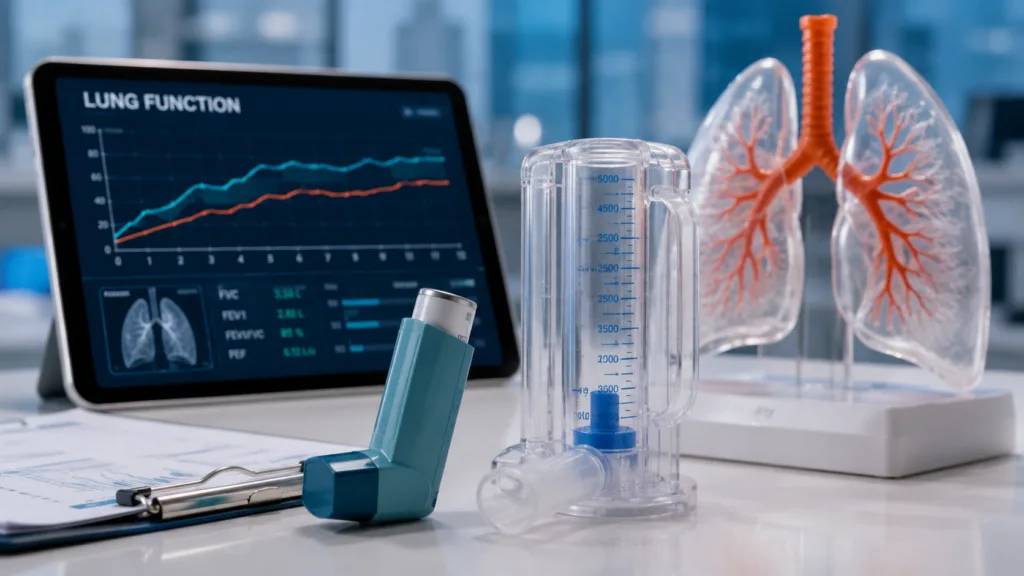
That biology also explains why FVC remains such an important endpoint. Forced vital capacity measures how much air a patient can exhale after taking a full breath, and progressive decline reflects loss of functional lung volume as fibrosis advances. Biomarkers can indicate that a drug is affecting relevant molecular pathways, but an IPF medicine ultimately needs to demonstrate that those changes matter to pulmonary function, progression or other clinically meaningful outcomes.
LTI-03’s strategy is differentiated because Rein is not positioning the peptide solely as another inhibitor of fibroblast activity. The company says caveolin-1-derived signaling may simultaneously suppress pathways involved in fibrosis and support survival of alveolar epithelial cells that participate in repairing injured lung tissue. Whether that translates into genuine regeneration remains unproven and should not be inferred from the current human dataset, but the dual hypothesis gives RENEW a broader biological question than whether one more antifibrotic pathway can be partially suppressed.
What did the 24-patient Phase 1b study actually show?
The randomized, double-blind Phase 1b study enrolled 24 people with IPF across six sites in the United States, United Kingdom, Germany and Australia. Nine participants received 5 mg of inhaled LTI-03 daily, nine received 10 mg and six received placebo for 14 days. The primary objective was safety rather than clinical efficacy, and investigators reported no treatment-related discontinuations, no severe treatment-emergent adverse events and no evidence of airway obstruction based on spirometry and associated symptoms.
The more interesting findings came from exploratory bronchial biomarkers. Both dose levels significantly reduced interleukin-11 and thymic stromal lymphopoietin relative to placebo, while the 10 mg dose also reduced collagen type 1 alpha chain 1, CXCL7 and galectin-7. These molecules are associated in different ways with fibrotic signaling, epithelial injury and remodeling, providing evidence that inhaled LTI-03 reached the biological environment it was intended to influence. Several other measured biomarkers did not change significantly, however, and a 14-day study involving 24 patients cannot demonstrate that molecular changes will slow progression of a disease developing over years.
That distinction makes the Phase 2 programme especially important. Early biomarker activity is useful when deciding whether to advance a candidate, but the field contains many therapies that affected plausible fibrosis pathways without ultimately producing sufficient clinical benefit. RENEW moves the programme from pharmacological plausibility toward a functional test.
How is the 120-patient RENEW study designed to answer the efficacy question?
RENEW is randomized and placebo controlled, with approximately 120 patients assigned across two active-dose groups and placebo. Rein lists treatment-emergent adverse events through week 24 as the primary safety endpoint and change from baseline in FVC as the primary efficacy endpoint, providing a direct test of whether the peptide slows the deterioration of pulmonary capacity. The multinational footprint is also important because IPF trials frequently encounter recruitment difficulties when eligibility requirements concentrate enrollment among relatively small populations treated at specialist centers.
Rein has progressively expanded the study from the United States, Australia and Poland into the United Kingdom and Germany, with all five planned countries now enrolling. The company had surpassed one-quarter enrollment by its August 14 corporate update and continues to target interim data during the second half of 2026. The precise interpretation of an interim dataset will depend on how many patients have reached the relevant follow-up period and which endpoints are sufficiently mature, so an initial readout should not automatically be treated as equivalent to a completed Phase 2 result.
The trial could nevertheless become a major value-setting event because it will show whether the molecular activity observed in bronchial sampling has any detectable relationship with FVC decline. A favorable signal could justify larger registrational planning and make the new Fast Track designation operationally useful; a neutral FVC result would raise questions about whether the biomarker changes are clinically consequential.
Why does inhaled delivery matter for an antifibrotic peptide?
Delivering LTI-03 directly to the respiratory tract is intended to expose diseased lung tissue while limiting unnecessary systemic exposure. This is particularly relevant in chronic diseases where patients may need therapy for years and where tolerability can determine whether an otherwise active treatment remains useful in routine practice. Inhalation also creates its own development requirements, including reproducible pulmonary deposition, device performance, patient technique and the possibility that severely impaired lungs may distribute the medicine differently from relatively preserved lungs.
The Phase 1b study offered some reassurance by showing no evidence of airway obstruction during the short treatment interval, but 14 days is far from sufficient to characterize chronic inhaled tolerability. RENEW’s 24-week safety assessment should therefore provide a more meaningful picture of respiratory adverse events and longer exposure.
The commercial proposition would become especially interesting if LTI-03 ultimately complements rather than simply replaces established antifibrotic medicines. IPF biology involves multiple pathways, making combination therapy plausible if developers can demonstrate additive benefit without unacceptable tolerability. RENEW is not yet answering that entire commercial question, but it will determine whether LTI-03 has enough independent clinical activity to justify pursuing it.
What does FDA Fast Track change and what does it leave unresolved?
Fast Track provides process advantages rather than a clinical endorsement. Rein can potentially interact with FDA more frequently about trial design and development questions, and qualifying programmes may eventually become candidates for rolling submission, Accelerated Approval or Priority Review. None of those later pathways is automatic, and FDA’s decision does not mean LTI-03 has shown that it slows, halts or reverses IPF.
The designation nevertheless arrives at a strategically useful moment. Rein has already raised additional capital, expanded RENEW across five countries and produced peer-reviewed Phase 1b data demonstrating biological activity in lung samples. Its next task is to connect those pieces through a functional outcome.
For LTI-03, the central unresolved question is unusually clear. Lowering IL-11, TSLP and several other fibrosis-associated biomarkers is scientifically encouraging, but IPF patients need preservation of lung function rather than a more favorable laboratory profile. RENEW’s FVC data will determine whether Rein’s caveolin-1 strategy crosses that gap.