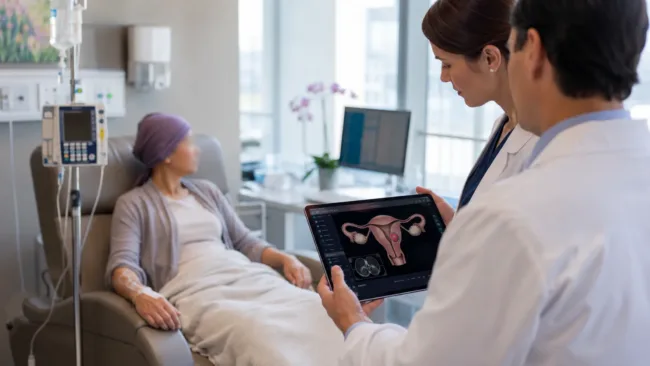
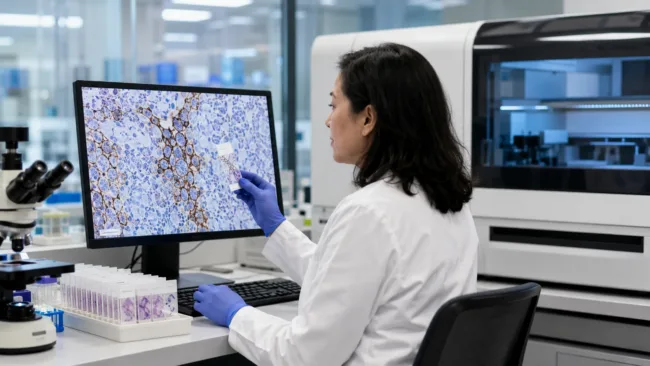
Kovina Therapeutics has disclosed the peer-reviewed publication of preclinical research showing that its HPV16 E6-targeted small molecules, including KTI-218 and KTI-240, restored p53 activity and suppressed cervical and oropharyngeal tumor growth in laboratory models. Published in the Proceedings of the National Academy of Sciences, the work positions direct covalent inhibition of the viral E6 oncoprotein as a potential therapeutic strategy for HPV16-driven cancers and premalignant disease, although no human clinical data or development-stage candidate has yet been disclosed.
Why direct HPV16 E6 inhibition could create a new precision oncology mechanism
The importance of the research lies less in another demonstration that HPV proteins contribute to cancer and more in evidence that one of those proteins may be directly druggable. HPV E6 has long been considered an attractive target because HPV-driven cancer cells depend on its continued expression, but the protein has been difficult to inhibit with conventional small molecules. It lacks the obvious enzymatic pocket commonly exploited by targeted cancer drugs and performs much of its oncogenic work through protein interactions.
Kovina Therapeutics’ approach attempts to overcome that problem through covalent inhibition. KTI-218 and KTI-240 bind to cysteine 51 within HPV16 E6, interfering with the interaction between E6 and the cellular ubiquitin ligase E6-associated protein. That interaction normally causes the destruction of p53, a central tumor suppressor responsible for controlling damaged cells through cell-cycle arrest, senescence or apoptosis.
Blocking E6 therefore does not introduce a completely new death signal into the cancer cell. Instead, it releases a host defence mechanism that the virus has suppressed. The compounds increased p53 protein stability, activated downstream p53 transcriptional programmes and reduced the viability of HPV16-positive cancer cells. This creates a mechanistic distinction from chemotherapy, which damages rapidly dividing cells, and from immunotherapy, which depends on the immune system recognising and attacking the tumour.
The strategy could become a form of virus-directed precision oncology in which treatment eligibility is defined by HPV genotype and continued dependence on a viral oncoprotein. However, restoring p53 in laboratory cells is not automatically equivalent to producing a durable clinical response. Tumours accumulate additional genetic changes as they evolve, and some may remain viable even after the E6 pathway is disrupted. The programme will therefore need to establish which biological features predict sensitivity beyond the presence of HPV16 alone.
Why the study’s genetic controls matter more than the headline tumor results
Tumour suppression in mice is the most visually compelling finding, but the study’s mechanism-of-action controls are more consequential for early drug development. Many experimental compounds reduce cancer-cell growth through general toxicity, stress responses or unintended protein interactions. An apparent anticancer effect is considerably more valuable when researchers can connect it to the intended molecular target.
The investigators engineered HPV16 E6 with a cysteine-to-serine alteration at the compound-binding site. This mutation prevented covalent engagement and made the modified cancer cells resistant to treatment. A structurally related non-covalent control compound also failed to restore p53 or meaningfully reduce cell viability. Together, these experiments support the conclusion that the activity of KTI-240 depends on binding cysteine 51 rather than on an unrelated chemical effect.
Transcriptomic analysis further showed activation of genes associated with the p53 pathway, apoptosis, senescence and cell-cycle control in HPV16-positive cells. The compounds did not need to increase p53 messenger RNA because the intended mechanism operates at the protein level. By preventing E6-mediated destruction, the treatment allowed existing p53 protein to accumulate and resume its regulatory role.
These controls strengthen target validation, but they do not fully answer the safety question associated with covalent medicines. Covalent binding can produce prolonged target engagement and may overcome weak reversible interactions, yet reactive chemical groups can also bind unintended proteins. Before clinical development, Kovina Therapeutics will need broad proteomic selectivity data, repeat-dose toxicology and evidence that exposure sufficient to inhibit tumour E6 does not disrupt important cysteine-containing proteins in healthy tissues.
The distinction between target validation and candidate validation is critical. The publication provides meaningful evidence that HPV16 E6 can be pharmacologically disabled. It does not establish that KTI-218, KTI-240 or any related molecule has the pharmacokinetic, safety, formulation and manufacturing properties required for human dosing.
How genotype specificity creates both a clear development strategy and a commercial ceiling
HPV16 is a logical entry point because it is the most consequential high-risk HPV genotype across several malignancies. It is responsible for a substantial share of cervical cancers and is particularly prominent in HPV-associated oropharyngeal cancer. A therapy capable of selectively attacking HPV16-dependent cells could therefore have relevance across anatomically different tumours that share the same viral driver.
That genotype specificity could simplify early clinical development. Patients can be identified using established tumour testing, allowing Kovina Therapeutics to enrol a biologically defined population rather than a broad group selected only by tumour location. HPV genotype, E6 expression, p53 pathway activity and circulating tumour HPV DNA could potentially become complementary biomarkers for patient selection and pharmacodynamic monitoring.
The same specificity also limits the first generation of the platform. The compounds depend on a cysteine found at the relevant binding position in HPV16 E6. HPV18 and several other high-risk genotypes do not present an identical target, meaning the current chemistry should not be assumed to address the entire HPV-associated cancer population. The label “HPV therapy” would consequently be too broad unless additional compounds are developed for other genotypes.
A genotype-specific portfolio may eventually be possible, with different molecules targeting structural vulnerabilities in different E6 proteins. That would resemble antiviral development more than conventional tumour-agnostic oncology. It would also require substantially more medicinal chemistry, toxicology and clinical work than advancing a single broadly active compound.
Commercially, the most credible near-term opportunity is therefore a biomarker-defined HPV16 franchise rather than a universal HPV treatment. Success in that population could validate the broader concept, but expanding across HPV18, HPV31, HPV33 and other oncogenic types would require separate evidence rather than extrapolation.

Where Kovina’s approach could fit beside immunotherapy, surgery and therapeutic vaccines
Existing treatment for HPV-associated malignancies is determined primarily by tumour site, stage and previous therapy rather than by direct pharmacological inhibition of the virus. Cervical cancer treatment can include surgery, chemoradiotherapy, anti-angiogenic therapy, immune checkpoint inhibition and antibody-drug conjugates. HPV-positive head and neck cancers are similarly treated with combinations of surgery, radiation, chemotherapy and immunotherapy.
These interventions can control disease without eliminating the molecular process through which HPV helped establish and maintain the malignant state. Preventive HPV vaccines provide powerful protection against new infection and future cancer development, but they do not treat established HPV infections or existing HPV-driven tumours. Therapeutic vaccines and engineered cellular therapies attempt to generate immune responses against E6 or E7, but their activity depends on antigen presentation, immune-cell function and the tumour microenvironment.
A small-molecule E6 inhibitor would operate differently. It could directly disrupt the viral survival mechanism inside the tumour cell, potentially making activity less dependent on immune recognition. That does not mean it would replace immunotherapy. Restoring p53 and driving tumour-cell stress could increase antigen release or alter immune signalling, creating a scientific rationale for combination studies with checkpoint inhibitors or therapeutic vaccines.
Combination potential should not be confused with evidence of combination benefit. The published work does not show whether E6 inhibition improves the activity of pembrolizumab, chemoradiotherapy or other established treatments. It also does not determine whether prior radiation or chemotherapy changes tumour dependence on the E6-p53 interaction.
The first clinical positioning may depend heavily on drug properties. A well-tolerated oral medicine could be investigated across recurrent or metastatic HPV16-positive cancers. A locally delivered formulation might offer a different risk-benefit profile for cervical, anal or vulvar precancer. A compound requiring high systemic exposure or producing off-target toxicity would probably be restricted to advanced cancer, where greater treatment risk is acceptable.
Why premalignant HPV disease may offer the broadest opportunity and the hardest trial design
Kovina Therapeutics is presenting E6 inhibition as a strategy that could extend from invasive cancer to premalignant HPV disease. Biologically, the argument is coherent because E6 is expressed before malignant transformation and contributes to the persistence of abnormal HPV-infected cells. Treating those cells before invasion could create an interception strategy rather than waiting for cancer to develop.
The unmet need is different from that in metastatic oncology. High-grade cervical lesions are commonly treated through excision or ablation, including loop electrosurgical excision, cone biopsy, cryotherapy or laser procedures. These approaches are often effective, but they require trained providers and may carry reproductive, anatomical or procedural consequences. Comparable challenges exist in managing recurrent or multifocal anal, vulvar and vaginal lesions.
A drug that clears HPV16-infected precancerous tissue without surgery could therefore have significant clinical value. It might be particularly relevant for patients with recurrent lesions, disease at multiple anatomical sites, limited access to specialist procedures or elevated recurrence risk associated with immune suppression.
However, the regulatory and safety standard for treating precancer is considerably higher than for treating advanced cancer. Many HPV infections clear spontaneously, and some lesions regress without intervention. A systemic covalent inhibitor would need an exceptionally favourable safety profile to justify use in patients who do not yet have invasive disease.
Trial design would also be demanding. Studies would need to distinguish viral clearance from temporary suppression, establish histological regression, monitor recurrence and determine whether treatment reduces progression to cancer. The appropriate duration of therapy, route of administration and follow-up period remain unresolved. Local delivery could reduce systemic exposure but might not address infection or lesions at multiple sites.
Premalignant disease may ultimately represent the largest strategic opportunity for E6 inhibition, yet it is unlikely to be the easiest first indication. Advanced HPV16-positive cancers may offer a more practical setting in which to establish human target engagement, dose, safety and preliminary antitumour activity.
What Kovina Therapeutics must resolve before an HPV E6 inhibitor reaches human testing
The next phase of development must convert a compelling research mechanism into a clinically usable product. Kovina Therapeutics has not yet disclosed an investigational new drug application, a first-in-human trial or the nomination of a definitive clinical candidate. KTI-218 and KTI-240 should therefore be regarded as research compounds supporting the platform rather than medicines approaching approval.
Candidate selection will require optimisation of potency, selectivity, metabolic stability, tissue penetration and dosing convenience. The molecule must reach HPV16-positive lesions at sustained concentrations while limiting nonspecific covalent binding. Development teams will also need to examine reactive metabolites, drug-drug interactions, genotoxicity, organ toxicity and the consequences of prolonged p53 reactivation in infected and surrounding tissues.
The programme requires a measurable pharmacodynamic bridge between laboratory studies and patients. Tumour biopsies could assess E6 engagement, p53 accumulation and downstream pathway activation, but repeated biopsies may not be practical across every tumour site. Circulating HPV DNA, p53-regulated proteins or imaging-based measures may help, although none can substitute for demonstrating direct tumour activity.
Resistance also requires attention. The engineered cysteine mutation proves the intended mechanism, but it simultaneously illustrates one route through which resistance could emerge. Viral sequence variation, reduced dependence on E6, alterations in TP53 or activation of parallel survival pathways could diminish response. Clinical sequencing should therefore examine both baseline viral variants and molecular changes that appear during treatment.
Manufacturing is another understated challenge. A scalable synthesis process must reliably control impurities associated with the covalent chemical group while producing a stable formulation suitable for clinical use. These issues are less dramatic than tumour regression experiments, but they often determine whether an academically promising molecule becomes a viable medicine.
What clinicians, regulators and potential partners are likely to watch as the program advances
The PNAS publication materially strengthens the scientific case for HPV16 E6 as a drug target. The combination of biochemical engagement, genetic resistance experiments, p53 pathway restoration, selective activity in HPV16-positive cells and tumour-growth suppression provides a more complete validation package than an isolated cell-viability result.
Even so, the programme remains at a stage where scientific de-risking is more advanced than clinical de-risking. The animal studies demonstrated growth suppression rather than proof of durable tumour elimination, and xenograft models cannot reproduce the full immune environment, chronic viral biology or treatment history of human HPV-associated cancers. Studies in immunocompetent and disease-relevant models would help clarify whether E6 inhibition cooperates with antiviral immunity or merely slows tumour-cell proliferation.
The clearest future value milestones are the nomination of a clinical candidate, completion of investigational toxicology, definition of a manufacturing process, regulatory clearance for human testing and demonstration of p53 pathway activation in patients. Early clinical trials will need to show more than tolerability. They must connect drug exposure to HPV16 E6 inhibition and then connect that inhibition to tumour or lesion response.
Kovina Therapeutics has produced evidence that an oncoprotein previously treated as difficult to drug may contain an exploitable covalent vulnerability. That is genuinely new and potentially important. The publication does not yet establish an HPV medicine, but it creates a credible foundation for testing whether direct viral oncogene inhibition can become a practical therapeutic category across HPV16-driven cancer and precancer.