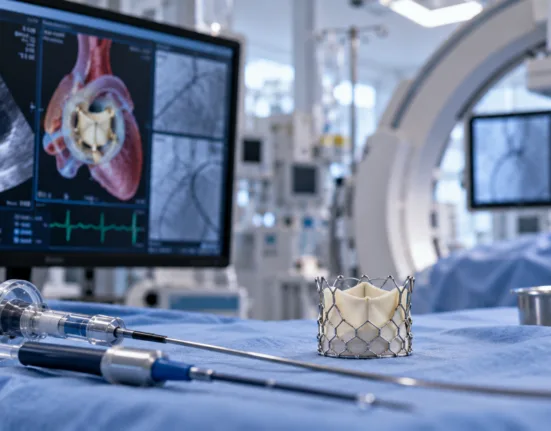
Edwards Lifesciences has received U.S. Food and Drug Administration approval for the SAPIEN M3 transcatheter mitral valve replacement system, making it the first transseptal-based TMVR technology to secure regulatory clearance in the United States. The system is now indicated for patients with symptomatic moderate-to-severe or severe mitral regurgitation, including those with mitral annular calcification, who are deemed unsuitable for surgical repair or transcatheter edge-to-edge repair by a multidisciplinary heart team.
The approval follows one-year data from the ENCIRCLE pivotal trial presented at the Transcatheter Cardiovascular Therapeutics conference and simultaneously published in The Lancet. With this milestone, Edwards Lifesciences is set to expand treatment access for a patient population historically left with few interventional options due to anatomical complexity, surgical risk, or procedural ineligibility.
What the SAPIEN M3 FDA approval changes for mitral valve patients ineligible for surgery or TEER
The regulatory greenlight for SAPIEN M3 introduces a new clinical pathway for patients who fall outside the reach of existing therapies. Transcatheter edge-to-edge repair technologies, such as MitraClip from Abbott Laboratories, have shown substantial benefit in anatomically suitable patients but often fail to provide complete regurgitation control in those with severe leaflet degeneration or complex mitral anatomy. Surgical mitral valve replacement, while effective, is contraindicated in many high-risk patients due to age, frailty, or comorbid conditions.
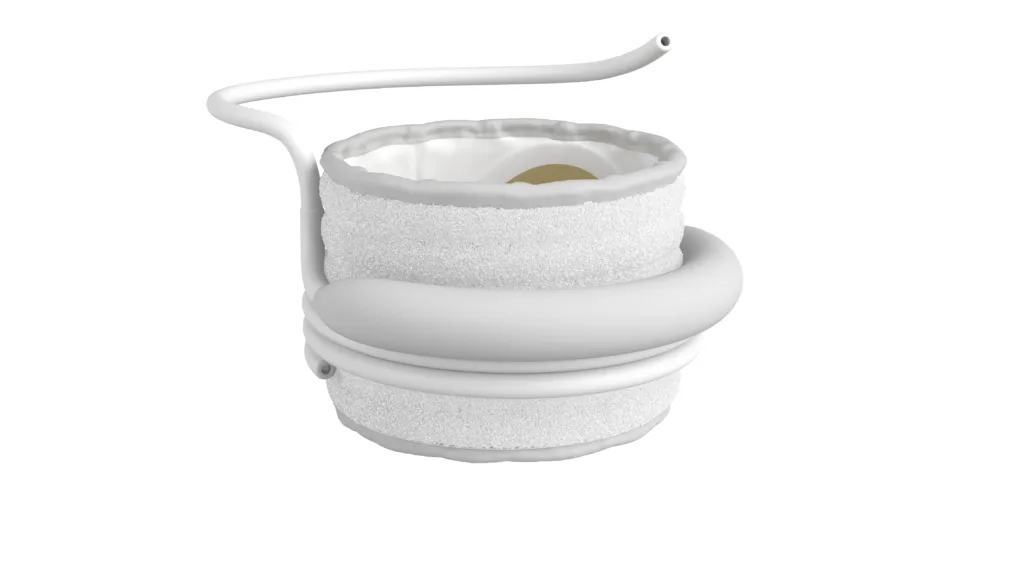
SAPIEN M3 enters this treatment void as the first fully percutaneous transseptal mitral replacement system to gain FDA clearance. The technology enables mitral valve replacement via femoral vein access using a 29 French steerable guide sheath. Its two-step deployment involves delivering a docking system followed by valve placement, allowing for precise anchoring and immediate MR resolution. The minimally invasive nature of the approach positions it as a potential lifeline for patients who previously had no viable interventional pathway.
Why SAPIEN M3 is being viewed as a next-generation alternative to repair-first strategies
Unlike transcatheter repair devices, which aim to approximate native leaflets and are limited by anatomical coaptation gaps, SAPIEN M3 replaces the mitral valve entirely. This fundamental shift in approach reflects an evolution in how interventional cardiologists and structural heart programs are addressing valvular pathologies in patients with mixed disease etiology.
The SAPIEN M3 system is built upon the established design principles of Edwards Lifesciences’ SAPIEN aortic valve platform, which is widely used in transcatheter aortic valve replacement. Leveraging that engineering lineage, SAPIEN M3 introduces mitral-specific enhancements that include a proprietary docking mechanism to stabilize the annular environment and reduce paravalvular leak. Clinicians following the space suggest that this replacement-based strategy could achieve more consistent MR elimination in patients with calcified annuli or severe leaflet disruption, scenarios where edge-to-edge repair often underperforms or is deemed infeasible.
What the ENCIRCLE trial reveals about clinical performance and procedural feasibility
The pivotal ENCIRCLE trial enrolled 299 patients with symptomatic MR who were determined to be poor candidates for surgery or TEER. At the one-year mark, more than 95 percent of treated patients demonstrated MR reduction to grade 0 or 1+, coupled with significant improvements in New York Heart Association functional class, six-minute walk distance, and health-related quality-of-life scores.
The trial met all prespecified safety and efficacy endpoints, reinforcing the feasibility of transseptal TMVR as a procedural standard in high-risk populations. Industry analysts note that the absence of a control arm limits head-to-head comparisons, but the consistency of MR resolution and symptomatic benefit still positions SAPIEN M3 favorably relative to existing transcatheter repair options in inoperable cases.
However, clinicians and regulators alike are expected to scrutinize long-term durability, thrombotic risks, and anticoagulation protocols as post-market experience accumulates. Mitral anatomy is inherently more complex than aortic anatomy due to asymmetric geometry, dynamic annular movement, and proximity to the left ventricular outflow tract. These variables introduce potential risks of device migration, embolization, or obstruction, especially over multi-year follow-up horizons.
Why adoption could be concentrated initially in specialized centers
Despite the favorable data, broad adoption of SAPIEN M3 will likely be gradual and focused initially within large-volume structural heart programs. The device’s procedural complexity, large delivery sheath size, and requirement for both dock and valve deployment in sequence introduce a steep learning curve. Transseptal puncture and steerable catheter navigation require significant experience and imaging support, suggesting that smaller centers may delay adoption until procedural workflows are better standardized.
Reimbursement pathways also remain a gating factor. While Centers for Medicare and Medicaid Services (CMS) coverage exists for certain transcatheter mitral interventions, TMVR-specific reimbursement codes and institutional economics may take time to align. Experts note that widespread uptake will depend on payer clarity, especially for in-hospital costs related to imaging, operating room time, and device components.
Moreover, valve sizing and patient selection criteria are still evolving. The mitral valve’s non-circular anatomy and its variation across patient populations create challenges in achieving optimal device-patient matching. This underscores the need for robust pre-procedural imaging and heart team collaboration to minimize complications and optimize outcomes.
How SAPIEN M3 fits into Edwards Lifesciences’ broader structural heart strategy
The approval of SAPIEN M3 strengthens Edwards Lifesciences’ positioning as the only company with FDA-cleared technologies for both transcatheter mitral repair and replacement. Its mitral portfolio now includes the PASCAL Precision edge-to-edge repair system, the newly approved SAPIEN M3 replacement device, and the EVOQUE tricuspid valve system, which was also recently cleared by the FDA.
This integrated approach allows Edwards Lifesciences to tailor interventions based on patient-specific anatomy and pathology rather than a one-size-fits-all device platform. For institutions moving toward procedural convergence in heart valve disease, a unified toolkit from a single manufacturer offers logistical, training, and inventory advantages.
Analysts believe the SAPIEN M3 system, in combination with these existing platforms, could materially expand the company’s total addressable market in structural heart interventions. In particular, patients with severe MR and comorbid mitral annular calcification represent a sizable segment of the aging population previously excluded from advanced therapies. Commercial success will depend on the speed at which Edwards Lifesciences can support procedural training, clinical guidelines, and reimbursement infrastructure to facilitate adoption.
What this means for other transcatheter mitral programs in development
With this FDA approval, Edwards Lifesciences now leads a category that has seen years of attrition, consolidation, and delayed regulatory progress. Other transcatheter mitral valve replacement systems, such as Abbott Laboratories’ Tendyne or Medtronic’s Intrepid, have either faced commercial setbacks or remain investigational in the United States. Many early-stage programs continue to rely on transapical access, a delivery route associated with higher procedural morbidity.
SAPIEN M3’s transseptal design, combined with strong one-year data and CE Mark approval earlier in 2025, provides Edwards Lifesciences with a first-mover advantage in both regulatory geography and clinical maturity. This sets a high bar for competing platforms still navigating feasibility studies or iterative design cycles. Industry observers suggest that the approval could also reignite interest in new delivery modalities, repositioning TMVR as a more viable commercial pathway after years of stagnation.
Regulators will be watching closely as Edwards Lifesciences expands its enrollment in post-approval studies, particularly in patients with mixed valvular disease or in scenarios involving prior mitral interventions. Clinical societies may also begin to revisit guideline language, especially for high-risk or inoperable populations where surgical replacement remains impractical.
What clinicians, investors, and health systems will track moving forward
Key stakeholders will now be watching for broader clinical integration and longer-term performance metrics. Clinicians are likely to assess procedural reproducibility, especially in anatomically challenging patients or those with left atrial dilation. Antithrombotic regimen standardization and anticoagulation management will also require further clarity.
From a hospital system standpoint, the procedural economics of SAPIEN M3, including device cost and length of stay, will be critical in evaluating return on investment. Investors, meanwhile, will be looking for signals of commercial ramp, including procedure volume growth, training center expansion, and payer coverage consistency.
Ultimately, the SAPIEN M3 approval represents a rare moment in structural heart innovation where a technically complex device addresses an urgent unmet need while opening new frontiers for commercial and clinical expansion. For Edwards Lifesciences, the path forward now depends on execution, real-world validation, and regulatory agility.