Thermo Fisher Scientific has launched Thermo Scientific Brilliance Candida 2 Agar in Europe and Spectra Candida Agar in the United States, two chromogenic culture media products designed to enable faster detection and differentiation of clinically important Candida species, including the multidrug-resistant pathogen Candida auris, within routine clinical microbiology workflows.
The introduction of these color-based culture media reflects a broader recalibration in hospital microbiology, where invasive fungal infections and antimicrobial resistance are increasingly intersecting. Candida auris, first identified in 2009, has since emerged as a persistent global healthcare-associated threat. Its ability to colonize patients silently, survive on surfaces, and resist multiple antifungal classes has made it a priority pathogen for infection prevention teams and public health agencies.
Chromogenic agar is not new technology. Laboratories have used color-based differentiation for years to distinguish common Candida species such as Candida albicans and Candida tropicalis. What shifts here is the strategic emphasis on direct visual identification of Candida auris from primary culture with shorter incubation times compared to conventional media. In outbreak settings, where hours matter, reducing time to presumptive identification can materially alter infection control trajectories.
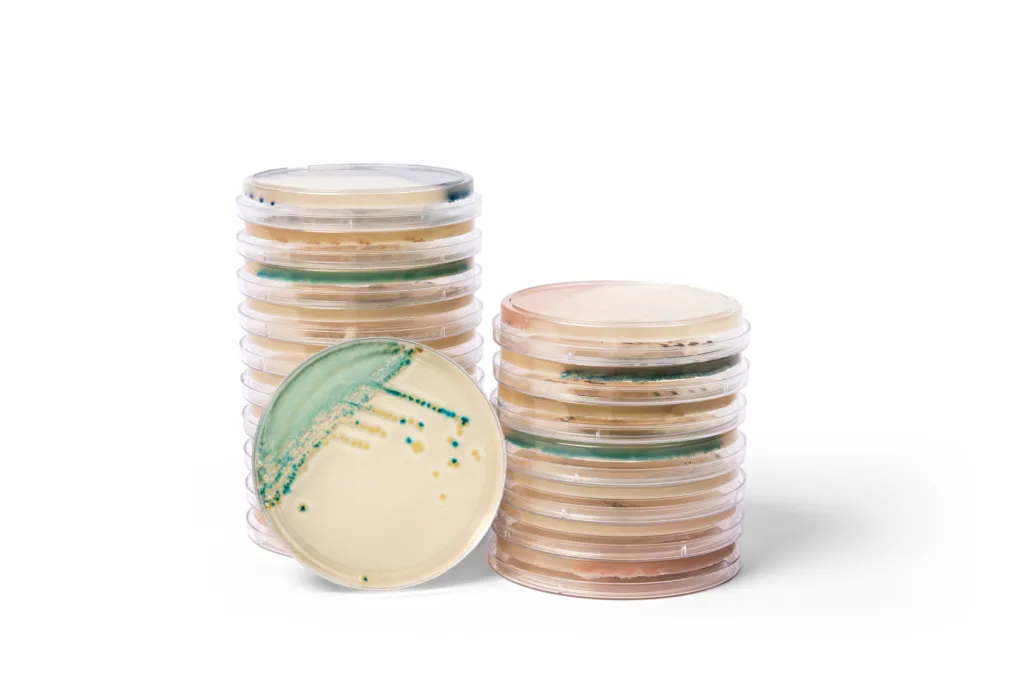
Industry observers note that while molecular assays provide rapid and highly specific identification, they carry cost, equipment, and workflow implications that smaller or resource-constrained laboratories may struggle to absorb. Chromogenic media occupy a middle ground. They integrate into existing culture-based processes, require no additional instrumentation, and support high-throughput screening. In many institutions, they remain the backbone of routine fungal diagnostics.
Why faster species-level differentiation could materially change antifungal stewardship decisions
The clinical relevance of species-level identification in Candida infections is not academic. Different Candida species exhibit distinct antifungal susceptibility patterns. Candida glabrata and Candida krusei, for example, may display reduced susceptibility to fluconazole, while Candida auris frequently demonstrates resistance to multiple drug classes. Delayed or inaccurate identification can lead to inappropriate empiric therapy, prolonged hospitalization, and increased mortality.
Clinicians tracking invasive candidiasis emphasize that early differentiation can guide targeted antifungal therapy sooner, particularly in high-risk populations such as intensive care patients, transplant recipients, and individuals with central venous catheters. If chromogenic media shorten the time from specimen collection to actionable presumptive identification, even by a day, that interval can translate into more precise antifungal stewardship.
However, laboratory medicine experts caution that chromogenic differentiation remains presumptive. Confirmatory testing, often via MALDI-TOF mass spectrometry or molecular assays, is still required in many cases. The practical impact therefore depends on how laboratories incorporate these media into tiered diagnostic algorithms. The true value proposition lies in accelerating the first decision point, not replacing downstream confirmatory workflows.
What this launch reveals about the evolving Candida auris diagnostic landscape and AMR priorities
Candida auris has become emblematic of the antimicrobial resistance crisis in fungal pathogens, an area historically overshadowed by bacterial resistance. Public health authorities in the United States and Europe have expanded surveillance guidance, and hospital accreditation bodies increasingly scrutinize infection prevention strategies related to emerging pathogens.
Thermo Fisher Scientific’s move underscores that diagnostic manufacturers are aligning product development with AMR surveillance imperatives. Chromogenic media that enable visual identification of Candida auris from primary culture could enhance screening programs in long-term care facilities, acute care hospitals, and outbreak investigations. In settings where colonization screening is scaled up, cost per test and workflow simplicity are critical.
From a competitive standpoint, several diagnostic companies offer chromogenic Candida media, and some provide selective formulations aimed at Candida auris detection. What differentiates products in this segment is performance characteristics such as specificity of color reactions, clarity of colony morphology, incubation time, and shelf stability. Without publicly available head-to-head data, laboratories will likely evaluate performance through internal validation studies before widespread adoption.
Regulatory watchers suggest that regional availability also shapes market penetration. Brilliance Candida 2 Agar is positioned for Europe, while Spectra Candida Agar serves the United States market. This regional tailoring reflects not only regulatory authorization pathways but also differences in laboratory purchasing patterns and distribution channels.
Where practical implementation challenges could limit real-world impact despite technical gains
Even well-designed diagnostic tools can face adoption barriers. Laboratories operate under staffing pressures, budget constraints, and accreditation requirements. Introducing new media requires validation, staff training, and potentially adjustments to standard operating procedures.
Another constraint is interpretive variability. Chromogenic reactions rely on visual differentiation, which may be influenced by lighting conditions, technician experience, and mixed cultures. In polymicrobial specimens, colony color interpretation can become complex. The reliability of color-based identification in real-world high-volume labs will determine sustained uptake.
Reimbursement dynamics also matter. In many health systems, fungal culture reimbursement is bundled or constrained, limiting financial incentives to switch media types unless clinical or operational benefits are clearly demonstrated. Health economists note that the cost-effectiveness argument may hinge on preventing even a small number of outbreak-related transmissions, which carry substantial downstream costs.
There is also the question of diagnostic strategy evolution. Rapid molecular panels for bloodstream infections increasingly incorporate fungal targets. As syndromic panels expand and costs decline, culture-based methods could see relative displacement in some tertiary centers. That said, culture remains essential for susceptibility testing and epidemiological typing, anchoring its continued relevance.
How clinicians and infection control teams are likely to interpret this development
Clinicians focused on invasive fungal infections often prioritize turnaround time and clarity of results. If the new chromogenic media consistently provide clear species differentiation with shorter incubation, they may be welcomed as incremental but meaningful improvements.
Infection prevention specialists, particularly those managing Candida auris clusters, are likely to value any tool that accelerates detection. Rapid identification supports earlier patient isolation, environmental decontamination, and contact tracing. In outbreak scenarios, delays can amplify transmission.
Yet experts caution that no single diagnostic tool is a silver bullet. Effective Candida auris control depends on a multi-layered strategy encompassing surveillance, environmental cleaning, antifungal stewardship, and interfacility communication. Chromogenic media enhance one node in that system but do not replace systemic vigilance.
What regulators and public health authorities may watch next in Candida diagnostics
Public health agencies have emphasized standardized laboratory practices for Candida auris detection. As new media enter the market, regulators may monitor performance consistency and real-world accuracy, particularly given the public health implications of false negatives or misidentification.
There is also growing interest in integrating laboratory data into regional surveillance networks. If chromogenic media expand testing capacity, they could indirectly strengthen data flows to public health databases. Enhanced early detection at the laboratory level feeds into broader antimicrobial resistance monitoring frameworks.
Manufacturers may also face pressure to generate comparative data demonstrating superiority or non-inferiority versus established media. Peer-reviewed performance studies will likely influence procurement decisions more than marketing claims.
The broader strategic significance for Thermo Fisher Scientific in microbiology diagnostics
For Thermo Fisher Scientific, the launch reinforces its positioning as a comprehensive supplier across the microbiology value chain. The company already offers a wide portfolio spanning culture media, identification systems, and molecular diagnostics. Expanding chromogenic offerings in response to Candida auris underscores a strategy of iterative product refinement aligned with emerging pathogen trends.
Industry analysts observe that incremental product enhancements in routine diagnostics can cumulatively strengthen customer loyalty and portfolio stickiness. Laboratories often prefer consolidated procurement from established suppliers to simplify logistics and quality assurance.
At the same time, the diagnostics landscape is becoming more technologically stratified. High-complexity centers may invest in rapid molecular and proteomic platforms, while smaller institutions rely heavily on culture-based solutions. By enhancing chromogenic media, Thermo Fisher Scientific appears to be reinforcing its presence in the foundational layer of laboratory testing, where volume and standardization drive sustained demand.
What the field will be watching over the next 12 to 24 months
The ultimate test of these new chromogenic media will not be initial uptake but sustained performance in diverse clinical environments. Laboratories will assess ease of interpretation, contamination rates, compatibility with existing workflows, and consistency across batches.
Clinicians will look for evidence that earlier presumptive identification translates into measurable improvements in antifungal stewardship metrics, length of stay, or outbreak containment. Public health observers will track whether expanded screening capacity correlates with more timely Candida auris detection and reporting.
In the broader antimicrobial resistance narrative, fungal pathogens are gaining attention after years of bacterial focus. Diagnostic innovation in this space, even when incremental, signals that manufacturers and healthcare systems recognize the shifting threat landscape. Thermo Fisher Scientific’s chromogenic Candida media may not revolutionize fungal diagnostics, but they reflect a pragmatic step toward faster, more visible detection of a pathogen that thrives in diagnostic blind spots.
As Candida auris continues to challenge infection control infrastructure worldwide, the field’s attention will remain fixed on tools that combine accuracy, speed, and scalability. Whether chromogenic media can consistently deliver on that triad will determine how significant this launch proves to be.