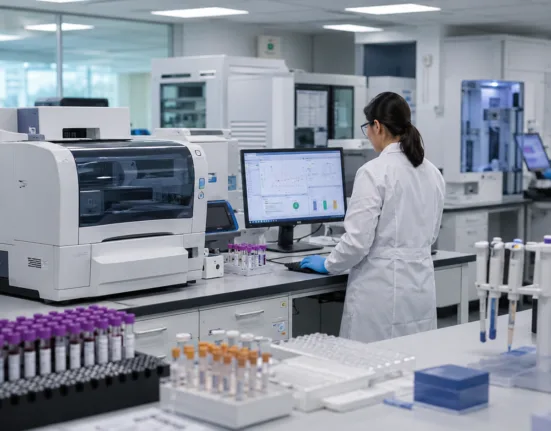
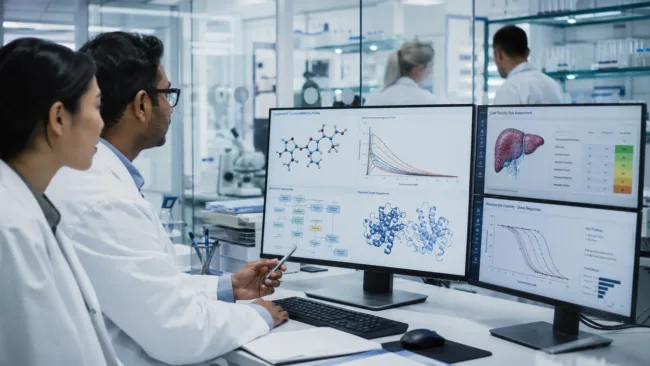
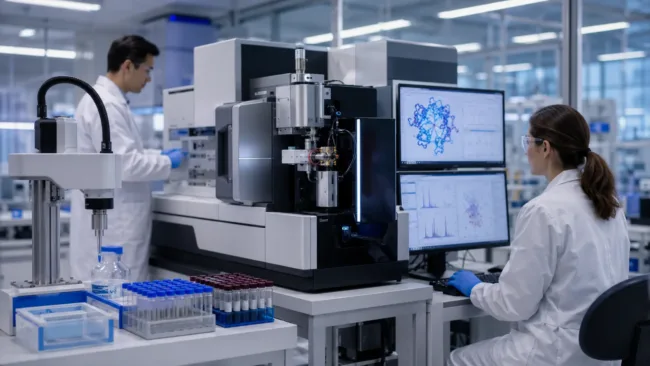
Thermo Fisher Scientific has opened a new bioanalytical and biomarker laboratory for its PPD Clinical Research business in Gothenburg, Sweden, expanding its support for pharmaceutical and biotechnology customers across preclinical, clinical and post-approval drug development. The facility, located within GoCo Health Innovation City, adds Good Laboratory Practice capabilities and advanced testing platforms for small molecules, biologics and complex therapeutic modalities.
Why Thermo Fisher Scientific’s Sweden lab expansion matters for complex drug development
The new Gothenburg laboratory is not just another capacity addition in the global contract research and laboratory services market. It reflects a more structural shift in drug development, where sponsors increasingly need integrated bioanalytical, biomarker and translational science support earlier in the development cycle and across more complicated therapeutic categories. As peptides, antibodies, oligonucleotides, cell therapies and gene therapies move deeper into clinical pipelines, the burden on laboratory infrastructure is rising sharply.
Bioanalytical testing has always been central to understanding how a therapy behaves in the body. However, modern drug development now requires more than conventional pharmacokinetic readouts. Sponsors need biomarker strategies, immunogenicity testing, genomics, proteomics, flow cytometry and cell-based assays that can connect mechanism of action with patient response. Thermo Fisher Scientific’s decision to add a laboratory in Gothenburg therefore speaks to a growing industry need for laboratories that can handle scientific complexity, regulatory expectations and trial timelines at the same time.
The risk is that laboratory expansion alone does not guarantee differentiation. The contract research market remains competitive, and large pharmaceutical sponsors are under pressure to shorten development timelines without compromising data quality. Thermo Fisher Scientific will need to show that the Gothenburg facility can operate as part of a truly integrated network rather than as a regional capacity node. The value will depend on execution, turnaround time, assay transfer reliability and the ability to support studies that span several geographies.

How the Gothenburg facility strengthens PPD’s position in bioanalytical outsourcing
Thermo Fisher Scientific’s PPD Laboratory services already operate across bioanalytical, biomarker, Good Manufacturing Practice, vaccine sciences and central laboratory functions. The Gothenburg site adds European capacity to a bioanalytical network that also includes laboratories in Richmond, Virginia, and Suzhou, China. That geographic spread matters because global clinical trials increasingly require harmonised laboratory support across North America, Europe and Asia.
For pharmaceutical and biotechnology sponsors, the appeal of a multi-region laboratory network lies in consistency. When trials recruit across several countries, sponsors want comparable data, aligned methodologies and fewer operational handoffs. A laboratory in Sweden gives Thermo Fisher Scientific a stronger European anchor for studies involving European trial sites, regional regulatory expectations and local scientific talent. It also helps reduce dependence on long-distance sample logistics, which can become a material operational issue when assays are time-sensitive or biologically complex.
The unresolved question is whether global network scale can be translated into sponsor stickiness. Many drug developers already use specialist bioanalytical providers for niche assay development, especially in emerging modalities. Thermo Fisher Scientific’s advantage is breadth, but specialist firms may compete on speed, scientific customization or therapeutic-area depth. For PPD Clinical Research, the commercial test will be whether the Gothenburg site helps win more integrated drug development mandates rather than only discrete laboratory work.
What the new lab reveals about the rise of biomarker-led clinical trial design
The inclusion of biomarker capabilities is especially significant because biomarkers are becoming central to how clinical trials are designed, stratified and interpreted. In oncology, immunology, neurology and rare diseases, sponsors increasingly need biomarkers to select patients, monitor biological activity, support dose selection and explain why a therapy succeeds or fails. A laboratory that combines bioanalysis with biomarker testing can therefore support decisions that go beyond routine sample processing.
This shift is also changing how clinical evidence is generated. Regulators, payers and clinicians are all asking harder questions about which patients benefit, how durable the response is and whether a therapy’s mechanism is sufficiently supported by biological data. For complex therapies, especially cell and gene therapies, biomarker and immune monitoring can influence trial design, safety assessment and post-approval evidence generation. Thermo Fisher Scientific’s Gothenburg investment aligns with that demand for deeper and more connected data.
However, biomarker-led development introduces its own challenges. Assays must be validated, reproducible and clinically meaningful. A biomarker that looks promising in early-stage studies may not translate into a robust endpoint or stratification tool in larger trials. For Thermo Fisher Scientific, the opportunity is to help sponsors manage that complexity. The limitation is that laboratory capability cannot solve weak biology, poor trial design or uncertain clinical relevance on its own.
Why Sweden and Gothenburg offer strategic value for life sciences expansion
The choice of Gothenburg is not incidental. GoCo Health Innovation City is positioned as a life sciences cluster that brings together health, technology, academia and industry. For a laboratory services business, location inside such a cluster can support recruitment, collaboration and proximity to biotech innovation. Sweden also has a strong life sciences tradition, with a combination of academic research, clinical infrastructure and multinational healthcare companies that make it attractive for global service providers.
For Thermo Fisher Scientific, this regional context gives the new laboratory more strategic value than a simple real estate decision. A Gothenburg presence can support European customers while reinforcing the U.S.-based life sciences group’s role as a long-term employer and investor in Sweden. In a market where sponsors are looking for both scientific expertise and operational resilience, local ecosystem credibility can matter.
The risk is that life sciences clusters are only as useful as the collaborations they produce. Being located in an innovation district does not automatically create commercial advantage. Thermo Fisher Scientific will need to convert proximity into talent access, scientific partnerships and customer engagement. If the site becomes primarily a back-office laboratory rather than an active node in the European drug development ecosystem, the strategic upside could be more limited.
What this means for pharmaceutical and biotechnology customers
For pharmaceutical customers, the Gothenburg laboratory could improve access to integrated testing support across the full development lifecycle. Large pharmaceutical companies often need scalable, regulated laboratory infrastructure that can support multiple programs, multiple modalities and global trial footprints. For biotechnology companies, the benefit may be more practical. Smaller sponsors often lack internal laboratory depth and may need external partners that can move from early assay work to later-stage clinical support without forcing a provider switch.
The facility’s technology suite, including liquid chromatography-mass spectrometry, immunochemistry, molecular genomics, proteomics, flow cytometry and cell-based assays, also reflects the multi-platform reality of modern drug development. Sponsors are no longer asking one biological question at a time. They are trying to connect exposure, response, immune activity, molecular signatures and safety signals into a coherent development story.
Still, outsourcing does not eliminate sponsor responsibility. Biopharma customers must still define strong translational strategies, choose relevant endpoints and ensure that laboratory data are integrated into decision-making. The real benefit of Thermo Fisher Scientific’s expanded capability will depend on whether sponsors use the data intelligently, not merely whether more tests can be run faster.
How investor sentiment frames Thermo Fisher Scientific’s laboratory expansion
Thermo Fisher Scientific remains one of the largest and most diversified players in life sciences tools, diagnostics and pharmaceutical services, with annual revenue above $45 billion. Its first-quarter 2026 results showed revenue growth and earnings expansion, but investor sentiment has been more complicated. The market has remained sensitive to demand pressure from academic and government customers in the United States and China, even as biopharma services and clinical research infrastructure remain strategically important.
That context makes the Gothenburg lab expansion interesting for investors. It is not likely to be a single transformational event for a company of Thermo Fisher Scientific’s scale. However, it supports a business mix that is increasingly tied to biopharma outsourcing, clinical trial complexity and demand for high-value analytical services. Investors watching Thermo Fisher Scientific will likely care less about the ribbon-cutting and more about whether such investments help sustain organic growth, improve customer retention and protect margins in a slower funding environment.
The main limitation is visibility. Laboratory expansions typically take time to translate into measurable revenue contribution, and Thermo Fisher Scientific does not usually break out the performance of every new facility. Market sentiment will therefore remain tied to broader indicators such as core organic growth, biopharma demand, China exposure, academic funding trends and margin execution. The Gothenburg laboratory strengthens the strategic story, but it does not remove macro pressure from the investment case.
Why the real test will be execution across complex modalities
The phrase “complex modalities” is now common across the biopharma sector, but it carries serious operational implications. Peptides, antibodies, oligonucleotides, cell therapies and gene therapies often require specialised sample handling, tailored assays, advanced analytics and close coordination between clinical operations and laboratory science. Mistakes in bioanalysis or biomarker strategy can delay programs, complicate regulatory submissions or weaken the interpretation of trial results.
Thermo Fisher Scientific’s broader platform gives PPD Clinical Research an opportunity to position itself as a partner for that complexity. A sponsor developing a next-generation therapy may prefer a provider that can combine clinical trial execution, laboratory services, biomarker support and global infrastructure. If the Gothenburg lab improves that integrated offering in Europe, it could strengthen Thermo Fisher Scientific’s competitive position in a market where drug development is becoming more data-intensive.
However, execution risk should not be dismissed. Complex modalities demand scientific depth, not just capital investment. Assay development, validation, cross-site standardisation and regulatory documentation all require discipline. The new laboratory will need to prove that it can deliver reliable data under real-world clinical trial conditions, where timelines are tight, samples are precious and sponsors are often making high-stakes development decisions.
What industry observers are likely to watch next
Industry observers will likely watch whether the Gothenburg facility becomes a platform for deeper European clinical research growth or remains a targeted laboratory capacity addition. The most important signals will include new sponsor wins, expanded biomarker partnerships, integration with PPD’s global clinical trial services and any evidence that Thermo Fisher Scientific is capturing more work in advanced therapy development.
Regulatory watchers may also focus on how laboratory data from multi-site global networks are harmonised. As trials become more decentralised and biologically complex, the credibility of laboratory data will be central to regulatory confidence. Sponsors will need partners that can support both scientific innovation and compliance discipline. That dual requirement makes Good Laboratory Practice capabilities important, but not sufficient by themselves.
The broader takeaway is that bioanalytical infrastructure is becoming a strategic layer in drug development. Thermo Fisher Scientific’s new Gothenburg laboratory shows how major life sciences service providers are positioning themselves for a market where the next bottleneck may not be trial recruitment alone. It may be the ability to generate reliable, interpretable and regulator-ready biological data fast enough to keep complex therapies moving.