Ultragenyx Pharmaceutical Inc. has secured US Food and Drug Administration accelerated approval for Genglycos, or pariglasgene brecaparvovec-opnr, making the one-time AAV8 gene therapy the first FDA-approved treatment for glycogen storage disease type Ia and the first gene therapy to reach commercial approval from Ultragenyx’s internal portfolio. The authorization covers adults and children aged eight years and older and is specifically indicated to reduce daily cornstarch intake as an adjunct to continued nutritional management rather than eliminate the need for dietary care.
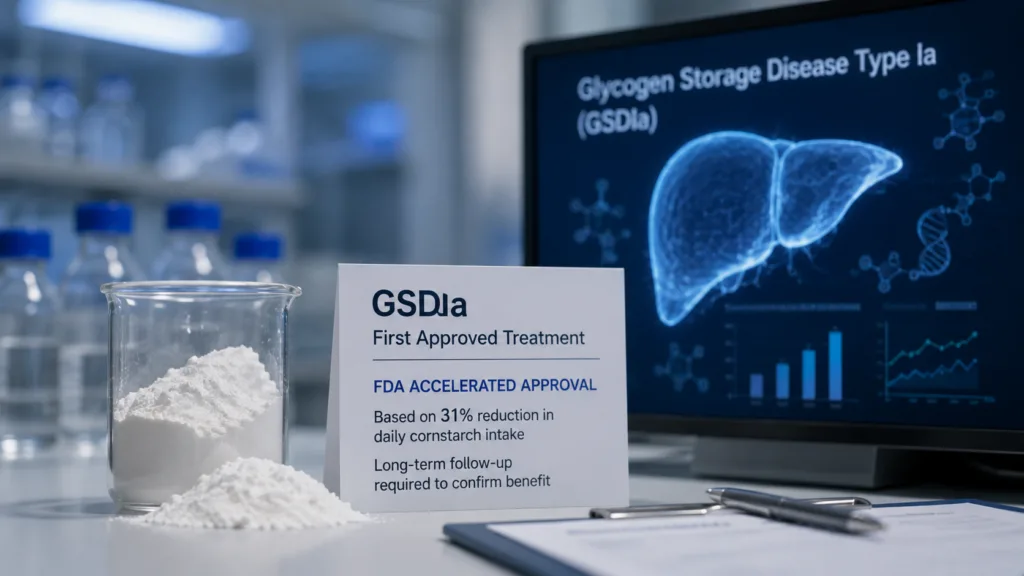
The August 19 decision rests on a surrogate endpoint: reduction in daily cornstarch requirement. In the randomized Phase 3 GlucoGene study, patients receiving Genglycos achieved a statistically significant mean 31% reduction from baseline in daily cornstarch intake compared with placebo after 48 weeks, while the treated group also reduced intake by an average of approximately one cornstarch dose per day relative to placebo. Because FDA used the accelerated approval pathway, Ultragenyx must now generate additional evidence confirming that reducing cornstarch dependence translates into durable clinical benefit.
The approval therefore represents both a major rare-disease milestone and an unusually instructive example of what accelerated approval means in gene therapy. Genglycos targets the biological cause of GSDIa by delivering a functional G6PC gene to liver cells, but approval does not establish that a single infusion permanently normalizes glucose control or removes the long-term risks associated with the disease.
Why has raw cornstarch been central to GSDIa treatment for decades?
Glycogen storage disease type Ia, also called von Gierke disease, results from pathogenic variants affecting G6PC, which encodes glucose-6-phosphatase. The enzyme is required for the final biochemical step that allows the liver and kidneys to release free glucose into the bloodstream from glycogen and other metabolic sources.
Without adequate glucose-6-phosphatase activity, patients struggle to maintain blood glucose during fasting. Even relatively short periods without food can produce dangerous hypoglycemia, while abnormal glycogen accumulation and metabolic disturbances can contribute to longer-term liver, kidney and other complications.
Dietary management attempts to work around that defect. Uncooked or specially formulated cornstarch digests relatively slowly, providing an extended external glucose source that can reduce the risk of fasting hypoglycemia. Patients may need cornstarch around the clock, including during the night, alongside frequent meals and restrictions on certain sugars.
The strategy can be lifesaving, but it is exceptionally demanding. Missing a dose or encountering an illness that disrupts normal intake can expose patients to severe hypoglycemia. Ultragenyx estimates that GSDIa affects approximately 1,500 to 2,500 people in the United States and 6,000 to 8,000 patients in commercially accessible markets worldwide.
Genglycos is intended to change the underlying metabolic capability rather than simply supply another source of glucose.
How does Genglycos attempt to restore glucose regulation?
Genglycos consists of a recombinant, non-replicating adeno-associated virus serotype 8 vector carrying a functional copy of the G6PC gene. The liver-directed vector is administered once, with the objective of delivering the gene to hepatocytes so they can produce functional glucose-6-phosphatase.
If sufficient enzyme activity is restored, the liver should become better able to release glucose during fasting or metabolic stress, reducing dependence on external cornstarch supplementation.
The distinction between gene delivery and genetic correction matters. Genglycos does not repair the patient’s inherited mutation throughout the body. AAV vector DNA generally persists primarily outside the chromosomes in an episomal form, and the durability of expression over many years remains one of the issues that long-term surveillance must clarify.
AAV8 also introduces eligibility and safety considerations. Patients with pre-existing antibodies capable of neutralizing the vector may not be appropriate for treatment, while immune responses following infusion can affect the liver and require corticosteroid management.
Genglycos is consequently not a simple one-day procedure followed by no further monitoring. Ultragenyx intends to distribute the treatment through a national network of Qualified Treatment Centers with gene therapy expertise.
What did the Phase 3 GlucoGene trial actually demonstrate?
The pivotal 48-week GlucoGene trial randomized 46 participants aged eight years and older to receive Genglycos at a dose of 1.0 × 10^13 genome copies per kilogram or placebo. Forty-four participants were included in the modified intention-to-treat efficacy population, comprising 20 patients assigned to Genglycos and 24 assigned to placebo.
The primary endpoint was the reduction in daily cornstarch requirement. FDA reported a 31% mean reduction from baseline for Genglycos relative to placebo, while the company reported a highly statistically significant treatment difference with a p-value below 0.001.
The result is clinically intuitive because a therapy that restores part of the missing metabolic function should allow patients to rely less heavily on external slow-release glucose. However, cornstarch reduction remains an intermediate measurement rather than a hard clinical outcome such as fewer severe hypoglycemic episodes, fewer hospitalizations, prevention of organ complications or improved survival.
That distinction explains the accelerated approval framework.
There is another important nuance in FDA’s review. The agency reported a numerical mean 3% increase in the percentage of glucose measurements falling below 70 mg/dL in Genglycos-treated patients compared with placebo. This does not negate the primary endpoint, but it argues against casually equating reduced cornstarch intake with proven elimination of hypoglycemia risk.
Patients will continue to need nutritional management and clinical supervision while physicians determine how much cornstarch can be reduced safely.
What safety issues accompany a one-time AAV8 gene therapy?
FDA identified several important risks.
Across clinical studies, serious adverse reactions among Genglycos-treated patients included anaphylaxis, adrenal insufficiency, elevated lactate and hypoglycemia. Common adverse reactions included increased liver transaminases, nausea, headache, constipation and hyperglycemia.
Hepatotoxicity is particularly relevant because the vector targets the liver and immune-mediated liver-enzyme elevations have occurred after treatment. Ultragenyx’s prescribing information requires corticosteroid treatment after infusion to mitigate hepatic reactions, while transaminases require monitoring for the first six months and longer when abnormalities persist.
Corticosteroid management introduces its own complications. Adrenal insufficiency has been reported during steroid use and tapering, making gradual withdrawal and monitoring necessary.
FDA also includes a tumorigenicity warning associated with the possibility of random AAV-vector DNA integration into human genomic DNA. The clinical significance of individual integration events remains uncertain, but long-term follow-up is an established feature of systemic AAV gene-therapy development.
Genglycos is contraindicated in patients with known severe hepatic fibrosis or cirrhosis and should not be used during pregnancy. FDA additionally reported a higher incidence of hypertriglyceridemia in Genglycos-treated participants than placebo recipients, at 29% versus 8%.
These risks reinforce why a gene therapy designed to reduce a burdensome lifelong dietary regimen still requires specialized administration and long-term medical oversight.
What does Ultragenyx have to prove after accelerated approval?
Continued approval may depend on verification of clinical benefit.
Ultragenyx has agreed to strengthen its existing GSDIa Disease Monitoring Program and collect at least two years of safety and efficacy information from 50 commercially treated patients and 20 controls. The control population will include patients who sought commercial therapy but cannot receive Genglycos because of anti-AAV8 antibodies.
The post-marketing programme will evaluate cornstarch burden, fasting tolerance and other measures while following treated patients in real-world care, where physicians can adjust diets using immediate glucose information. Previously treated trial participants and newly treated commercial patients will also be followed for a total of 10 years.
That design should generate evidence on durability that a 48-week placebo-controlled period cannot answer.
For a one-time gene therapy, durability is fundamental to the value proposition. A clinically meaningful reduction in cornstarch intake that persists for many years would represent a very different therapeutic outcome from an effect that gradually declines as transgene expression diminishes.
Long-term surveillance should also clarify whether partial restoration of hepatic glucose regulation reduces serious hypoglycemia or disease-related metabolic and organ complications.
Why does the approval matter strategically for Ultragenyx?
Genglycos is the company’s fifth FDA-approved product but its first internally developed gene therapy to cross the regulatory finish line, converting years of investment in AAV manufacturing and rare-disease development into a commercial product.
Ultragenyx manufactures Genglycos entirely at its Gene Therapy Manufacturing Facility in Bedford, Massachusetts. Owning that manufacturing capability gives the company greater control over production, quality and supply, although commercial-scale gene therapy manufacturing introduces substantial operational and regulatory responsibility.
The company also received a Rare Pediatric Disease Priority Review Voucher with the approval, adding a separate potentially valuable regulatory asset. FDA had previously granted the programme Fast Track and Regenerative Medicine Advanced Therapy designations.
The larger significance, however, belongs to the GSDIa community. Until August 19, there was no FDA-approved therapy for the condition, leaving nutritional management as the essential strategy for preventing dangerous fasting hypoglycemia.
Genglycos now provides the first therapy aimed directly at restoring the missing metabolic function. The Phase 3 evidence shows it can reduce cornstarch dependence, but accelerated approval appropriately leaves a second question open: whether that reduction produces durable improvements in the clinical outcomes that matter most.
For Ultragenyx, commercial launch begins while that confirmatory test continues.