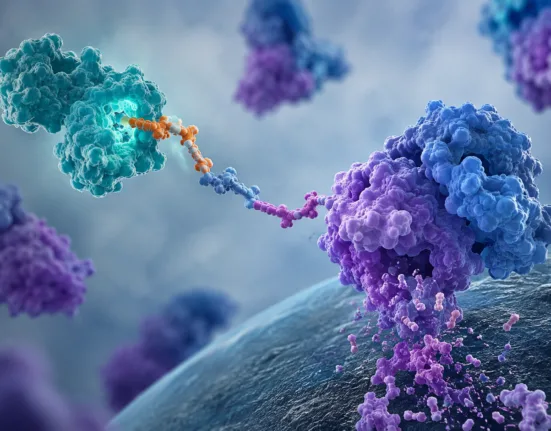
Amphista Therapeutics has presented new preclinical data at the American Association for Cancer Research Annual Meeting 2026 highlighting its orally bioavailable SMARCA2 and TEAD Targeted Glue degrader programs, alongside a bioRxiv publication detailing optimization strategies for its TEAD platform. The data reinforce early efficacy signals across oncology-relevant pathways and position both programs for potential candidate selection in the second half of 2026.
The significance of this update lies less in incremental data generation and more in how the UK-based biotech firm is attempting to expand the boundaries of targeted protein degradation. Much of the field’s clinical progress has relied on cereblon or von Hippel-Lindau ligase recruitment, which, while validated, has constrained target scope and introduced resistance risks. By leveraging alternative E3 ligases such as DCAF16 and FBXO22, Amphista Therapeutics is attempting to open a broader target landscape while differentiating itself in a crowded pipeline environment.
What SMARCA2 selectivity data reveal about overcoming paralog targeting challenges in synthetic lethality strategies
Selective targeting of SMARCA2 while sparing SMARCA4 remains a central challenge in exploiting synthetic lethality in SMARCA4-deficient tumors. The reported sustained selectivity and deep degradation following oral dosing suggest that Amphista Therapeutics may be addressing a specificity issue that has limited earlier approaches. Industry observers note that unintended SMARCA4 degradation could compromise both efficacy and safety, given its role in normal cellular function.
The associated suppression of downstream biomarkers, including KRT80 and PLAU, supports functional target engagement rather than purely pharmacologic activity. However, the translation of biomarker modulation into clinical benefit remains uncertain, particularly for chromatin remodeling targets where preclinical correlations have historically been inconsistent.
Clinicians tracking the field continue to view SMARCA2 as a high-value target, especially in lung and ovarian cancers characterized by SMARCA4 loss. Yet the competitive landscape is evolving, with multiple modalities including ATPase inhibitors and bromodomain-targeting approaches under development. The differentiating question is whether degradation-based selectivity can deliver a superior balance of efficacy and tolerability.
What TEAD degrader activity signals about targeting the Hippo pathway with sustained pharmacodynamic control
The TEAD program reflects a more ambitious attempt to intervene in the Hippo pathway, which has proven difficult to target due to the lack of conventional drug-binding pockets. By demonstrating tumor regression in a mesothelioma xenograft model and enabling intermittent dosing schedules, Amphista Therapeutics is highlighting a potential advantage of degradation over inhibition.
Regulatory watchers suggest that degradation of TEAD proteins may allow for prolonged pathway suppression, particularly given their long half-life. This aligns with the reported pharmacodynamic profile, where activity extends beyond dosing intervals and supports a once-every-three-day regimen. Such flexibility could influence both tolerability and adherence if replicated clinically.
The observed synergy with osimertinib in EGFR-mutant non small cell lung cancer models introduces a combination strategy that could broaden clinical applicability. Combination therapy remains central to oncology practice, but it also introduces complexity in trial design and safety evaluation. Whether the in vitro synergy translates into clinical benefit remains an open question.
What the use of alternative E3 ligases reveals about the next wave of targeted protein degradation platforms
The use of DCAF16 and FBXO22 reflects a broader shift toward diversifying E3 ligase engagement. Early-generation degraders were limited by a small number of well-characterized ligases, constraining both target selection and intellectual property differentiation. Expanding this toolkit is essential for addressing previously inaccessible proteins.
However, each ligase introduces its own biological context, which may influence efficacy and safety. Differential expression across tissues could affect both tumor selectivity and off-target activity, raising questions about generalizability. Regulatory watchers suggest that understanding ligase biology will become increasingly important as programs move into clinical testing.
Amphista Therapeutics’ emphasis on structure-guided design, supported by cryo-electron microscopy insights, reflects a broader industry move toward rational degrader optimization. While this approach improves design precision, it does not eliminate the translational gap that often emerges in first-in-human studies.
What oral bioavailability and intermittent dosing strategies could enable in next-generation targeted protein degradation oncology treatment paradigms
Oral bioavailability across both programs positions Amphista Therapeutics within a subset of developers aiming to align degraders with the convenience of small molecule therapies. As oncology increasingly shifts toward chronic disease management, ease of administration remains a meaningful differentiator.
Intermittent dosing enabled by sustained degradation effects could represent a shift in treatment paradigms. Clinicians suggest that reduced dosing frequency may help manage cumulative toxicity while maintaining efficacy. However, degradation-based pharmacology introduces complexity, as prolonged target suppression may also increase the risk of delayed adverse effects.
The decoupling of pharmacokinetics from pharmacodynamics is both an opportunity and a challenge. While it enables extended activity, it complicates dose optimization and safety monitoring, particularly in early-stage trials.
What clinical translation risks, resistance mechanisms, and manufacturing scalability challenges could still determine viability of targeted protein degradation programs
Despite encouraging preclinical data, several risks remain as the programs approach clinical transition. Species-specific differences in E3 ligase biology could lead to unexpected outcomes in human studies, making early safety evaluation critical. Regulatory watchers emphasize the need for cautious dose escalation and robust biomarker strategies in first-in-human trials.
Resistance mechanisms also remain an unresolved issue. While degradation can overcome certain forms of inhibitor resistance, it may introduce new vulnerabilities related to ligase engagement or ternary complex formation. The durability of response will therefore be a key measure of success.
Manufacturing complexity represents another potential constraint. Targeted Glue degraders often require precise chemical optimization, which can complicate scale-up. As Amphista Therapeutics advances toward candidate selection, maintaining consistency and scalability will be essential.
Competitive pressure is intensifying across the degradation landscape, with both large pharmaceutical companies and emerging biotechs advancing multiple programs. Differentiation will depend on demonstrating not only efficacy but also safety, dosing advantages, and compatibility with combination regimens.
What alternative E3 ligase targeting reveals about the next wave of targeted protein degradation platforms in oncology drug development
As Amphista Therapeutics moves toward candidate selection, attention will shift to early clinical trial design and execution. Clinicians will focus on evidence of target engagement, biomarker validation, and initial efficacy signals, while regulators will prioritize safety and translational consistency.
Industry observers suggest that strategic partnerships could accelerate development, particularly given the resource demands of oncology trials. The company’s openness to collaboration indicates an awareness of the need for external validation as programs progress.
The broader implication of these programs lies in their potential to extend the reach of targeted protein degradation beyond established ligase systems. If the selectivity, pharmacodynamic durability, and dosing flexibility observed preclinically can be replicated in humans, they could expand the therapeutic scope of degraders. If not, they will still contribute to refining the design principles that are shaping the next generation of oncology drug discovery.