Ensem Therapeutics, Inc. said it will present new preclinical data at the American Association for Cancer Research Annual Meeting 2026 for ETX-929, an oral pan-KRAS inhibitor, and ETX-880, a covalent WRN inhibitor. The update matters because both programs target some of the most commercially attractive and scientifically difficult areas in precision oncology, at a time when investors and drug developers are increasingly looking beyond narrow mutation-specific drugs toward broader, more durable strategies.
That matters because Ensem Therapeutics is not simply adding two early-stage assets to a crowded conference agenda. It is trying to position itself as a company that can compete in two of oncology’s most strategically important races, one centered on the long-running effort to drug KRAS beyond a single allele, and another focused on exploiting synthetic lethality in microsatellite instability-high cancers after checkpoint inhibitor resistance. In both cases, the company is arguing that molecular breadth, oral dosing, and selectivity could become the real differentiators, not just novelty alone.
Why Ensem Therapeutics is chasing a broader KRAS strategy instead of a narrower mutation niche
The central argument behind ETX-929 is that the current KRAS field still has a coverage problem. The first commercial breakthroughs in KRAS inhibition proved that the target was druggable, but they also exposed the limitation of allele-specific strategies. Drugs built around a single mutation can be highly effective in a defined subset of tumors, yet they do not solve the broader problem of heterogeneous KRAS-driven disease across tumor types and across patients whose cancers harbor different KRAS variants or even amplification without the most famous hotspot substitutions.
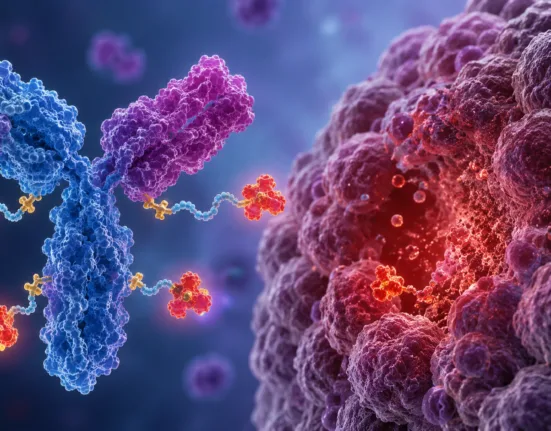
That is where Ensem Therapeutics is trying to plant its flag. ETX-929 is being positioned as an oral pan-KRAS inhibitor that can hit multiple mutant variants including KRASG12D, KRASG12V, and KRASG12C, while also addressing active and inactive conformations of the protein. If that profile holds up in humans, it could move the conversation from single-allele precision toward broader pathway suppression. For clinicians and drug developers, that would be meaningful because KRAS-driven cancers do not present as a neat one-mutation market. Pancreatic, colorectal, and non-small cell lung cancers can carry different KRAS alterations, and resistance patterns often make one-dimensional targeting look less durable than initially hoped.
The risk, of course, is that breadth in preclinical oncology often sounds more impressive than it performs in the clinic. A molecule that hits more KRAS states and more KRAS variants may also face a tougher balance between potency, safety, and pharmacokinetics. Pan-KRAS ambition is strategically attractive, but the closer a drug moves toward broad pathway control, the more scrutiny it will face on tolerability and therapeutic window. That is especially true in solid tumors where dosing consistency, combination compatibility, and long-term exposure matter as much as raw target engagement.
How ETX-929 could matter if pan-KRAS inhibitors finally start looking clinically usable
The deeper commercial question is not whether pan-KRAS is interesting, because that is already settled. The question is whether any company can translate that idea into a clinically usable, scalable, orally available drug that fits real-world oncology practice. Ensem Therapeutics appears to understand that, which is why it is emphasizing not only potency and selectivity but also dual ON and OFF state activity. That framing suggests the company wants investors and future partners to see ETX-929 as a molecule designed for durability rather than just breadth.
If the drug can truly inhibit multiple KRAS states, it may offer a theoretical advantage in tumors that shift signaling behavior under treatment pressure. Resistance remains one of the biggest structural weaknesses in targeted oncology. Even when an initial response is strong, pathway reactivation, adaptive signaling, or clonal evolution can rapidly erode benefit. A broader mechanism could help counter that problem, particularly if it is eventually combined with EGFR, SHP2, MEK, or immuno-oncology approaches. That creates strategic flexibility, which is often as important as first-line monotherapy promise.
However, the unresolved question is whether preclinical tumor control will translate into clinically relevant depth and duration of response in heavily pretreated or biomarker-diverse populations. Ensem Therapeutics said ETX-929 has completed IND-enabling studies and is anticipating IND clearance in the second quarter of 2026. That timeline is notable because it means the program is nearing its transition from platform narrative to human proof-of-concept. Once the molecule enters the clinic, the market will stop rewarding elegant mechanistic claims on their own and start asking harder questions about dose escalation, biomarker strategy, tumor type prioritization, and competitive differentiation.
Why WRN is becoming a more interesting target as MSI-H treatment gaps remain unresolved
ETX-880 reflects a different but equally important oncology thesis. MSI-H cancers are already a recognized biomarker-defined category with established sensitivity to checkpoint blockade, but that success has not closed the field. A substantial portion of patients either fail to respond or eventually relapse, which means the category still has room for targeted approaches that exploit the specific biology of mismatch repair deficiency. WRN has emerged as one of the most compelling synthetic lethal targets in that setting because MSI-H tumors appear unusually dependent on it for survival.
This is where Ensem Therapeutics is trying to move beyond the obvious checkpoint backdrop. ETX-880 is being developed as a covalent oral WRN inhibitor, and the company is emphasizing deep and sustained target inhibition along with selective anti-proliferative activity in MSI-H cancers. That positioning matters because synthetic lethality only becomes clinically useful when the dependency is strong enough to produce a meaningful efficacy signal without unacceptable collateral toxicity. In theory, WRN sits in a scientifically attractive middle ground. It is highly relevant to tumor biology in a defined subgroup, yet it is still early enough as a target that no single company owns the narrative.
That said, WRN remains a preclinical promise until human data establish that the mechanism is both druggable and tolerable in practice. Synthetic lethal targets can generate excitement because they offer a precision framework that looks cleaner than broad cytotoxic therapy, but they also come with translational risk. Tumor dependency may vary by histology, prior therapy, or genomic context. A biomarker-defined population can also become commercially narrower than expected if response is uneven or if diagnostic complexity slows adoption. For ETX-880, the science is intriguing, but the next real test will be whether early clinical development can identify where WRN inhibition works best and how durable that effect looks against standard care and immunotherapy sequencing.
What Ensem Therapeutics’ AACR 2026 update reveals about the company’s platform strategy
The AACR 2026 presentations are also a readout on Ensem Therapeutics itself, not only on its molecules. The company is using ETX-929 and ETX-880 to reinforce the broader claim that its Kinetic Ensemble platform can identify non-obvious binding opportunities against targets that have historically challenged drug developers. That is a familiar promise in precision oncology, especially in an era where companies increasingly mix AI-driven design claims with structure-based drug discovery language. Still, the commercial importance lies in whether the platform can repeatedly produce assets with clearly differentiated profiles, not just one-off scientific stories.
Ensem Therapeutics already has a clinical-stage program in ETX-636, a PI3Kα dual inhibitor and degrader being studied in PIK3CA-mutant, hormone receptor-positive, HER2-negative advanced breast cancer. That gives the company at least some credibility beyond concept-stage discovery. With ETX-929 and ETX-880 now highlighted in AACR preclinical sessions, Ensem is attempting to show portfolio depth across multiple high-value oncology categories. For investors, partners, and competitors, that matters because platform companies are judged not just by the novelty of their computational claims but by the repeatability of their pipeline output.
The limitation is that platform validation is slow and unforgiving. A company can generate strong conference interest with elegant target selection and persuasive preclinical packages, but the market ultimately asks a blunt question: do these assets survive clinical development better than conventionally discovered drugs? Until that answer becomes clearer, Ensem’s platform story remains promising but still provisional.
Why the next twelve months could determine whether this is platform momentum or just conference-stage promise
The next phase for Ensem Therapeutics will be more revealing than the AACR posters themselves. ETX-929 is nearing the clinic, and that means the company will soon have to show how it plans to prioritize tumor types, select patients, and define success in a field where competitors are already racing to expand KRAS coverage. ETX-880, still at the IND-enabling stage, will need to show that WRN inhibition can move from elegant synthetic lethal theory into a practical treatment strategy for MSI-H disease.
For the broader precision oncology market, these programs are interesting because they sit at the intersection of two major shifts. One is the move from ultra-narrow targeted drugs toward broader molecular strategies that can still preserve selectivity. The other is the continuing search for post-immunotherapy opportunities in biomarker-defined cancers. If Ensem Therapeutics can generate credible early clinical data on either front, it could improve its standing well beyond that of a typical discovery-stage oncology company.
But the caution flags remain clear. Preclinical best-in-class language is cheap in oncology and expensive to prove. Pan-KRAS programs must show they can broaden activity without collapsing under safety pressure. WRN programs must demonstrate that synthetic lethality is clinically robust, not just experimentally elegant. And platform companies must eventually prove that computational sophistication leads to better medicines, not just better investor decks.
That is why this AACR 2026 update matters. It does not confirm that Ensem Therapeutics has solved KRAS or unlocked WRN, but it does show the company is aiming at two targets that could materially raise its profile if the science survives contact with the clinic. In precision oncology, that is often where the real story begins.