Marengo Therapeutics has presented early-stage results from its STARt-002 clinical trial evaluating invikafusp alfa (Invika), a novel T cell immunotherapy candidate, in combination with sacituzumab govitecan (TRODELVY), an antibody-drug conjugate developed by Gilead Sciences. The data, shared during a late-breaking presentation at the 2025 San Antonio Breast Cancer Symposium, highlight the safety, pharmacodynamic activity, and early anti-tumor response of the investigational regimen in patients with metastatic breast cancer. A recommended dose for phase 2 has been selected, and patient enrollment is now underway in expansion cohorts across North America.
Why the Invika–TRODELVY regimen could reframe immune response in metastatic breast cancer
The significance of the STARt-002 trial lies in its attempt to move beyond the immunotherapy stagnation often seen in breast cancer. While checkpoint inhibitors have transformed treatment paradigms in melanoma and non-small cell lung cancer, breast cancer—particularly the triple-negative and hormone receptor-positive, HER2-negative subtypes—has remained relatively resistant to immune-based approaches. Marengo Therapeutics is targeting this unmet need through invikafusp alfa, a precision immunotherapy agent from its STAR platform, designed to selectively expand effector memory T cells bearing the Vβ6/10 T cell receptor subset.
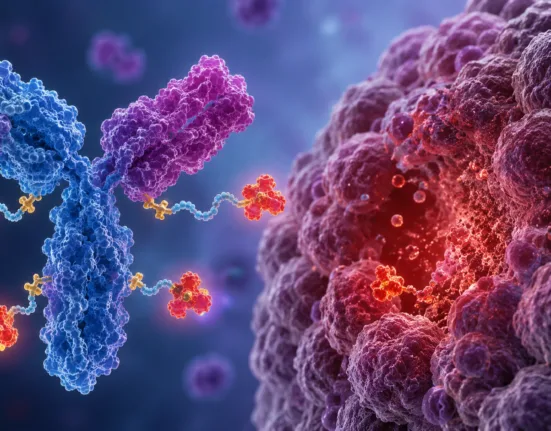
When paired with sacituzumab govitecan, a topoisomerase 1 inhibitor ADC already approved in metastatic breast cancer, invikafusp alfa introduces an immune-priming element that could potentiate tumor killing by ADC payloads. Early pharmacodynamic data from the STARt-002 study confirm that invikafusp alfa maintains its activity even in combination settings. The observed expansion of Vβ6/10 T cells across all evaluated dose levels suggests the immune system is being re-engaged in a controlled and selective manner, which could be critical for overcoming resistance in immunologically cold tumor types.
What the Vβ6/10 expansion tells us about the mechanism of action and therapeutic promise
Invikafusp alfa’s ability to selectively expand Vβ6/10 T cells represents more than a pharmacodynamic readout. It is core to the scientific rationale behind the drug. This T cell subset has been associated with durable anti-tumor responses in multiple preclinical models. Unlike broadly stimulating the immune system, invikafusp alfa offers a more refined method of immune activation, reducing the risk of systemic inflammation while enhancing tumor-specific cytotoxicity.
The persistence of this mechanism in patients co-treated with sacituzumab govitecan provides mechanistic validation that the STAR platform can maintain fidelity in complex therapeutic settings. While immunotherapy combinations have historically been limited by overlapping toxicity or signal interference, this early readout supports the notion that invikafusp can function as a backbone immunomodulator without compromising the efficacy or safety of the co-administered ADC.
How invikafusp alfa builds on prior PD-1 resistance findings to create a new immunotherapy niche
Previous data from Marengo Therapeutics indicated that invikafusp alfa has single-agent activity in PD-1 refractory tumors, including subsets of breast cancer. This is not a trivial observation. Resistance to PD-1 blockade remains a major barrier in metastatic breast cancer, and the oncology field has struggled to convert checkpoint failures into second-line immune wins.
The STARt-002 trial now builds on this premise by layering in a cytotoxic modality. Rather than relying solely on immune recognition, the regimen leverages targeted cell killing through sacituzumab govitecan while simultaneously conditioning the tumor microenvironment to be more responsive to T cell attack. If sustained in phase 2 and beyond, this could establish invikafusp alfa as a foundational asset for immunotherapy-based combinations across tumor types where checkpoint monotherapy has not delivered on expectations.
Why the ADC–IO combination model has struggled and how this trial is different
Combination strategies pairing antibody-drug conjugates with immunotherapy have generally failed to demonstrate meaningful synergy in solid tumors. In many trials, adding immune-based agents to ADCs produced only marginal improvements in progression-free survival or introduced toxicities that offset any clinical benefit. A key reason has been the absence of genuine immunologic reprogramming in patients receiving ADCs. Most tumor microenvironments in breast cancer lack the conditions for immune effector cells to infiltrate or expand effectively.
Marengo Therapeutics appears to be tackling this problem directly by activating a specific and expandable population of T cells that are thought to drive durable immunity. By avoiding generalized immune stimulation, the company may also be reducing the likelihood of off-target effects that have derailed other dual-agent approaches. The early safety data from STARt-002 suggest that the combination’s profile is in line with that of each agent alone, reinforcing its feasibility for long-term development.
What phase 2 expansion could clarify about response durability and commercial viability
The transition to phase 2 marks a pivotal moment for both the STAR platform and Marengo Therapeutics’ broader oncology ambitions. The current expansion cohorts target two metastatic subtypes with very different biological behavior and treatment landscapes: triple-negative breast cancer and HR-positive, HER2-negative breast cancer. Both represent large markets with high clinical need, particularly for regimens that can deliver immune durability after initial progression.
What industry observers are now watching is whether invikafusp alfa can translate pharmacodynamic signals into measurable clinical endpoints such as confirmed responses, progression-free survival, or even improved time to next treatment. While early data include two confirmed partial responses, these signals must be interpreted cautiously given the small patient numbers and short follow-up. Still, the willingness to move forward into larger cohorts suggests internal confidence in the drug’s safety and mechanistic alignment with ADC strategies.
Why the STAR platform may represent more than a single-drug pipeline
At the heart of this clinical program is the STAR platform itself, a proprietary fusion technology that combines T cell receptor-targeting antibodies with co-stimulatory signaling domains. Marengo Therapeutics describes this as a “non-clonal” TCR activation method, implying a broader and more durable immune engagement compared to conventional checkpoint inhibition or bispecific antibody strategies.
If invikafusp alfa proves successful, it could unlock a new paradigm where immunotherapy regimens are modular, with STAR-based agents forming the common denominator. That would position Marengo Therapeutics as a potential platform player capable of supporting multiple oncology indications, either as monotherapy in PD-1 resistant settings or as part of complex therapeutic cocktails involving ADCs, cell therapies, or radiopharmaceuticals.
What risks remain despite encouraging biological signals
Despite the positive tone of early data, there are still substantial risks to consider. The trial has yet to show long-term clinical benefit, and the immune selectivity that underpins the STAR platform could prove insufficient in more heterogeneous patient populations. Manufacturing complexity is another potential headwind. Fusion proteins that combine multiple immune functions in a single molecule are notoriously challenging to scale, both technically and in terms of regulatory oversight.
From a development perspective, combining two potent agents—one investigational and one approved—often triggers heightened regulatory scrutiny, especially around potential overlapping toxicities, pharmacokinetics, and dose optimization. Marengo Therapeutics will need to navigate these hurdles while also demonstrating that invikafusp alfa can be safely integrated into future standards of care.
Why selective immune backbones could shift the oncology treatment model
There is growing industry consensus that the future of immuno-oncology lies not in isolated checkpoint inhibition, but in the development of versatile immune priming agents that can unlock efficacy in resistant tumor types. Invikafusp alfa is being positioned precisely within this emerging category. Unlike checkpoint inhibitors that rely on pre-existing immune responses, invikafusp aims to generate new responses where few exist.
The strategic implication is that STAR-based agents could become backbone components, used across various combinations to improve immune engagement and therapy durability. If proven effective, this could reshape how oncologists approach tumor types historically considered immunologically inert. Breast cancer may simply be the first testing ground for a broader immunologic modularity.
Outlook: A differentiated approach with real potential, but validation still needed
The STARt-002 trial represents an important inflection point for Marengo Therapeutics. The combination of invikafusp alfa and sacituzumab govitecan offers a mechanistically grounded, biologically active, and early-stage safe regimen that could fill longstanding gaps in metastatic breast cancer treatment. However, key clinical questions remain unresolved, and the leap from pharmacodynamic confirmation to sustained patient benefit is significant.
Should the phase 2 cohorts deliver on their promise, Marengo Therapeutics may find itself with a genuinely differentiated platform that goes beyond breast cancer. Until then, the sector will watch closely to see whether invikafusp alfa can emerge not only as a product but as a paradigm shift in how immunotherapy is deployed in solid tumors.