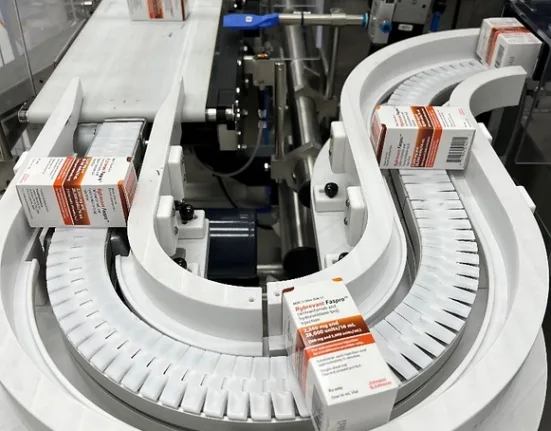
Johnson & Johnson has secured U.S. Food and Drug Administration accelerated approval for Rybrevant Faspro, or amivantamab and hyaluronidase-lpuj, as a single-agent treatment for adults with recurrent or metastatic head and neck squamous cell carcinoma whose disease has progressed on or after platinum-based chemotherapy and an anti-PD-(L)1 antibody. The indication specifically excludes patients with human papillomavirus-associated oropharyngeal squamous cell carcinoma identified by p16 testing, making the approval narrower than a general authorisation for recurrent or metastatic head and neck cancer.
The November 5 decision is based on the Phase 1b/2 OrigAMI-4 study, where 42% of 102 patients achieved a confirmed objective response by blinded independent central review. Complete responses were reported in 15% of patients, partial responses in 28%, and 56% of responders maintained their response for at least six months. The FDA used overall response rate and duration of response as the basis for accelerated approval, meaning longer-term clinical benefit has not yet been confirmed.
The approval moves amivantamab into a second major solid-tumour setting after its established role in EGFR-mutated non-small cell lung cancer and gives Johnson & Johnson a new option in a post-platinum, post-immunotherapy population with limited treatment choices. The FDA described it as the first drug approval in roughly a decade for patients with recurrent or metastatic head and neck squamous cell carcinoma who had previously received platinum-based chemotherapy, although the commercial and survival significance of the new therapy will depend on confirmatory evidence and real-world uptake.
What did the OrigAMI-4 study actually establish about Rybrevant Faspro in advanced HNSCC?
OrigAMI-4 is an open-label, multicohort Phase 1b/2 programme evaluating subcutaneous amivantamab across head and neck cancer settings. The efficacy population supporting the accelerated approval consisted of 102 adults with recurrent or metastatic disease that had progressed following both platinum-based chemotherapy and an anti-PD-(L)1 antibody, excluding HPV-associated oropharyngeal squamous cell carcinoma from the primary efficacy population.
The confirmed objective response rate of 42% had a 95% confidence interval of 32% to 52%, indicating substantial antitumour activity in a population whose previous systemic treatment had already failed. Fifteen per cent of patients achieved a complete response, which is notable because complete disappearance of measurable disease is uncommon in this late-line setting, while 28% achieved partial responses. More than half of responding patients maintained their response beyond six months, with observed response durations extending beyond 19 months in some cases at the data cut-off.
These results are clinically relevant but should not be translated into a proven survival advantage. OrigAMI-4 was not a randomized comparison demonstrating that Rybrevant Faspro improves overall survival or progression-free survival relative to a standard treatment. Accelerated approval allows the FDA to act on a response-based endpoint in a serious disease with unmet need while requiring Johnson & Johnson to verify whether the tumour responses translate into durable clinical benefit.
That evidentiary boundary is central to interpreting the approval. A 42% response rate is stronger than the response rates historically associated with several later-line options, but cross-trial comparisons are inherently unreliable because patient characteristics, previous therapies, HPV status, response assessment and follow-up differ between studies. The value of Rybrevant Faspro will ultimately be defined by prospective evidence rather than comparisons assembled across unrelated trials.
Why does the FDA label exclude HPV-associated oropharyngeal squamous cell carcinoma?
Head and neck squamous cell carcinoma is not one biologically uniform disease. Oropharyngeal cancers associated with HPV can differ substantially from HPV-unrelated tumours in molecular biology, prognosis and treatment response, which is why Johnson & Johnson and the FDA separated these patients in the clinical-development strategy.
The approved Rybrevant Faspro indication does not include HPV-associated oropharyngeal squamous cell carcinoma, defined through p16 immunohistochemistry. That limitation prevents the OrigAMI-4 efficacy signal from being extended to a population for which the supporting evidence did not establish the same treatment effect.
The distinction has also appeared in Johnson & Johnson’s first-line development programme. In an exploratory OrigAMI-4 cohort reported at the 2026 European Society for Medical Oncology Congress, the company reported a 77% response rate among 22 evaluable patients with HNSCC other than HPV-associated oropharyngeal disease receiving subcutaneous amivantamab with pembrolizumab and carboplatin, compared with 29% among seven patients with HPV-associated oropharyngeal cancer. Those groups were extremely small, however, and the results are early Phase 1b/2 data rather than evidence of a validated biological treatment difference.
The FDA restriction therefore reflects evidence precision rather than a general conclusion that amivantamab cannot work in HPV-associated disease. Future studies could generate different evidence, but the current marketed indication should remain confined to the population formally supported by the regulatory package.
How does dual EGFR and MET targeting give amivantamab a different strategy in head and neck cancer?
Amivantamab is a bispecific antibody designed to engage both epidermal growth factor receptor and mesenchymal-epithelial transition factor, or MET. EGFR signalling is deeply established in head and neck squamous cell carcinoma biology, while MET signalling can contribute to tumour growth, invasion and treatment resistance, giving simultaneous targeting of the two pathways a mechanistic rationale.
That design differentiates amivantamab from older EGFR-only strategies such as cetuximab. It also builds on Johnson & Johnson’s experience with amivantamab in EGFR-mutated non-small cell lung cancer, where the antibody has already secured multiple regulatory indications in both intravenous and subcutaneous formulations.
Mechanistic differentiation does not establish superior clinical efficacy. Head and neck cancer differs substantially from EGFR-mutated lung cancer, and the current approval is based on observed tumour responses rather than proof that dual pathway inhibition produces better survival than alternative later-line treatments.
What the OrigAMI programme does establish is that the EGFR-MET strategy has sufficient clinical activity in selected HNSCC populations to justify a regulatory approval and a larger confirmatory programme. Whether the dual-target mechanism becomes a central part of head and neck cancer treatment will depend on what randomized Phase 3 testing shows once it is combined with established first-line therapies.
Why does subcutaneous delivery matter if patients still need specialist monitoring?
Rybrevant Faspro combines amivantamab with recombinant human hyaluronidase using Halozyme Therapeutics’ ENHANZE drug-delivery technology, allowing administration beneath the skin rather than through the intravenous infusion required for the original Rybrevant formulation. The subcutaneous format has already been incorporated into Johnson & Johnson’s lung-cancer franchise and now extends into head and neck cancer.
Administration convenience can matter in a population that may already face substantial hospital visits, supportive care and treatment burden, but subcutaneous delivery should not be mistaken for a low-monitoring therapy. The prescribing information requires premedication and monitoring for hypersensitivity and administration-related reactions, particularly around the first dose.
In the broader OrigAMI-4 safety population, administration-related reactions occurred in 16% of patients receiving Rybrevant Faspro, with 91% of those reactions occurring at the first administration. All reported administration-related reactions in that dataset were Grade 1 or Grade 2, but the first dose still requires monitoring in a setting equipped to manage potentially serious reactions.
The commercial advantage of subcutaneous administration will therefore depend on more than injection time. Oncology centres will assess whether the formulation reduces chair utilisation and infusion-resource requirements while preserving appropriate observation, supportive management and workflow efficiency.
What does the safety dataset reveal about the trade-off behind the 42% response rate?
The safety profile is material because these patients have advanced disease and may already have accumulated toxicity from platinum chemotherapy, immune checkpoint inhibitors and other systemic treatments. In the 102-patient safety population supporting the HNSCC approval, the most common adverse reactions were rash in 79%, fatigue in 39%, nail toxicity in 35%, stomatitis in 32% and oedema in 28%.
Serious adverse reactions occurred in 39% of patients. Events reported in at least 2% included pneumonia at 8%, haemorrhage at 4.9%, dysphagia and pneumothorax at 2.9% each, and anaemia, dyspnoea, fatigue, elevated hepatic enzymes and interstitial lung disease or pneumonitis at 2% each. Fatal adverse events occurred in 6% of patients, including sudden death, myocardial ischaemia, tumour haemorrhage, aspiration pneumonia and interstitial lung disease or pneumonitis, although the occurrence of a fatal event during treatment does not by itself establish that the drug caused the event.
Interstitial lung disease and pneumonitis require particular attention because amivantamab can cause severe and fatal pulmonary toxicity. In OrigAMI-4, ILD or pneumonitis occurred in approximately 1.5% of the broader single-agent safety population and included one fatal case, leading affected patients to discontinue therapy.
Dermatologic toxicity is another predictable consequence of targeting EGFR. Rash occurred in more than four-fifths of the broader OrigAMI-4 population used for some safety analyses, including Grade 3 events, which means supportive management and dose modification can become part of routine treatment rather than an exceptional occurrence.
Why is OrigAMI-5 more important than the accelerated approval headline?
Accelerated approval does not close the regulatory story. The FDA has formally listed the Rybrevant Faspro HNSCC indication among ongoing oncology accelerated approvals and requires completion of OrigAMI-5 to verify and describe clinical benefit in HPV-unrelated recurrent or metastatic head and neck squamous cell carcinoma.
OrigAMI-5 moves amivantamab earlier in treatment, combining the subcutaneous antibody with established standard-of-care agents rather than testing it only after platinum and immunotherapy have failed. Johnson & Johnson is evaluating a regimen incorporating amivantamab, pembrolizumab and carboplatin in first-line recurrent or metastatic disease, making the trial strategically important both as the confirmatory requirement and as a potential route into a much larger treatment population.
Early company-reported Phase 1b/2 data provide a rationale for the Phase 3 programme but should not be treated as confirmation. Among 22 non-HPV-associated oropharyngeal HNSCC patients in one first-line OrigAMI-4 cohort, the amivantamab, pembrolizumab and carboplatin regimen generated a 77% confirmed response rate, with 14% complete responses and 65% of responses ongoing at a median follow-up of 10.6 months. The tiny sample size, absence of a randomized comparator and conference-stage evidence mean those results are hypothesis-strengthening rather than definitive.
A successful randomized Phase 3 result could do considerably more than preserve the current accelerated approval. It could support use of amivantamab earlier in the treatment pathway, where patient numbers, duration of therapy and commercial opportunity could be materially greater than in the heavily pretreated population covered by the November label.
What does the approval mean for Johnson & Johnson’s strategy beyond lung cancer?
Rybrevant has so far been identified primarily with EGFR-mutated lung cancer, where Johnson & Johnson has built an increasingly broad franchise around amivantamab, Lazcluze and different chemotherapy combinations. The HNSCC approval demonstrates that the company is attempting to turn the antibody’s dual EGFR-MET mechanism into a broader solid-tumour platform rather than leaving it confined to molecularly selected lung cancer.
Head and neck cancer offers a different commercial model because the newly approved indication is not based on a specific EGFR mutation. Instead, Johnson & Johnson is targeting disease biology in a defined clinical setting after failure of platinum chemotherapy and immune checkpoint treatment.
The approval also expands the value of the subcutaneous Rybrevant Faspro formulation and indirectly benefits Halozyme Therapeutics, whose ENHANZE technology enables the formulation. Halozyme has increasingly built its business around royalty and collaboration economics from partners converting high-value biologic medicines from intravenous to subcutaneous delivery, so each additional commercial indication broadens the potential utilisation of the platform.
For Johnson & Johnson, however, the most important question is whether amivantamab can move from an accelerated late-line approval into a validated first-line treatment strategy. That outcome would depend not on the existing 42% response rate but on OrigAMI-5 demonstrating confirmatory clinical benefit against an appropriate standard-of-care comparator.
Can a 42% response rate become a durable change in head and neck cancer treatment?
The November approval gives clinicians a new targeted treatment for a population that has already progressed through two major components of contemporary systemic therapy. The magnitude of response in OrigAMI-4, including complete responses in 15% of patients and responses lasting beyond six months in more than half of responders, is sufficient to explain why the FDA used its accelerated approval pathway.
The evidence is not yet equivalent to demonstrating longer survival or a better quality of life than existing alternatives. A single-arm response dataset can support earlier regulatory access when unmet need is substantial, but it leaves uncertainty around comparative benefit, durability across a larger population and how much observed tumour shrinkage ultimately alters the course of the disease.
Safety and patient selection will also affect real-world uptake. High rates of rash, meaningful serious adverse-event burden, pulmonary toxicity risk and the exclusion of HPV-associated oropharyngeal disease mean Rybrevant Faspro will require deliberate clinical integration rather than automatic adoption across recurrent or metastatic HNSCC.
Johnson & Johnson has now achieved the first objective by moving amivantamab beyond lung cancer and into an FDA-approved head and neck cancer indication. The decisive test comes next: OrigAMI-5 must show that adding the EGFR-MET bispecific to first-line therapy produces a clinical benefit robust enough to verify the accelerated approval and potentially move Rybrevant Faspro much earlier in the treatment pathway.