Veracyte’s ASCO 2026 data could sharpen the commercial case for genomic cancer diagnostics
Veracyte’s ASCO data could sharpen the case for genomic testing in breast and prostate cancer. Read why adoption still faces hard tests.


Veracyte’s ASCO data could sharpen the case for genomic testing in breast and prostate cancer. Read why adoption still faces hard tests.
Could AstraZeneca’s latest ASCO 2026 cancer data reshape future treatment sequencing in liver and breast oncology? Read the full analysis.
Discover how Sapu Nano’s Deciparticle platform could reshape oncology drug delivery and expand intravenous everolimus development.
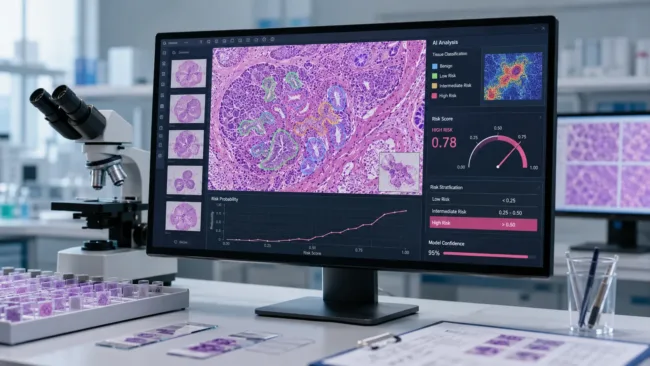
AI can read pathology slides, but can it change breast cancer treatment decisions? ArteraAI Breast puts that question before clinicians and payers.

Race matters in care access, but tumor biology may drive response. Agendia’s FLEX data sharpen the breast cancer equity debate.
Artera has won CE marking for its AI prostate and breast cancer assays. Read what this means for oncology diagnostics, adoption, and global expansion.
Pfizer’s ASCO 2026 oncology data span lorlatinib, talazoparib, tucatinib and new pipeline assets. Read what the updates could change next.
Hologic’s latest breast imaging AI data suggests stronger detection of hard-to-find cancers. Read what it could mean for screening adoption.
Discover how AKTX-101 could redefine TROP2 ADC resistance strategies in oncology. Read the full analysis now.
Salubris Biotherapeutics’ JK06 showed early AACR 2026 activity in NSCLC and breast cancer. Read what it could mean for the 5T4 ADC race.