Enhertu cut breast cancer recurrence risk by 53% against T-DM1, but will lung toxicity affect its use?
Enhertu wins EU approval after cutting invasive recurrence or death risk by 53% versus T-DM1. Lung toxicity remains a key consideration.


Enhertu wins EU approval after cutting invasive recurrence or death risk by 53% versus T-DM1. Lung toxicity remains a key consideration.
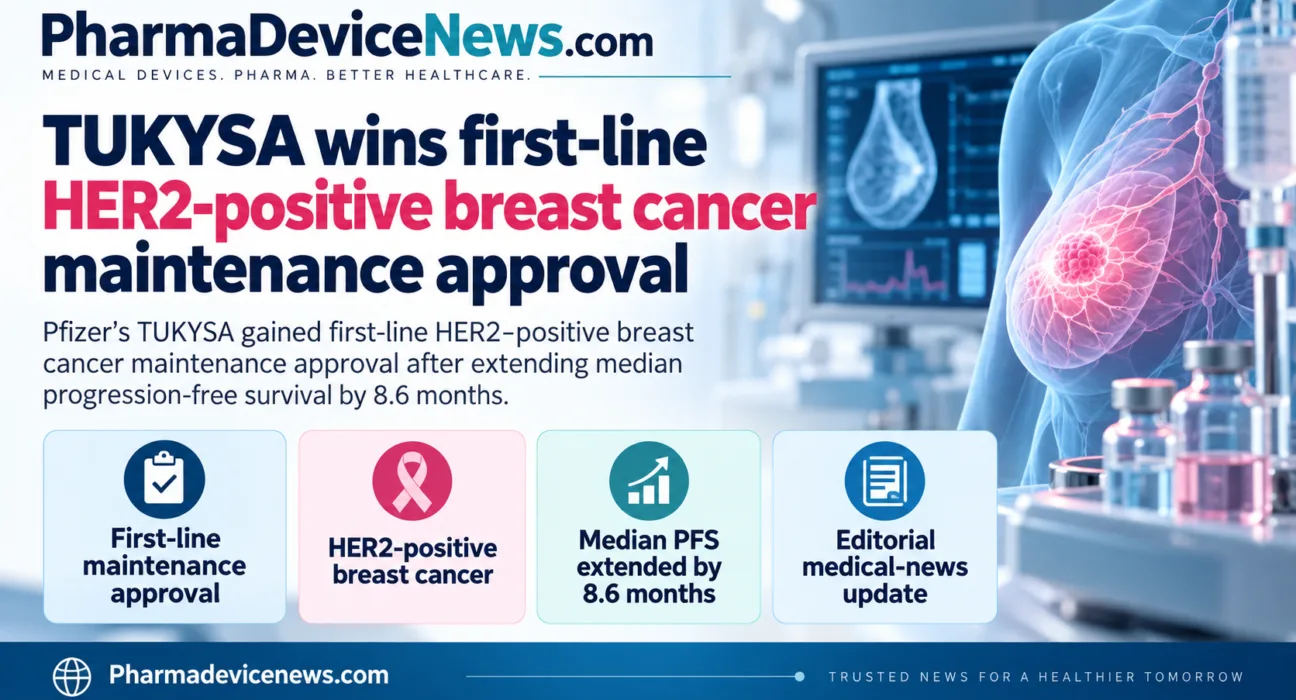
Pfizer’s TUKYSA gained first-line HER2-positive breast cancer maintenance approval after extending median PFS by 8.6 months.
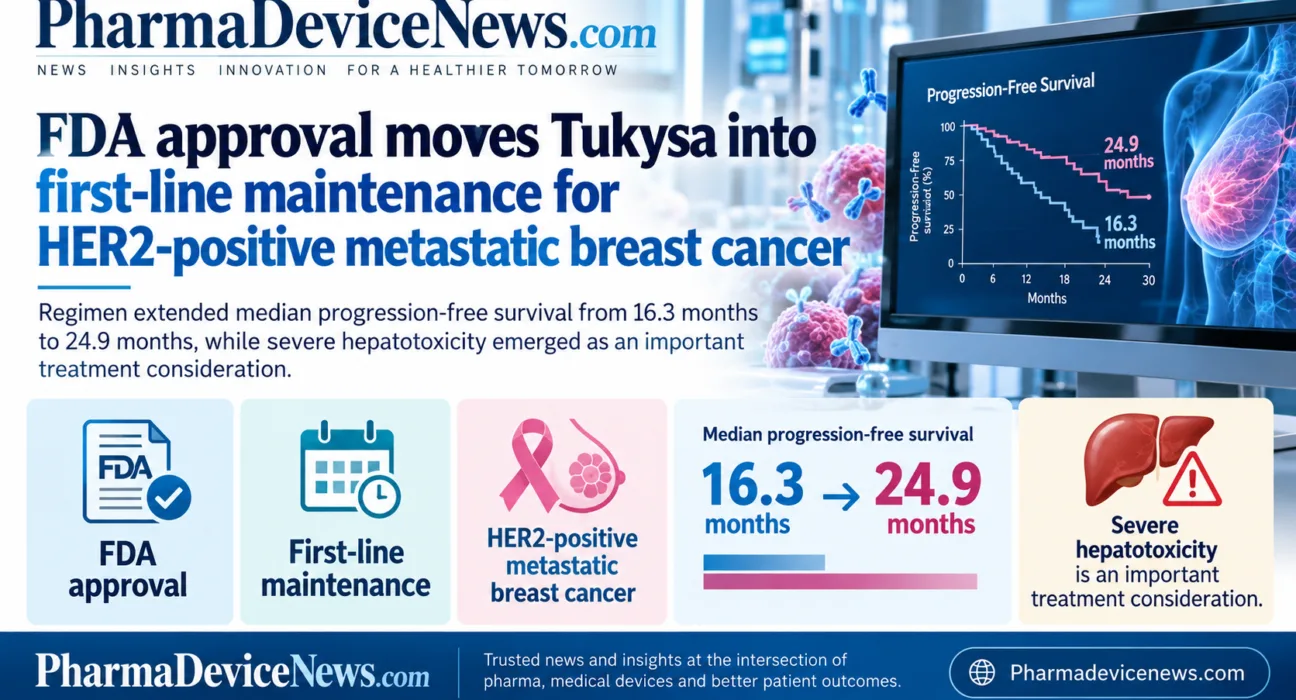
FDA approval moves Pfizer’s Tukysa into first-line maintenance for HER2-positive metastatic breast cancer after the regimen extended median progression-free survival from 16.3 to 24.9 months, although severe hepatotoxicity has emerged as an important treatment consideration.

Enhertu reduced the risk of progression or death by 37% against pembrolizumab plus chemotherapy in first-line HER2-mutant metastatic non-small cell lung cancer, potentially opening another earlier-treatment market for AstraZeneca and Daiichi Sankyo.

The FDA has expanded HYRNUO into first-line advanced HER2-mutated non-small cell lung cancer after a 75% response rate in an early-phase cohort. The approval gives Bayer an important head start, but rival oral therapies and unfinished confirmatory trials mean the long-term treatment hierarchy remains unsettled.

The European Commission has approved AstraZeneca and Daiichi Sankyo’s Enhertu with pertuzumab for first-line HER2-positive metastatic breast cancer after DESTINY-Breast09 showed a 44% reduction in the risk of progression or death compared with long-standing THP therapy.

EU regulators back Enhertu plus pertuzumab for first-line HER2-positive metastatic breast cancer, shifting focus to approval, safety and access.

Avacta’s next AVA6103 data will test sustained exatecan release in cancer patients. Read what the FOCUS-01 results could mean for its platform.

The European approval takes Enhertu beyond organ-specific oncology, although its clinical reach will depend on reliable HER2 testing, reimbursement and safety management.

Find out how Enhertu’s EU recommendation could reshape HER2 targeted treatment for metastatic solid tumors.