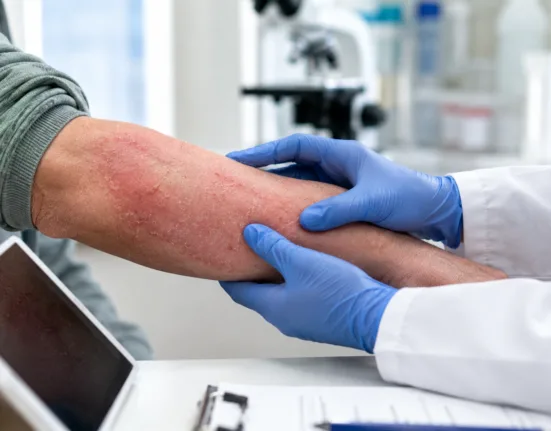
Galderma presented phase II data at the 2026 American Academy of Dermatology Annual Meeting showing that nemolizumab, the dermatology company’s anti-IL-31 receptor alpha monoclonal antibody, produced clinically meaningful and sustained reductions in skin lesions and itch in children aged 2 to 11 with moderate-to-severe atopic dermatitis over 52 weeks. The trial (NCT04921345) assessed pharmacokinetics, safety, and efficacy across weight-based dosing cohorts, with findings consistent with the established profile of nemolizumab in adults and adolescents for whom the drug is already approved in multiple markets.
Why the under-12 age group represents a meaningful regulatory gap
The pediatric atopic dermatitis treatment landscape has expanded considerably over the past decade, but the youngest patients remain the most underserved segment. Dupilumab, the IL-4 receptor alpha inhibitor from Sanofi and Regeneron, holds the broadest pediatric label, covering children from 6 months of age following a series of age-specific regulatory submissions. Tralokinumab and lebrikizumab, both targeting IL-13, are approved for patients aged 12 and older. Nemolizumab received FDA approval in December 2024 for adolescents and adults but had not yet generated controlled data in children below 12. The new phase II results begin to close that gap with a dataset covering the 2-to-11 age band specifically, and with dosing parameters calibrated by weight rather than applied uniformly.
The clinical rationale for studying nemolizumab specifically in younger children carries additional biological logic. IL-31 expression appears elevated in pediatric patients compared with adults, which has led researchers to suggest the drug may achieve relatively stronger itch suppression in this population. If confirmed in larger controlled studies, that biological asymmetry could influence treatment sequencing decisions, particularly for children presenting with severe pruritus as the dominant symptom rather than skin inflammation.
What the phase II response rates reveal about the drug’s pediatric positioning
The trial enrolled children across two age cohorts and three weight-based dosing tiers: 5 mg for patients weighing 10 kg to under 20 kg, 10 mg for those weighing 20 kg to under 30 kg, and 15 mg for those at or above 30 kg. Across the two main cohorts, 41 to 47 percent of patients achieved an Investigator’s Global Assessment score of 0 or 1, indicating clear or almost clear skin, by week 16. EASI-75, the threshold for a 75 percent reduction in eczema area and severity, was reached by 69 to 73 percent of patients in the same window. Itch relief, measured by a score of 4 or above on the Peak Pruritus Numerical Rating Scale, was observed as early as week 1, with 72 percent of children aged 2 to 6 and 59 percent of children aged 7 to 11 meeting that threshold by week 16. Comparable or higher response rates were reported at week 52.
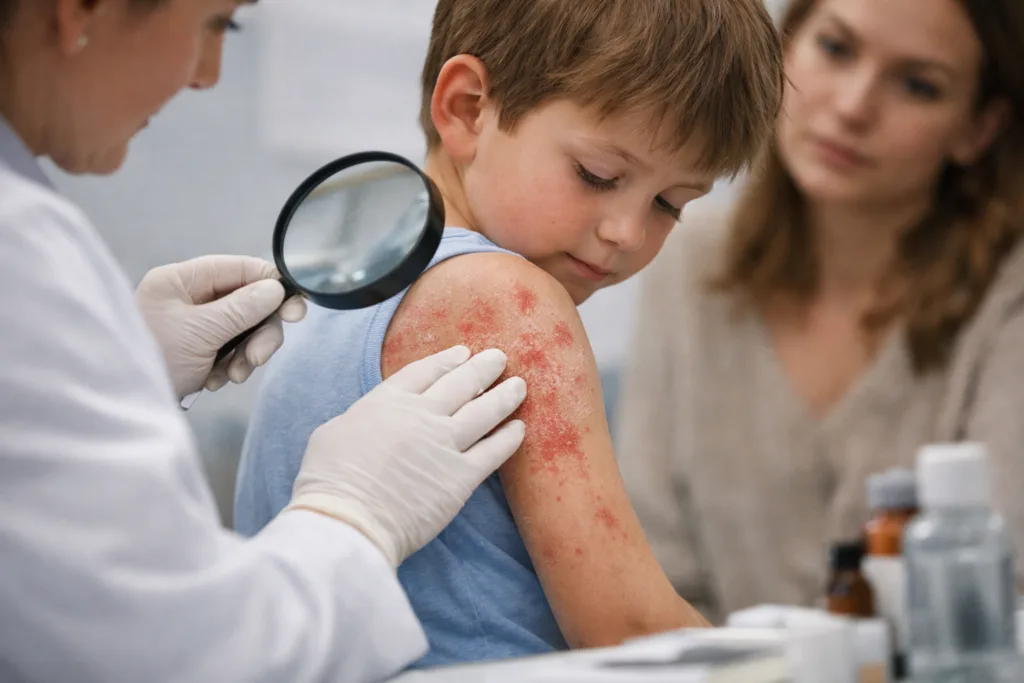
Contextualising these numbers requires care. The pivotal ARCADIA 1 and 2 phase III trials in adults and adolescents showed IGA success rates of 36 to 38 percent and EASI-75 rates of 42 to 44 percent at week 16. The pediatric phase II results appear numerically higher on both endpoints, which is notable but not directly comparable given the absence of placebo arms of the same design, different trial populations, and the phase II rather than phase III designation. Network meta-analyses examining the adult and adolescent data have suggested nemolizumab may be somewhat less effective than dupilumab on inflammatory endpoints such as EASI, while performing comparably on itch metrics. Whether that pattern holds in the 2-to-11 cohort cannot be determined from the current dataset alone.
Pharmacokinetic alignment with adults matters more than it appears
One of the most strategically significant findings from the trial is that the weight-based pediatric doses produced pharmacokinetic exposure broadly consistent with that seen in adults and adolescents at approved doses. This matters because drug regulators increasingly rely on pharmacokinetic bridging as a pathway to support pediatric labelling extensions without requiring a full replicated phase III programme in children. If the exposure data hold under regulatory scrutiny, Galderma may be positioned to submit for an age extension without the timeline and cost burden of a complete pivotal trial. The company has not publicly disclosed its regulatory filing strategy for the under-12 indication, but the pharmacokinetic framing in the data release is consistent with a bridging approach.
The safety profile reported in the phase II study was described as similar to that observed in adults and adolescents. No new safety signals were characterised in the press release. This consistency is important for any future regulatory submission but should be interpreted with appropriate caution given the phase II scale. The adult and adolescent ARCADIA programme enrolled more than 1,700 patients; the pediatric phase II trial operated at a smaller scale, and rare adverse events may not surface until a larger paediatric population has been exposed.
The itch-first mechanism creates a differentiated argument at the prescribing level
Nemolizumab’s distinction within the crowded atopic dermatitis biologic class is not primarily about skin clearance but about the speed and depth of itch relief. IL-31 is the cytokine most directly implicated in the neuroinflammatory itch pathway in atopic dermatitis, and blocking the receptor rather than the cytokine itself provides the mechanism Galderma uses to define nemolizumab’s profile. In adult and adolescent trials, itch improvement was detectable within the first week of treatment, and the pediatric phase II data replicated that rapid onset. For children, where severe itch drives sleep disruption, school absenteeism, and behavioural consequences, this early symptom relief carries clinical weight beyond what endpoint tables alone convey.
Clinicians managing children below 12 who fail topical corticosteroids or calcineurin inhibitors currently have very limited approved systemic options. Dupilumab covers children from 6 months, but for patients where itch is the primary burden and where dupilumab has shown reduced efficacy over time or has generated inadequate responses, the field has lacked an approved alternative. Nemolizumab’s itch-specific mechanism and its compatibility with topical corticosteroids and calcineurin inhibitors as background therapy could position it as a logical second-line option in the 2-to-11 segment if regulatory approval follows.
What remains unresolved before a regulatory submission can proceed
Phase II data carry inherent limitations that regulators will weigh carefully. The trial design assessed pharmacokinetics, safety, and efficacy but was not structured as a randomised controlled trial with a concurrent placebo arm in each cohort in the same manner as a pivotal phase III study. The response rates reported at week 16 and week 52 therefore cannot be evaluated against a placebo comparator from within this study, which constrains the certainty with which effect size can be estimated. Galderma has not announced phase III plans for the 2-to-11 cohort, and whether the existing pharmacokinetic and efficacy data will be sufficient to support a labelling extension or whether additional controlled trials are required will depend on the regulatory dialogue that follows the AAD presentation.
Reimbursement considerations will also shape real-world uptake if and when an approval is obtained. Dupilumab, which holds a long-established track record in young children, is the presumptive first-line biologic for most payers. Nemolizumab would need to demonstrate either clinical differentiation sufficient to justify a first-line position in specific patient subgroups, or generate outcomes data adequate to support second-line reimbursement policies. That case will be easier to build once paediatric label language exists, but achieving that language requires Galderma to navigate age-specific dosing validation, manufacturing scale considerations for weight-based formulations, and regulatory review timelines that typically extend beyond adult approval timelines.
One forward-looking signal to watch is whether Galderma pursues the prurigo nodularis paediatric indication alongside atopic dermatitis. Nemolizumab is already approved in adults for prurigo nodularis in the US, and the shared IL-31-driven itch biology creates a mechanistic rationale for paediatric investigation. No paediatric prurigo nodularis trials in the 2-to-11 age range were referenced in the AAD disclosure, but the pathway is commercially and clinically plausible if the atopic dermatitis paediatric programme advances.
How this shifts Galderma’s competitive position against dupilumab in children
Galderma entered the biologic dermatology space later than Sanofi and Regeneron, whose dupilumab franchise commands a dominant market position built on years of real-world data and progressively broadened age labelling. The gap between dupilumab’s paediatric reach (from 6 months) and nemolizumab’s current approval ceiling (12 years and above) represents a segment where Galderma has no commercial presence. The phase II data presented at AAD 2026 are the first step toward addressing that gap, but they are the beginning of a regulatory and commercial process rather than its conclusion. The data are meaningful in narrowing the evidence deficit, but they do not yet support a prescribing decision in the 2-to-11 cohort, and clinicians should note that nemolizumab remains unapproved for children below 12.
From a pipeline strategy perspective, the presentation at a late-breaking AAD session reflects Galderma’s intent to establish scientific credibility in the paediatric segment ahead of any regulatory submission. Companies routinely use high-profile conference presentations to signal to regulators, payers, and prescribers that a labelling extension is forthcoming. Whether Galderma can translate these phase II findings into an approval within the under-12 age band within a commercially relevant timeframe will depend on how regulators assess the pharmacokinetic bridging argument and whether additional controlled paediatric data are required before a full label extension can be granted.